The rapid acceleration of global environmental regulations—specifically the Euro VI, U.S. EPA Tier 4 Final/2017, and China VI standards—has fundamentally reshaped the landscape of diesel engine technology. These mandates impose dramatically stricter limits on nitrogen oxide NOx emissions, forcing manufacturers of heavy-duty vehicles, marine engines, and industrial power generation equipment to adopt highly advanced aftertreatment systems. At the heart of this compliance effort is the Selective Catalytic Reduction (SCR) technology, the only proven solution capable of consistently achieving the 90% to 95% NOx reduction efficiencies required by modern global standards.
For B2B partners, original equipment manufacturers (OEMs), and fleet operators, understanding the engineering and function of a high-performance SCR catalyst system is not just about meeting a regulatory checkpoint; it is about ensuring maximum operational efficiency, reliability, and long-term compliance in a hyper-regulated market.
The Global Mandate for Ultra-Low NOx Emissions
The push for stricter controls is driven by the fact that NOx gases are primary contributors to acid rain, smog, and respiratory illness. Global standards have systematically tightened the leash on emissions, culminating in the current generation of ultra-low targets:
Euro VI (and China VI): These standards set exceptionally low limits for NOx and particulate matter (PM), particularly for heavy-duty commercial vehicles. China VI, which is largely benchmarked against the Euro VI standard, represents one of the most stringent emission limits globally, requiring robust and durable SCR performance across a wide range of engine operating conditions.
U.S. EPA Standards: The EPA’s regulations, including the 2010/2017 on-highway and Tier 4 Final off-highway mandates, require near-zero NOx emissions. These rules require SCR systems to function effectively even at lower exhaust temperatures, a key engineering challenge.
Meeting these limits necessitates a highly efficient, chemically-driven process that can operate reliably for the full service life of the engine. An SCR system, often integrated with a Diesel Oxidation Catalyst (DOC) and a Diesel Particulate Filter (DPF) in a single aftertreatment module, serves as the final, most critical stage in NOx abatement.
Decoding the SCR catalyst system: A Chemical Solution
The SCR process is defined by its ability to selectively convert hazardous NOx into harmless nitrogen gas and water. This conversion is facilitated by a reductant—commonly Diesel Exhaust Fluid (DEF) or AdBlue (an aqueous urea solution)—which is injected into the hot exhaust gas upstream of the catalyst.
The core steps are as follows: Injection and Decomposition: The injected urea rapidly breaks down in the hot exhaust stream to form the active reducing agent: ammonia. Catalytic Conversion: The ammonia and the NOx gases then pass over the SCR catalytic converter substrate. The catalyst facilitates a specific chemical reaction between the ammonia and the NOx gases, converting the harmful pollutants into inert nitrogen and water vapor. This process happens selectively, without reacting with the bulk oxygen in the exhaust stream.
Ammonia Slip Control: A secondary function is to manage ‘ammonia slip’—trace amounts of unreacted ammonia that can escape the system. An Ammonia Slip Catalyst (ASC) is often integrated downstream to safely convert this residual ammonia, ensuring the entire system meets all final emission limits.
The efficiency of this entire SCR catalyst system is fundamentally dependent on the uniform mixing of the urea and exhaust, the precise control of dosing based on engine load and temperature, and, most importantly, the design and performance of the catalyst itself.
The SCR catalytic converter: Precision in the Exhaust Stream
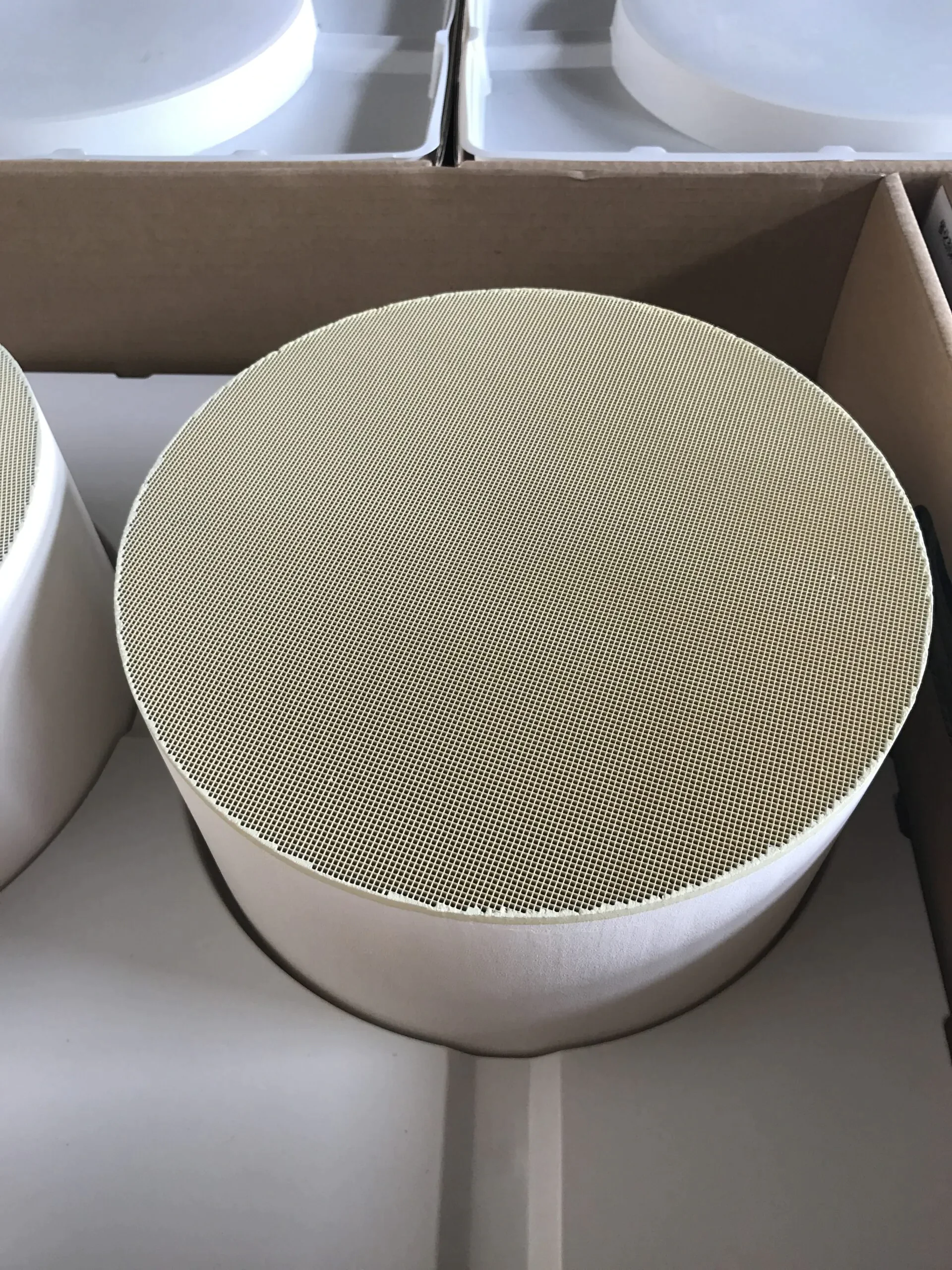
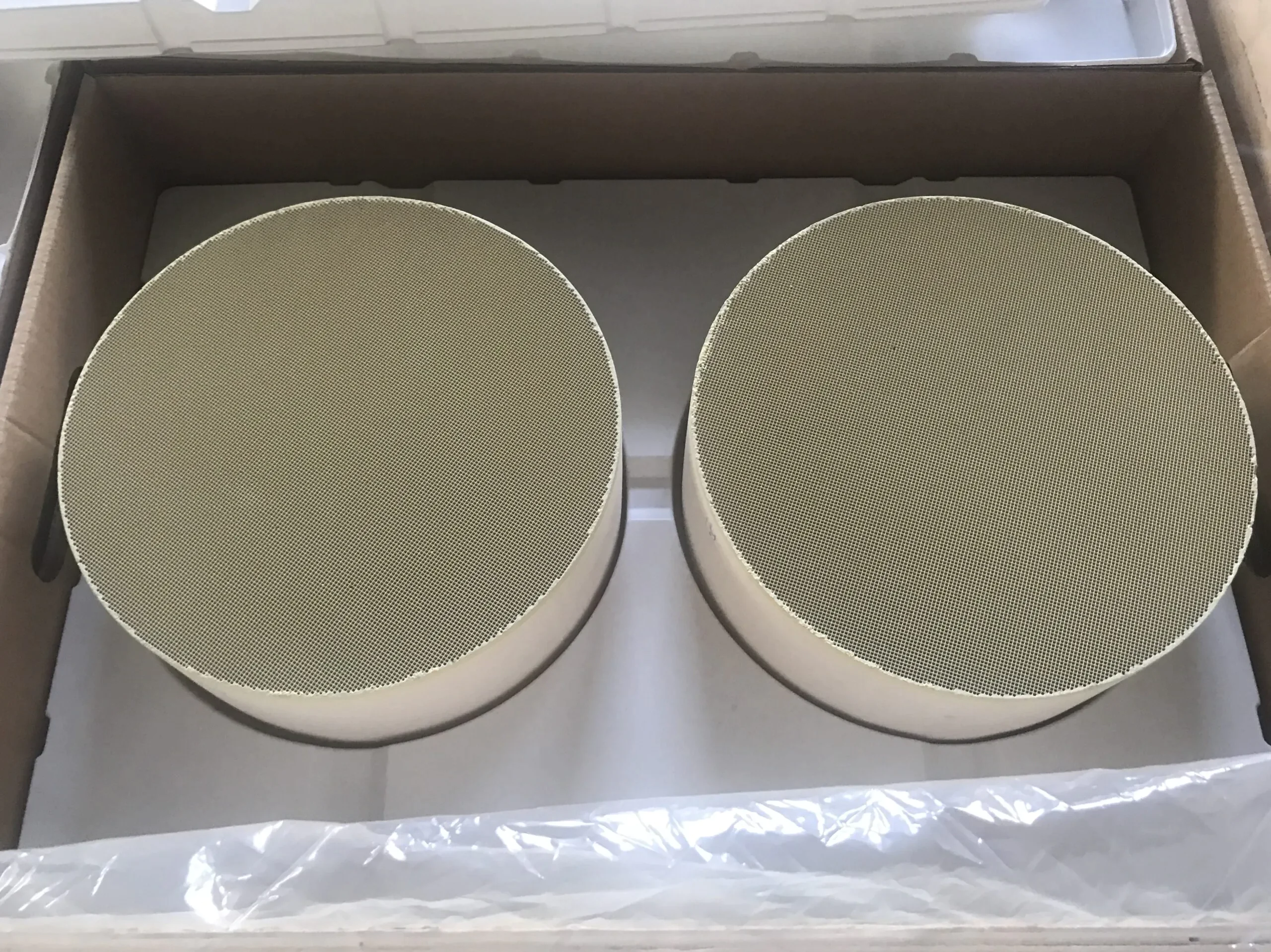
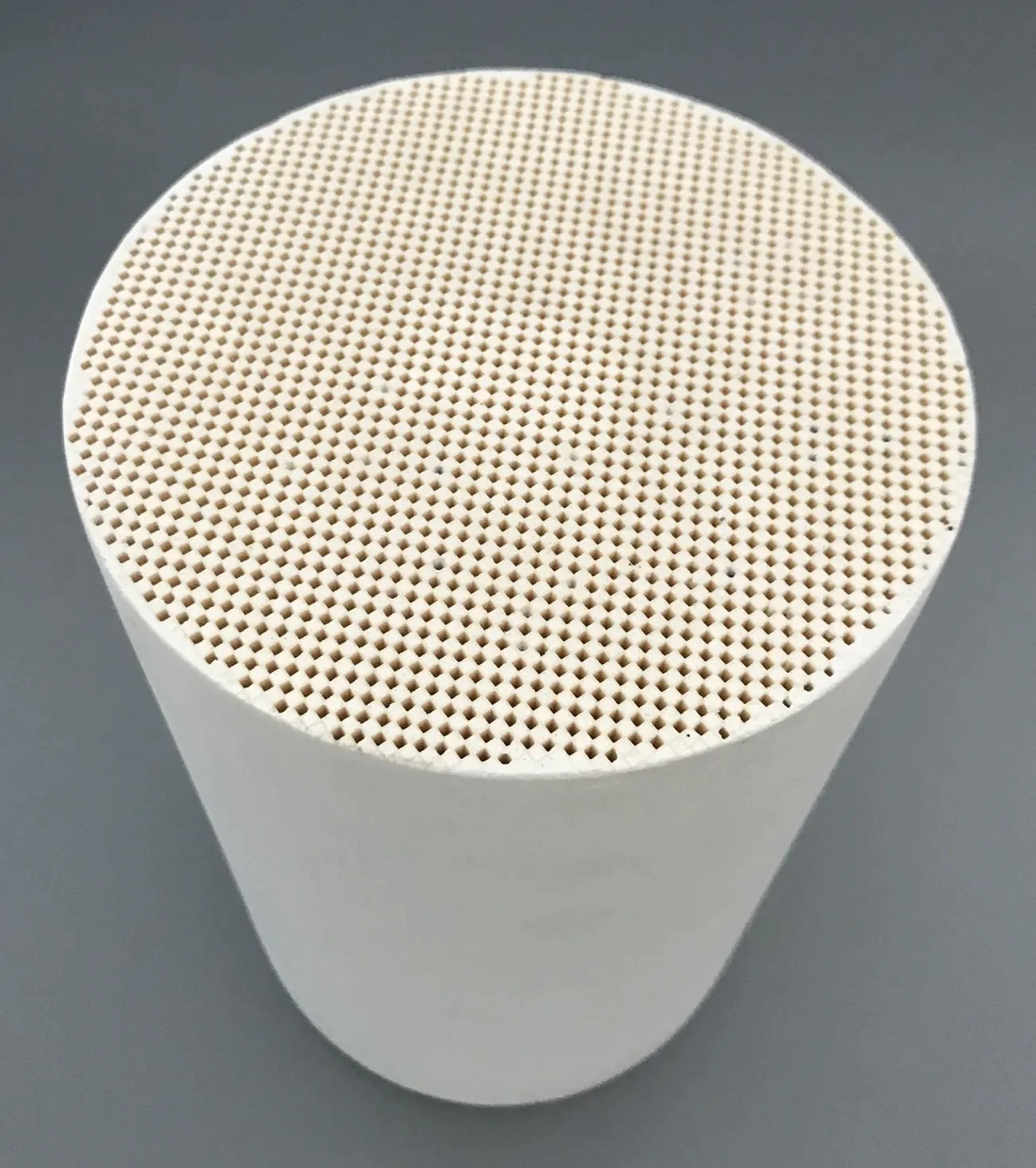
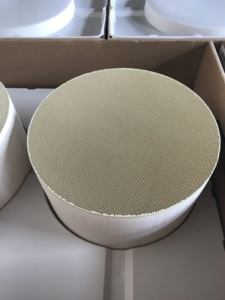
The core component is the SCR catalytic converter. In most mobile and many stationary applications, this takes the form of a Honeycomb Ceramic Catalyst—a structure that offers maximum geometric surface area within a compact volume.
Key Design and Material Specifications:
Structure: The honeycomb design provides high channel density, minimizing pressure drop (back pressure on the engine) while maximizing the contact time between the exhaust gas and the catalyst surface. This balance is critical for engine efficiency.
Material Composition: For diesel aftertreatment, the catalyst materials are highly specialized to function effectively in the typical operational temperature window (generally 180°C to 450°C).
Vanadium-Tungsten Oxide: Highly durable and excellent for applications with higher sulfur content fuels and/or higher exhaust temperatures, often found in industrial or older marine applications.
Zeolite Catalysts (Copper or Iron Zeolite): These are the modern choice for on-road diesel vehicles (heavy-duty trucks, buses) due to their superior hydrothermal stability and high NOx conversion efficiency, especially at the lower operating temperatures seen during cold start and low-load city driving—a critical requirement for Euro VI and EPA compliance.
The ability of an SCR catalytic converter to withstand thermal cycling, sulfur poisoning, and long-term vibration without performance degradation is the benchmark of its quality and directly impacts the operator’s total cost of ownership (TCO).
Hualian Catalyst’s Engineering for Compliance and Efficiency
For over three decades, Hualian Catalyst has specialized in providing the essential honeycomb ceramic substrates and catalyst solutions required by the world’s most demanding emissions standards. The company’s focus is on engineering durable, high-efficiency catalysts that serve as reliable solutions for OEMs and industrial clients seeking consistent compliance with the latest Euro VI, EPA, and China VI mandates.
Hualian Catalyst’s advanced manufacturing capabilities allow for the customization of the honeycomb pitch (cell density) and the active coating (washcoat) to perfectly match the specific engine output, application temperature profile, and fuel type of the customer’s equipment.
Focus on Durability: Recognizing the challenging conditions of heavy-duty and industrial use, Hualian’s products are designed for superior mechanical strength and resistance to sulfur deactivation, ensuring a long service life and reliable NOx reduction performance of 90% or higher.
Thermal and Flow Optimization: The use of precision-engineered honeycomb ceramics minimizes back pressure, which is vital for maintaining the engine’s fuel efficiency—a core metric for all fleet operators. The catalyst design ensures a uniform flow and reaction, maximizing the conversion rate of NOx across the full face of the substrate.
Global Compliance: By leveraging high-performance washcoats, including state-of-the-art zeolite formulations, Hualian Catalyst provides the high NOx conversion required across the entire operating map, ensuring vehicles and equipment powered by their technology are fully compliant with the global push toward ultra-low emissions.
In the era of Euro VI and China VI, the performance of the SCR catalyst is non-negotiable. Partnering with a specialist like Hualian Catalyst ensures that the critical link between engine performance and environmental compliance is met with a robust, reliable, and expertly engineered solution.