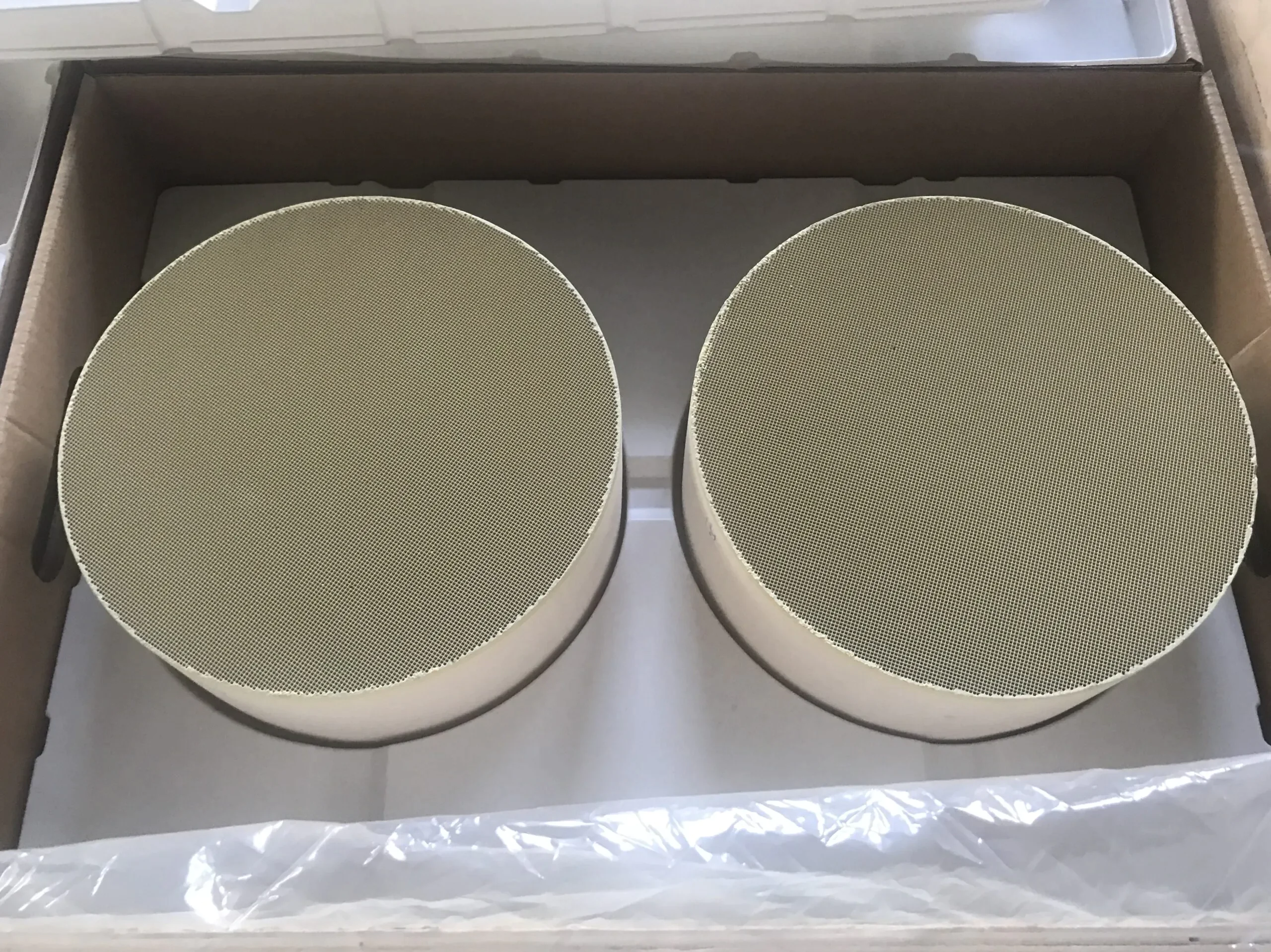
The commitment to cleaner operations and compliance with global emission standards—such as Euro VI, EPA Tier 4, and China VI—is paramount for industries relying on diesel power, from mining and petrochemicals to heavy-duty logistics. For these B2B sectors, the solution to managing exhaust pollution is centered on the Diesel Particulate Filter (DPF).
A high-performance diesel exhaust filter must not only trap harmful pollutants but also manage them in a way that minimizes maintenance and disposal waste. The most effective technology for this is the catalyzed diesel particulate filter, a core product offered by Hualian Catalyst. With over 30 years of specialization in chemical ceramics, Hualian Catalyst engineers DPF substrates that are essential for long-term environmental and operational sustainability in demanding industrial applications.
The true value of a DPF lies in its dual function: superior physical filtration combined with chemical catalysis, which together transform toxic pollutants into manageable waste products.
The Dual Mechanism of Emissions Control
The DPF addresses the problem of diesel emissions by performing two crucial, integrated functions within its honeycomb ceramic structure.
- Physical Filtration: Trapping Particulate Matter
The primary goal is the capture of Particulate Matter (PM)—the fine soot particles comprised mainly of carbon, which are highly regulated due to their impact on public health and the environment.
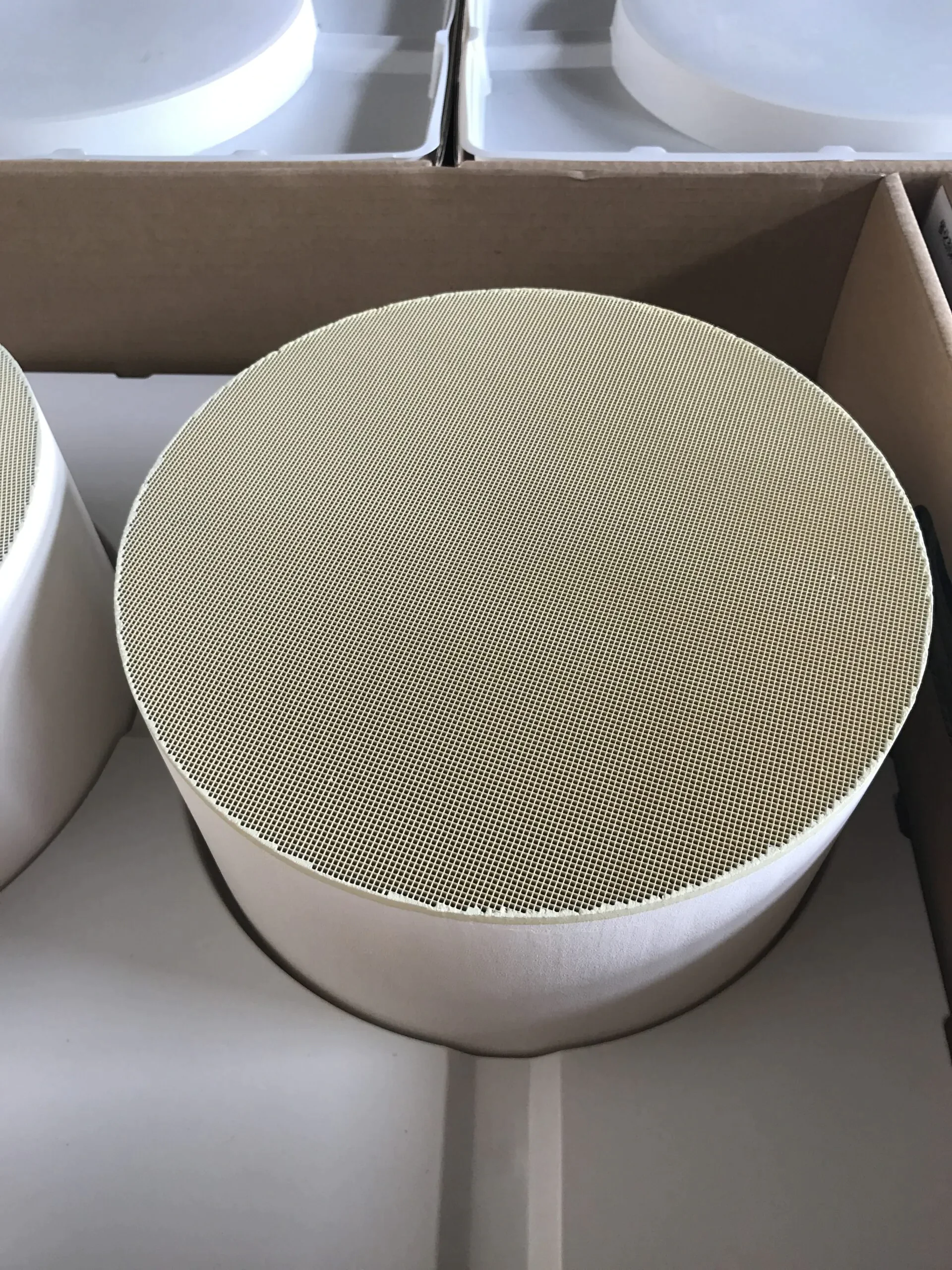
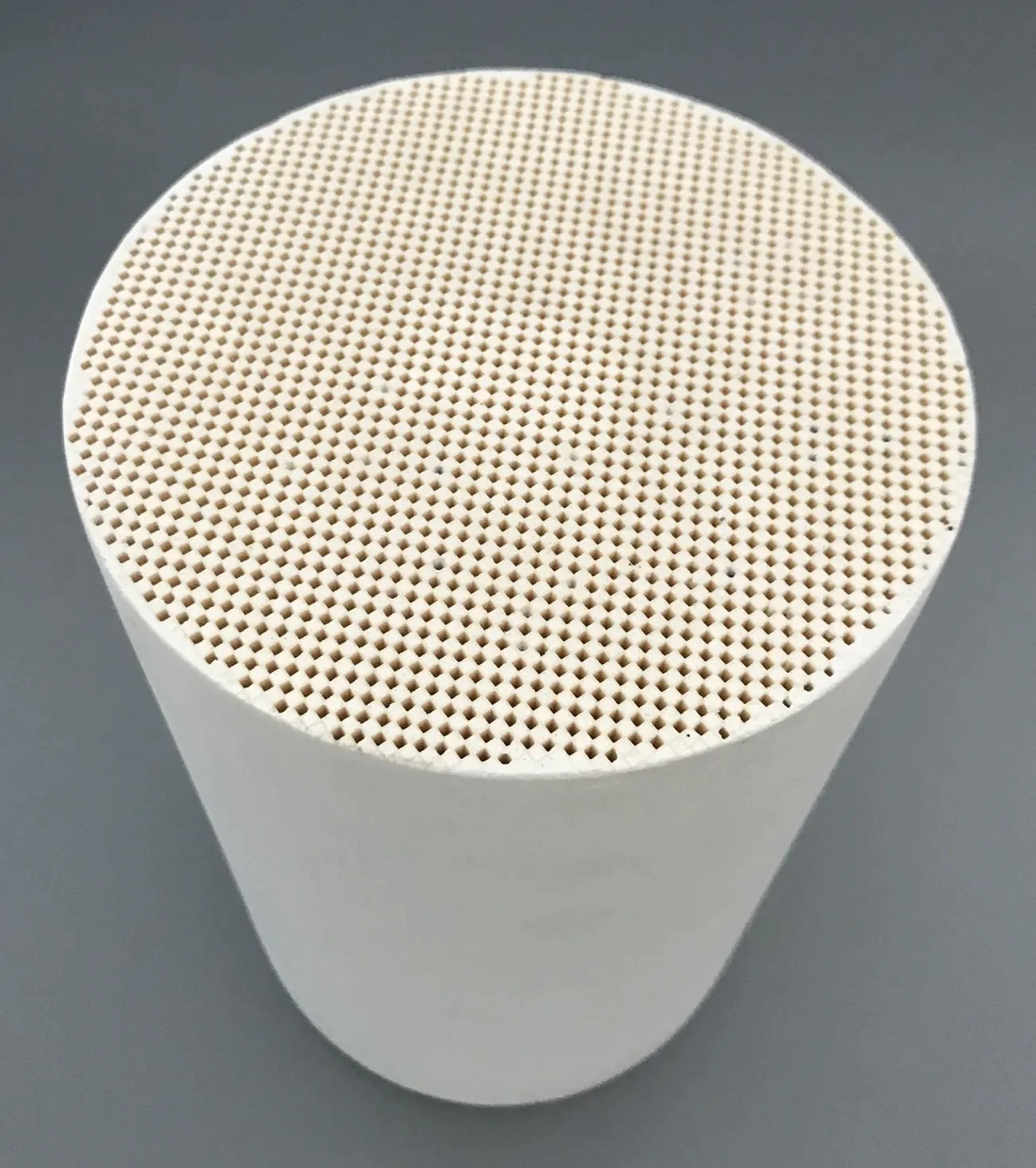
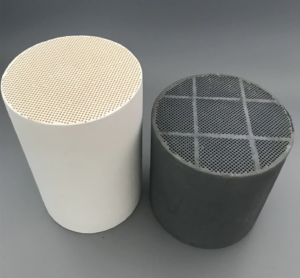
Wall-Flow Design: The Hualian Catalyst DPF is a wall-flow monolith. The ceramic substrate has a honeycomb structure where adjacent channels are alternately plugged at opposite ends. This forces the exhaust gas to flow through the porous walls, not just along the channels, physically trapping over 80% to 90% of the soot.
Engineered Porosity: The substrate’s quality is defined by its ability to trap soot efficiently while maintaining low resistance to gas flow. Hualian Catalyst DPFs are manufactured with high porosity and uniform pore distribution. This ensures high filtration capability alongside the critical feature of low backpressure. Maintaining low backpressure prevents excessive strain on the engine, preserving fuel economy and power.
- Catalysis: Enabling Continuous Regeneration
A standard DPF captures soot, but it must be periodically regenerated—a process of burning off the soot—to clean the filter and reduce backpressure. This process is made dramatically more efficient and waste-reducing in a catalyzed diesel particulate filter.
The catalytic washcoat applied to the ceramic walls, which often includes precious metals like platinum, is the key differentiator:
Gaseous Pollutant Conversion: The catalyst oxidizes gaseous pollutants, such as carbon monoxide and unburned hydrocarbons, converting them into less harmful carbon dioxide and water. This is the first step in cleaning the gas stream.
Facilitating Passive Regeneration: This catalytic function is vital for reducing waste. The catalyst promotes the conversion of nitrogen monoxide into nitrogen dioxide. Nitrogen dioxide is a powerful oxidant that can react with the accumulated carbon soot at significantly lower temperatures, typically in the range of 250℃ to 400℃. This constant, low-temperature soot burnout is known as Passive Regeneration.
The ability of the catalyzed diesel particulate filter to self-clean at normal operating temperatures means less frequent and less severe Active Regeneration cycles are required. This reduces reliance on high-heat events and supplemental fuel injection, which is a major factor in reducing operational waste.
Operational Efficiency and Waste Minimization
For industrial clients, choosing a high-quality diesel exhaust filter is an investment that yields multiple operational benefits, primarily by minimizing waste in three critical areas.
Reduced Maintenance and Fuel Waste
By promoting low-temperature passive regeneration, the DPF reduces the frequency of forced, high-temperature active regeneration. This leads to:
Lower Fuel Consumption: Active regeneration often requires injecting extra fuel into the exhaust stream to raise the temperature. Reducing these events saves fuel and associated costs.
Increased Uptime: Fewer regeneration cycles mean less time the equipment is idle or operating under strain, translating directly into increased operational uptime and productivity—a major concern for B2B clients.
Minimized Filter Disposal Waste
While soot is burned off as gas (carbon dioxide), the DPF inevitably accumulates ash, which originates from engine oil and fuel additives. Ash cannot be regenerated and the filter must be professionally cleaned or replaced.
Extended Service Intervals: The high-efficiency and reliable regeneration facilitated by the catalyst coating ensures that carbon soot loading remains low. This allows the filter to operate longer before ash buildup becomes problematic. By reducing the frequency of cleaning or replacement, the disposal waste associated with the diesel exhaust filter is minimized, aligning with industrial sustainability goals.
Durability Assurance: Hualian Catalyst DPFs are built for longevity, featuring a low coefficient of thermal expansion and robust resistance to thermal shock. This structural integrity means the filter will resist cracking and failure even under harsh, fluctuating exhaust temperatures, ensuring a longer service life and reducing premature waste from damaged components.
Hualian Catalyst Precision for Industrial Applications
Hualian Catalyst provides substrates that meet the rigorous demands of industrial buyers. Their DPFs are engineered with a specific cell density, typically ranging from 100 pores/square inch to 200 pores/square inch, offering the optimal balance between flow and filtration for various engine types and sizes. They offer flexibility in dimensions, including both circular and square cross-sections, with heights customized upon request to ensure seamless integration into existing or new exhaust aftertreatment systems.
By integrating the proven quality of a Hualian Catalyst catalyzed diesel particulate filter, industrial operators secure a solution that not only guarantees compliance with emission limits but also drives substantial long-term savings through reduced fuel consumption, minimized maintenance downtime, and less overall filter disposal waste. The technology is a critical component in the transition to cleaner, more efficient industrial activity.