As Hualian Catalyst, we work closely with sulfuric acid plants that rely on consistent catalyst behavior, making accurate evaluation essential for stable operations. When assessing the activity of a V₂O₅ catalyst contact process, we begin by examining the reaction environment rather than isolating a single performance indicator. Temperature uniformity, feed gas purity, and SO₂ concentration must be monitored to ensure that the activity values reflect actual catalyst behavior under operating conditions. Our experience shows that even slight shifts in gas composition can lead to measurable changes in conversion rates.
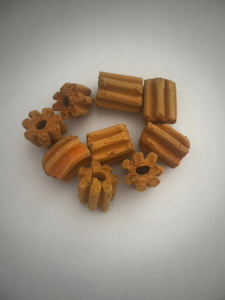
To support this evaluation, our company provides the V₂O₅ Vanadium pentoxide catalyst sulfuric acid system, designed with controlled pore structure and reliable mechanical strength. These features help us understand real-time performance trends and maintain consistency across multiple converter beds.
Practical Approaches for Activity Evaluation
When we evaluate a V₂O₅ catalyst sulfuric acid unit, we rely on methods that reflect the behavior of the material within full-scale industrial equipment. Online measurement of SO₂-to-SO₃ conversion remains a primary method, as it directly reflects the oxidation efficiency. By comparing outlet gas composition to baseline values, we identify any changes in catalytic response. This approach aligns with the operating requirements of sulfuric acid plants and supports predictive maintenance planning.
Another step involves monitoring pressure drop and heat release patterns. These variables allow us to assess whether the catalyst maintains structural stability and whether gas flow distribution remains uniform. For the V₂O₅ catalyst contact process, consistent temperature rise across the bed indicates steady activity and proper interaction between gas components and catalyst surface. Our focus is on creating conditions where measurements translate clearly into actionable operational decisions.
Ensuring Reliability Through Catalyst Design
We also emphasize the importance of catalyst design when interpreting activity measurements. Our V₂O₅ material incorporates advanced processing techniques and carefully managed formulation, especially in caesium-containing products that help reduce operating temperatures and SO₂ emissions. When activity tests are carried out on such systems, the results must be interpreted with consideration of the catalyst’s ability to promote oxidation at lower temperature ranges.
In our application support work, we guide customers on integrating measurement routines that match their converter configuration. For a V₂O₅ catalyst sulfuric acid operation handling variable loads, a combination of fixed-point temperature tracking and gas-phase sampling gives a more reliable view of how the catalyst performs under changing conditions.
Conclusion: Building Accurate and Consistent Measurement Practices
Accurate measurement of V₂O₅ catalyst performance depends on understanding the interaction between gas composition, converter temperature, and catalyst formulation. As Hualian Catalyst, we apply structured monitoring methods that allow experienced operators to maintain stability and evaluate performance changes over time. By combining temperature profiles, gas conversion data, and mechanical indicators, we ensure that each V₂O₅ catalyst contact process system provides reliable activity information. This approach supports long operating cycles, consistent output, and improved decision-making for sulfuric acid production.