As a manufacturer working closely with professional clients, Hualian Catalyst has long experience in developing particulate filtration solutions, and we understand that replacing a diesel exhaust filter is a routine but important maintenance task. When customers ask how to change a diesel exhaust filter, we always start with the fundamentals: identifying the correct diesel particulate filter for sale for the engine platform, confirming compatibility, and preparing for a controlled installation process. In most systems, removal begins with cooling the exhaust line, disconnecting temperature and pressure sensors, and unbolting the filter housing. These steps allow the existing unit to be taken out safely without stressing surrounding components. Once the old filter is removed, we recommend a visual inspection of clamps, gaskets, and mounting points so the new filter can be installed securely.
Key Considerations Before Installing an Aftertreatment Diesel Particulate Filter
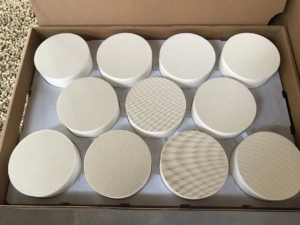
Before any installation, it is important to match the specifications of the replacement filter to the operating requirements of the engine. Our aftertreatment diesel particulate filter options include round or square structures, adjustable diameter, length, and cell density from 100 to 350 CPSI, supporting a broad range of equipment needs. The 200-cell Diesel Engine Particulate Filter System is one example widely used in Euro DPF replacement applications. Its porous catalyst structure supports efficient wall-flow filtration, allowing soot to be captured while maintaining stable exhaust flow. Materials such as cordierite or silicon carbide offer high-temperature resistance, which is essential for reliable operation during both passive and active regeneration. These characteristics are relevant when planning how to change a diesel exhaust filter because proper matching ensures that soot loading, heat distribution, and regeneration behavior remain consistent with the engine’s requirements.
Installing and Verifying the New Diesel Exhaust Filter
During installation, we guide customers to position the new diesel particulate filter for sale into the exhaust housing, align the inlet and outlet surfaces, and tighten the mounting hardware gradually to avoid distortion. Once sensors and clamps are secured, the system can be restarted for verification. A short warm-up period helps check for leaks and confirm that pressure readings fall within expected ranges. This step is especially important for an aftertreatment diesel particulate filter because correct pressure feedback supports regeneration events. Our 200-cell filter design accommodates both passive and active regeneration, so once installed, normal operation allows soot to burn off naturally when exhaust temperature reaches the required threshold. If temperature is lower, the system introduces controlled heat to maintain clean filter channels.
Conclusion
Replacing a diesel exhaust filter becomes a straightforward process when the correct components and procedures are followed. By selecting a suitable aftertreatment diesel particulate filter, confirming structural compatibility, and installing the new unit with proper alignment and sensor inspection, the engine maintains stable backpressure and emission performance. Our 200-cell Diesel Engine Particulate Filter System supports efficient wall-flow filtration, durable high-temperature resistance, and compliance with Euro emission regulations. Understanding how to change a diesel exhaust filter ensures reliable long-term operation for professional equipment fleets.