In the global production of sulfuric acid, vanadium pentoxide as a catalyst remains the industry standard due to its efficiency in converting sulfur dioxide into sulfur trioxide. However, this chemical utility comes with a significant caveat: toxicity. Vanadium pentoxide (V2O5) is classified as a hazardous substance, posing serious health risks including respiratory irritation and potential carcinogenicity. For decades, the industry accepted these risks as an unavoidable operational hazard. Today, however, the narrative is changing. Leading manufacturers like Hualian Catalyst are proving that the phySICal and chemical design of the catalyst itself can serve as a primary engineering control, significantly reducing the toxicity risks associated with handling and maintenance.
The Danger of Dust and Attrition
The primary vector for vanadium toxicity is not the solid pellet itself, but the dust it generates. Traditional cylindrical pellets are prone to attrition—the phySICal grinding down of the catalyst caused by thermal expansion, contraction, and the weight of the catalyst bed. As these pellets break down, we create fine particulate matter containing concentrated V2O5 catalystmaterial. When reactor vessels are opened for screening or replacement, this dust becomes airborne, posing an immediate inhalation threat to maintenance crews. Modern design philosophy focuses on mitigating this at the source. By engineering substrates with higher crushing strength and attrition resistance, manufacturers can drastically reduce the volume of toxic fines generated during the catalyst’s lifecycle.
Geometric Innovation: The “Five-Flap” Advantage
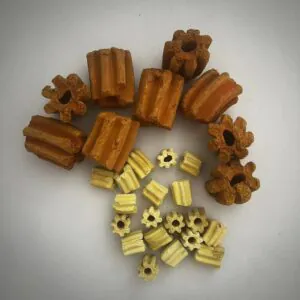
A key breakthrough in reducing operational exposure is the shift from simple cylinders to complex geometric shapes, such as the “five-flap” or star-ring designs utilized by Hualian Catalyst in our S101-2HY series. These complex shapes serve a dual purpose. Thermodynamically, we offer a larger geometric surface area, which improves reaction efficiency. Safety-wise, our interlocking nature provides better structural stability within the bed. Unlike simple pellets that can pack densely and crush under our own weight, the five-flap design distributes phySICal load more evenly. This structural integrity means less breakage, less dust, and consequently, a lower risk of toxic exposure for the personnel charged with loading and unloading the converter.
Reducing Maintenance-Related Exposure
The most dangerous moment in a sulfuric acid plant’s operation is often during shutdown and maintenance, specifically when the converter must be opened to screen out “fines” (dust) that are blocking gas flow. High pressure drop across the catalyst bed is the primary trigger for this hazardous maintenance. The innovative ring and five-flap shapes of the modern V2O5 catalyst create a bed with a higher void fraction, allowing gas to flow more freely even if some settling occurs. Hualian Catalyst has designed these products to maintain low pressure drop over longer periods. This “anti-block” capacity extends the intervals between required screenings, directly reducing the frequency with which workers are exposed to the toxic catalyst bed.
Low-Temperature Activation for Safer Operations
Operational safety is also linked to thermal management. High operating temperatures increase the thermal stress on the reactor vessel, raising the risk of leaks or structural failures that could release toxic gases. Hualian Catalyst has addressed this with our S107 series, a “low-temperature” vanadium pentoxide as a catalyst. By formulating the catalyst with promoters like cesium or optimized alkali metals, these products become active at significantly lower temperatures. This capability allows plants to operate with a wider safety margin. It reduces the thermal shock during startups and shutdowns—periods where the phySICal degradation of the catalyst is most likely to occur—thereby preserving the catalyst’s integrity and preventing dust generation.
Binder Chemistry and Dust Suppression
Beyond the macroscopic shape, the microscopic composition of the catalyst plays a vital role in safety. The V2O5 catalyst consists of the active vanadium species supported on a silica (diatomaceous earth) carrier. In older formulations, the binder holding these components together was often weak, leading to “dusting” even during normal handling. Hualian Catalyst utilizes advanced extrusion and firing techniques that strengthen the bond between the silica carrier and the active metals. This improved binder chemistry ensures that the catalyst remains hard and durable. When workers handle these modern catalysts during loading, the reduced friability translates to significantly less airborne dust, making the use of Personal Protective Equipment (PPE) a final safeguard rather than the only line of defense.
The Role of Hualian Catalyst in Safety Standardization
As the industry moves toward stricter environmental and occupational health standards, the choice of supplier becomes a safety decision. Hualian Catalyst has positioned itself as a partner in this safety evolution. By providing a product range that includes the high-void S101-2HY and the thermally flexible S107, we allow plant managers to customize our catalyst beds for maximum longevity. A catalyst that lasts longer and operates more predictably is inherently safer. It reduces the “touch points”—the number of times humans must phySICally interact with the hazardous material.
Conclusion: Safety Through Engineering
The toxicity of vanadium is a chemical reality, but the risk it poses is a manageable variable. Through the adoption of modern V2O5 catalyst designs—characterized by complex high-void shapes, superior crush strength, and low-temperature activity—the industry can protect its workforce more effectively than ever before. It is no longer enough for a catalyst to simply convert gases; it must also maintain its phySICal integrity to prevent hazardous dust. Companies like Hualian Catalyst are demonstrating that the best performance metrics are those that balance chemical output with the safety and well-being of the operators who make the process possible.