As Hualian Catalyst, we consistently study surface mechanisms that shape selective oxidation performance in industrial processes. In this context, the chemistry occurring on the surface of vanadia materials is central to reaction selectivity, oxygen mobility, and catalyst stability. When we evaluate a V₂O₅ catalyst, we examine how its surface species interact with reactants, how lattice oxygen participates in oxidation, and how surface restructuring affects long-term operation. These factors define how efficiently oxidation pathways proceed. Our work with vanadium pentoxide catalyst systems shows that the controlled formation of reactive oxygen species is essential for achieving stable conversion without unwanted by-products.
Surface Chemistry and Its Influence on Industrial Operation
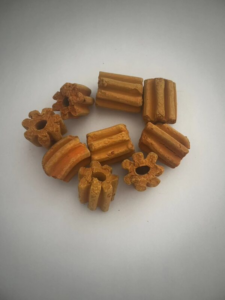
In our experience, selective oxidation performance is closely related to how vanadia layers distribute and migrate under reaction conditions. On a V₂O₅ catalyst, the surface may dynamically adjust its oxidation state, and this adaptability enables steady catalytic activity. When we design each vanadium pentoxide catalyst, we consider how acidity, dispersion, and support interaction contribute to oxygen transfer efficiency. These features shape reaction kinetics in processes such as sulfur dioxide oxidation. Our team integrates these insights when evaluating industrial units, ensuring that surface chemistry supports consistent productivity. For specialized sulfuric acid applications, we supply the Vanadium pentoxide catalyst sulfuric acid Daisy 11mm 12mm, a product developed with surface characteristics suitable for continuous operation.
Practical Application in Sulfuric Acid Production
In sulfuric acid plants, the role of surface chemistry becomes even more important because the oxidation of SO₂ to SO₃ must remain stable across varying process loads. When we apply a V₂O₅ catalyst, we focus on how vanadia’s redox properties maintain conversion efficiency under these conditions. A well-engineered vanadium pentoxide catalyst provides a balance between active oxygen availability and structural durability. Our product line reflects this principle. The Vanadium pentoxide catalyst (V₂O₅) we manufacture plays a key role in supporting the contact process, where controlled oxidation pathways are essential. When caesium is incorporated, the catalyst demonstrates improved performance by helping reduce continuous operating temperature and lowering SO₂ emissions. Through advanced manufacturing and quality control, we ensure that surface behavior remains stable and supports energy-efficient operation. These characteristics contribute to prolonged catalyst life and consistent overall plant performance.
Conclusion: Understanding Surface Chemistry for Reliable Selective Oxidation
By examining vanadia surface reactions, we ensure that our solutions remain aligned with industrial expectations for stability and efficiency. The working principles of a V₂O₅ catalyst highlight how oxygen mobility and surface states influence oxidation outcomes. Each vanadium pentoxide catalyst we supply is designed with these considerations in mind, allowing our systems to meet operational requirements in sulfuric acid production and other selective oxidation environments. Our approach reinforces the value of surface chemistry as a foundation for predictable, long-term catalytic performance.