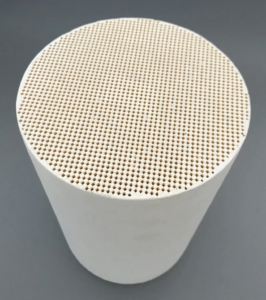
As we continue to refine our exhaust treatment solutions at Hualian Catalyst, thermal shock resistance remains a central consideration in our honeycomb ceramic filter design. When a diesel engine experiences rapid temperature fluctuations, the structure of a filter undergoes expansion and contraction that can generate internal stress. For operators searching for a reliable diesel particulate filter for sale, the ability of the material to handle these variations is fundamental to maintaining stable filtration efficiency and everyday engine performance. In our production process, we evaluate how material composition, pore structure, and cell density work together to support durability under repeated heating and cooling cycles. This understanding shapes our selection of substrates for different operating conditions, especially in engines that experience frequent regeneration or variable load patterns.
Material Behavior and Its Impact on Filter Durability
The thermal shock characteristics of a honeycomb ceramic filter are closely tied to material properties such as thermal conductivity, thermal expansion coefficient, and inherent mechanical stability. When designing a catalyzed diesel particulate filter, we focus on how these characteristics influence stress distribution across the wall-flow channels. Cordierite exhibits a low thermal expansion rate, giving it natural resistance to sudden temperature changes, making it suitable for light-duty vehicles with frequent stop-start operation. Silicon carbide offers higher thermal conductivity, helping release heat more efficiently during regeneration, which reduces localized stress. Both materials allow us to balance filtration performance, soot-loading behavior, and thermal endurance so that customers can choose a configuration aligned with their long-term maintenance expectations.
Application of Material Choice in Our Euro 6 DPF Solutions
Our Euro 6 SiC/cordierite DPF Diesel Particulate Filter 200–300 CPSI series is designed to address real-world exhaust challenges through controlled material engineering and precise honeycomb formation. When customers evaluate a diesel particulate filter for sale, they often consider how each option behaves during regeneration and continuous operation. For this reason, we provide two substrate solutions within our system. The cordierite DPF offers lightweight construction, dependable thermal shock resistance, and cost-effective performance for urban driving conditions. The SiC variant supports higher thermal loads and stable filtration under heavy-duty operation, making it suitable when longer service intervals are expected. In both versions, the wall-flow structure used in our catalyzed diesel particulate filter enhances soot trapping efficiency while maintaining low back pressure to help engines operate smoothly.
Conclusion: Material Design Supporting Long-Term Reliability
In summary, thermal shock resistance plays a defining role in the durability and consistency of a honeycomb ceramic filter. By understanding how material behavior influences long-term performance, we ensure that users seeking a reliable diesel particulate filter for sale receive a product aligned with their operational environment. Whether selecting cordierite or SiC, our engineering approach ensures that each catalyzed diesel particulate filter maintains structural stability and effective soot management. Through this material-focused design, we continue supporting diesel engines that require dependable filtration across varying thermal conditions.