In sulfuric-acid production, the reaction that converts SO₂ into SO₃ determines both plant efficiency and long-term operational stability. Our team works with facilities that expect predictable performance from every converter bed, and the vanadium pentoxide catalyst consistently meets these expectations. Inside the system, the catalytic surface supports a steady oxygen-transfer cycle that encourages continuous SO₂ oxidation without abrupt reaction shifts. This reliability is essential for maintaining balanced heat distribution and manageable operating conditions. Within this framework, Hualian Catalyst places great emphasis on designing solutions that maintain uniform SO₃ formation and allow customers to operate extended campaigns with minimal fluctuation. The properties of the V₂O₅ catalyst match the requirements of these advanced operations and support a stable foundation for overall plant performance.
Why V₂O₅ Provides Operational Consistency
The suitability of V₂O₅ for SO₂ oxidation is closely linked to its redox characteristics, which respond well to the thermal profile inside converter beds. The V⁵⁺/V⁴⁺ transition enables efficient oxygen exchange, promoting high conversion rates even when temperature or gas composition varies. In our projects, we often observe that the vanadium pentoxide catalyst maintains activity across a broad temperature range, helping operators avoid the typical production interruptions caused by thermal imbalance. This behavior is particularly valuable during continuous runs, where minor shifts in feed concentration can challenge reaction stability. Our integration of this behavior within the V₂O₅ catalyst helps maintain efficient SO₃ formation, supports controlled heat release, and provides facilities with a reliable operational window. When these factors are combined, V₂O₅ offers a clear advantage over alternatives that require more restrictive thermal conditions.
V₂O₅ Catalysts Tailored for Converter Bed Requirements
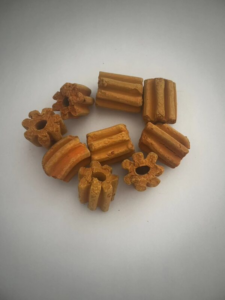
Different layers in the converter demand specific catalytic characteristics, and our product line is designed with these requirements in mind. The V₂O₅ vanadium pentoxide catalyst sulfuric acid portfolio includes several formulations that address the individual needs of each bed. V201-M functions effectively across all beds and supports wide operating-temperature flexibility through its dispersed V₂O₅ species and high surface area. For Bed 3, where the gas stream contains greater SO₃ concentration, V208-M offers increased V₂O₅ content to maintain activity under more demanding conditions. Another option, V212-M, uses caesium promotion to improve low-temperature performance, supporting conversion at levels starting near 370 °C and helping plants reduce SO₂ emissions while maintaining output stability. These configurations allow Hualian Catalyst to provide bed-specific solutions that keep the V₂O₅ catalyst productive across varied reaction zones.
Conclusion: Why V₂O₅ Remains the Practical Choice
The advantages that define the vanadium pentoxide catalyst—such as its adaptable redox cycle, dependable thermal behavior, and wide operating range—explain why V₂O₅ remains the preferred material for SO₂ oxidation. Our application of the V₂O₅ catalyst in sulfuric-acid systems helps customers achieve consistent conversion efficiency and stable operation throughout extended production periods. At Hualian Catalyst, these characteristics form the core of the catalyst series we supply, providing sulfuric-acid plants with solutions that support reliability, energy balance, and environmental compliance.