Is the Future Ceramic or Metallic? Industry Predictions for Emission Control Technology
As global emission regulations grow increasingly stringent—with Euro 7 on the horizon and China VI b fully implemented—automotive OEMs, industrial operators, and equipment manufacturers face a pivotal decision: Which technology will dominate the next era of emission control—ceramic or metallic catalysts? While metallic catalysts have long held niche advantages in weight and shock resistance, ceramic catalyst technology has undergone remarkable evolution, solving historical limitations and aligning perfectly with sustainability and cost goals. For over 30 years, Hualian Catalyst has been a pioneer in ceramic-based emission control solutions, and industry trends make it clear: their flagship ceramic catalytic converter lineup is poised to lead the future. Let’s break down the key factors shaping this critical industry shift.
Ceramic Catalytic Converters: Ready for Euro 7 and Beyond
The upcoming Euro 7 standard—demanding catalysts maintain 90%+ pollutant conversion efficiency for 200,000 km or 10 years—has become a defining benchmark for 2B clients. Ceramic catalysts, once criticized for brittleness, now stand out thanks to Hualian’s engineering innovations:
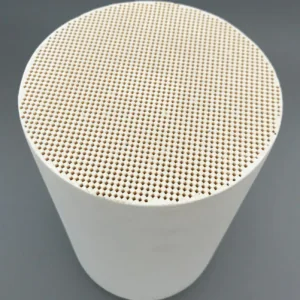
Enhanced Durability & Thermal Stability: Hualian’s honeycomb ceramic catalytic converters use high-quality cordierite or SiC (silicon carbide) substrates with 200–300 CPSI (cells per square inch). Sintered at 1,000–1,200°C, these substrates form a robust structure that resists thermal shock and vibration—even in exhaust temperatures exceeding 800°C. Unlike metallic alternatives prone to corrosion from sulfur impurities, Hualian’s ceramic substrates maintain structural integrity across long service lives.
Cost & Sustainability Advantages: Ceramic’s lower raw material costs and 65%+ recyclable precious metal content make it 30% more cost-competitive than metallic catalysts for mass-produced vehicles and heavy-duty trucks. This aligns with global carbon neutrality goals, as ceramic catalyst production has a 60% lower carbon footprint compared to metallic systems.
Metallic Catalysts: Niche Relevance in a Ceramic-Driven Future
Metallic catalysts won’t disappear entirely—they retain appeal for high-performance vehicles and motorcycles, where lighter weight and superior shock resistance are critical. However, two key factors limit their long-term growth:
Resource Vulnerability: Metallic catalysts rely heavily on SUS 304 stainless steel and dense precious metal coatings, making them susceptible to supply chain disruptions and price fluctuations. With global rare metal reserves dwindling, this dependency creates long-term risks for 2B clients managing large-scale production.
Regulatory & Environmental Pressures: Metallic systems have a 2.8x higher carbon footprint than ceramic alternatives, conflicting with global sustainability mandates. For commercial fleets and industrial operators, this raises the risk of non-compliance with emerging environmental standards focused on lifecycle emissions.
Why Hualian Catalyst’s Ceramic Solutions Lead the Industry
Hualian’s 30+ years of expertise in ceramic catalyst technology positions it as a trusted partner for forward-thinking businesses:
Proven Global Performance: Our honeycomb ceramic catalytic converters are certified to ISO 9001 and IATF 16949 standards, with a track record of supporting 278,000+ projects across 50+ countries. The 200–300 CPSI substrate design balances maximum gas contact with minimal backpressure—ideal for both passenger cars and heavy-duty diesel trucks.
Customization for Diverse Needs: As a customer-centric manufacturer, Hualian tailors ceramic catalytic converter specifications (including coating thickness, substrate material, and active ingredient blends) to client-specific engine requirements. This flexibility is critical for non-road mobile machinery and industrial applications—a market projected to grow 50% by 2028.
Proactive Regulatory Readiness: Hualian’s ceramic catalysts already meet Euro 2–6 and China VI standards, with pre-optimized designs for Euro 7. This proactive approach helps clients avoid last-minute redesigns, accelerate time-to-market, and eliminate non-compliance penalties.
Industry data confirms the trend: The global ceramic catalyst market share is expected to reach 70% by 2030, driven by regulatory pressure, cost advantages, and sustainability goals. Hualian’s partnerships with 5,000+ global companies underscore its ability to deliver reliable, future-proof solutions.
Choose Hualian Catalyst: Embrace the Ceramic Future of Emission Control
While metallic catalysts will maintain niche roles in specialized applications, the future of emission control belongs unequivocally to ceramic technology. Hualian Catalyst—a leader in ceramic catalyst and ceramic catalytic converter innovation—combines 30+ years of R&D, global compliance, and customer-centric customization to meet the needs of 2B clients worldwide. Whether you’re an automotive OEM preparing for Euro 7, an industrial operator upgrading emission systems, or a equipment manufacturer seeking cost-effective solutions, Hualian’s ceramic products offer the perfect blend of performance, durability, and sustainability.
In an era where regulatory compliance and sustainability are competitive advantages, Hualian Catalyst doesn’t just follow industry trends—we shape them. For businesses ready to invest in long-term, future-proof emission control, partnering with Hualian isn’t just a choice—it’s a strategic decision to stay ahead of the curve. The future of emission control is ceramic, and Hualian is your trusted guide to this exciting shift.