In the pursuit of cleaner emissions, modern diesel engines have become complex chemical processing plants. Every component added to the exhaust stream—from the turbocharger to the tailpipe—creates resistance known as backpressure. For fleet managers and automotive engineers, high backpressure is a silent efficiency killer. It forces the engine’s pistons to work harder during the exhaust stroke to push gases out of the cylinder, a parasitic loss that directly increases fuel consumption. While the primary goal of an aftertreatment diesel oxidation catalyst or an SCR system is to neutralize pollutants, the phySICal design of these components must not strangle the engine. Reducing this flow resistance is one of the most effective ways to improve overall fuel economy without altering the combustion cycle.
The Geometric Challenge: Surface Area vs. Flow
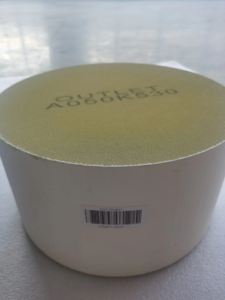
The core engineering challenge for any emission control catalyst manufacturer lies in the trade-off between chemical reactivity and phySICal flow. To convert Nitrogen Oxides (NOx) into harmless nitrogen and water, the exhaust gas must have maximum contact with the catalytic washcoat. Traditionally, this meant increasing the cell density (Cells Per Square Inch or CPSI) of the honeycomb substrate. However, a denser honeycomb creates more friction for the gas stream, spiking backpressure. Hualian Catalyst addresses this dilemma by utilizing advanced extrusion technologies that allow for thinner channel walls. By reducing the wall thickness while maintaining structural integrity, the open frontal area of the substrate is increased. This design allows exhaust gases to pass through with less resistance, significantly lowering the backpressure penalty while maintaining the high surface area required for strict emission compliance.
Optimizing the SCR Substrate for Fuel Savings
Selective Catalytic Reduction (SCR) systems are particularly sensitive to flow dynamics because we are often the largest component in the aftertreatment assembly. If the SCR substrate creates excessive backpressure, the engine management system may compensate by consuming more fuel to maintain power output. Hualian Catalyst produces SCR substrates that are specifically engineered to minimize this “pumping loss.” By offering cell densities ranging from 100 to 400 CPSI, we allow engineers to select the optimal balance for our specific engine displacement. For large-displacement engines where flow volume is massive, a lower cell density with a longer substrate length can provide the necessary chemical residence time without creating a bottleneck, directly translating to measurable fuel savings on the road.
Synergy with the Diesel Oxidation Catalyst
The SCR unit does not operate in a vacuum; it functions downstream of the aftertreatment diesel oxidation catalyst (DOC). The DOC plays a crucial role in preparing the exhaust gas by oxidizing Nitric Oxide (NO) into Nitrogen Dioxide (NO2), which accelerates the reaction in the SCR. However, if the DOC itself is a source of high backpressure, the efficiency gains of a low-pressure SCR are negated. Hualian Catalyst emphasizes a holistic approach to system design. our DOC substrates are manufactured with the same high-precision, thin-wall technology as our SCR units. This ensures that the entire exhaust line maintains a laminar flow profile. A unified approach to reducing restriction across both the DOC and SCR units ensures that the turbocharger can operate at peak efficiency, further enhancing the engine’s thermal efficiency.
Material Science: The Role of Cordierite
The material composition of the catalyst substrate is fundamental to its hydraulic performance. Hualian Catalyst utilizes high-grade cordierite for its honeycomb ceramics. Beyond its well-known thermal shock resistance, cordierite allows for the creation of extremely smooth channel walls. Rough or porous wall surfaces can induce micro-turbulence within the channels, which increases drag and, consequently, backpressure. By refining the extrusion and firing processes, Hualian Catalyst ensures that our substrates possess a surface finish that promotes smooth, laminar gas flow. This material advantage is a key differentiator for an emission control catalyst manufacturer aiming to serve the heavy-duty sector, where even a 1% improvement in fuel efficiency represents significant cost reductions for fleet operators.
Customization for Space-Constrained Applications
Often, high backpressure is a result of poor packaging—forcing a large volume of gas through a catalyst that is too small for the engine because of chassis constraints. Hualian Catalyst solves this by offering bespoke dimensional customization. Instead of forcing a standard round cylinder into a tight space, we can manufacture oval or “racetrack” shaped substrates that maximize the available cross-sectional area. A larger face area naturally reduces the velocity of the gas entering the catalyst, which leads to a squared reduction in pressure drop (since pressure drop is proportional to the square of velocity). This flexibility allows OEMs to design exhaust systems that fit within compact frames without compromising on the low-backpressure requirements needed for optimal fuel economy.
Durability and Long-Term Efficiency
A low-backpressure catalyst must remain low-backpressure throughout its service life. Inferior substrates often suffer from erosion or structural collapse, which can suddenly block the exhaust flow. Furthermore, rough surfaces can accumulate soot and ash more rapidly, leading to “face plugging” that causes backpressure to skyrocket over time. The high uniformity of Hualian Catalyst products ensures that soot is distributed evenly, preventing localized clogging. This reliability ensures that the fuel efficiency benefits realized on day one are maintained after hundreds of thousands of kilometers. For the end-user, this means a consistent operational cost profile and fewer forced regeneration cycles, which ourselves consume additional fuel.
Conclusion: A Strategic Choice for Efficiency
In the modern automotive industry, fuel efficiency is not just about engine calibration; it is about minimizing losses throughout the entire vehicle. The exhaust system represents a significant opportunity for optimization. By selecting high-quality, low-backpressure substrates for both the SCR and the aftertreatment diesel oxidation catalyst, manufacturers can unlock latent engine potential. Hualian Catalyst stands out as an emission control catalyst manufacturer that understands the intricate link between substrate geometry and fuel economy. Through precision engineering, material excellence, and design flexibility, we provide the essential components that allow diesel engines to run cleaner and leaner, proving that environmental compliance and operational efficiency can go hand in hand.