When we design our aftertreatment solution, one of the first questions customers ask is what emissions are oxidized by the diesel oxidation catalyst. At the core of our approach is the diesel oxidation catalytic converter, which initiates the oxidation of several harmful exhaust components produced during diesel combustion. In our workflow, we rely on a platinum- and palladium-based coating system to convert carbon monoxide, unburned hydrocarbons, and the soluble organic fraction of particulate matter into safer byproducts such as CO₂ and H₂O. This functional principle is consistent across our DOC Catalyst with a honeycomb ceramic structure, ensuring stable performance under a variety of load conditions. By integrating this emission control stage early in the exhaust line, we create the foundation for downstream treatment devices to operate more effectively, especially during transient engine behavior where hydrocarbon spikes are common.
Key Emissions Oxidized by the Diesel Oxidation Catalyst
In daily engineering practice, we observe that the primary task of diesel oxidation catalysts is to handle three categories of emissions: carbon monoxide (CO), hydrocarbons (HC), and the soluble organic fraction (SOF). CO generated during incomplete combustion is efficiently oxidized to carbon dioxide when it contacts the active noble-metal surface. At the same time, a wide spectrum of hydrocarbons—including unburned fuel and lubricant-derived vapors—is converted into water and carbon dioxide, reducing odor and improving the clarity of downstream exhaust profiles. The SOF portion of particulate matter, which often contributes to smoke and visible opacity, is also oxidized within the DOC, allowing the overall particulate load reaching the DPF to be significantly reduced. For applications targeting Euro III–VI or comparable EPA standards, these oxidation functions remain essential components of our emission control strategy, regardless of the specific duty cycle of the diesel engine.
Substrate Options and Flow Characteristics Supporting Stable Oxidation
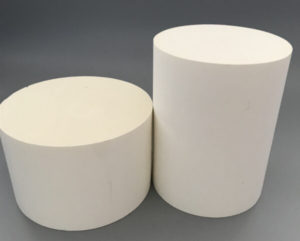
To maintain reliable oxidation performance, we provide ceramic and metallic substrate options depending on installation requirements. Our ceramic substrate, typically cordierite or SiC, provides thermal stability for long-duration on-road operation. The metallic substrate option offers stronger mechanical durability and faster light-off characteristics, supporting equipment exposed to vibration or repeated start-stop cycles. Both substrate types use a honeycomb structure that limits backpressure while preserving sufficient surface area for oxidation reactions. By customizing dimensions and cell densities, we ensure that the diesel oxidation catalytic converter functions consistently across varied exhaust flow rates, enabling uniform CO, HC, and SOF oxidation from light-duty engines to heavy-duty power units.
Conclusion
In summary, Hualian Catalyst ensures that our system responds directly to the question of what emissions are oxidized by the diesel oxidation catalyst by demonstrating clear treatment of carbon monoxide, hydrocarbons, and the soluble organic fraction. These oxidation reactions form the baseline for compliant diesel engines and support the effectiveness of other aftertreatment components. Through a robust substrate design, controlled coating formulation, and adaptable configuration options, we ensure that these emissions are consistently converted into more stable compounds across a range of operating environments.