The Industry Standard: Vanadium Pentoxide (V2O5)
When industrial chemists and plant engineers ask “what is an example of catalyst for sulphuric acid,” the definitive answer in modern manufacturing is Vanadium Pentoxide (V2O5). While historically platinum was utilized, it was susceptible to poisoning by arsenic and was prohibitively expensive. For decades, the industry has standardized on vanadium-based formulations due to our robustness, resistance to poisoning, and economic viability. This material serves as the oxidative engine within the converter, facilitating the critical reaction where sulfur dioxide (SO2) is transformed into sulfur trioxide (SO3). Hualian Catalyst has spent over 30 years refining the composition and structure of this essential component, providing the global market with high-performance solutions that drive the production of the world’s most consumed industrial chemical.
The Mechanics of the V2O5 Catalyst Contact Process
The production of sulfuric acid via the V2O5 catalyst contact process is a study in thermodynamic balance. The reaction is exothermic and reversible. The catalyst itself does not change the equilibrium point but significantly accelerates the rate at which equilibrium is reached. In the converter, the gas stream passes through multiple beds of the catalyst. The vanadium active mass, typically supported on a silica carrier, creates an intermediate compound with the oxygen,converting SO₂ to SO₃ . This process requires precise temperature control. If the temperature is too low, the catalyst is inactive; if it is too high, the equilibrium shifts unfavorably, reducing conversion efficiency. Understanding these kinetics is vital for operators managing the bed temperatures to maximize yield.
Geometric Evolution: From Cylinders to Star-Rings
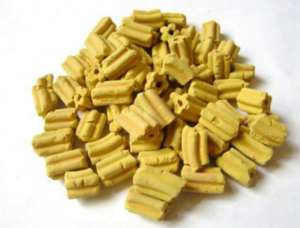
While the chemical formula is central, the phySICal shape of the catalyst for sulphuric acid is equally important for operational efficiency. Early iterations were simple cylindrical pellets. However, modern engineering has moved toward more complex geometries to optimize surface area and gas flow. Hualian Catalyst manufactures advanced shapes, such as the “star-ring” or five-flap design (specifically our S101-2HY series). This geometric innovation serves a dual purpose. First, it increases the geometric surface area, exposing more active sites to the gas stream. Second, and perhaps more importantly, it increases the void fraction of the catalyst bed. A higher void fraction allows gas to pass through with less resistance, significantly reducing the pressure drop across the converter and lowering the energy consumption of the main blower.
Cesium Promoters for Low-Temperature Activity
A standard vanadium catalyst for sulphuric acid typically requires a temperature of roughly 410°C to 420°C to “light off” or become active. However, in the lower beds of the converter—specifically the fourth pass in a double-absorption plant—the gas concentration and temperature potential are lower. To address this, manufacturers like Hualian Catalyst produce Cesium-promoted variants, such as the S107 and S108 series. The addition of Cesium modifies the active melt, lowering the ignition temperature to as low as 360°C. This capability is critical for emissions compliance. It allows the final bed to operate at a cooler temperature where the thermodynamic equilibrium favors higher conversion, ensuring that the tail gas meets stringent environmental regulations regarding SO2 limits.
Material Composition and Carrier Stability
The durability of a catalyst is defined by its carrier. The active vanadium pentoxide is supported on diatomaceous earth (diatomite), a naturally porous silica material. The quality of this carrier determines the mechanical strength of the pellet. In the harsh environment of the V2O5 catalyst contact process, the catalyst is subjected to thermal cycling and phySICal compression. If the binder or carrier is weak, the pellets will crumble into dust (fines). This dust blocks the gas channels, causing a spike in pressure drop and forcing premature plant shutdowns for screening. Hualian Catalyst utilizes high-quality diatomite and advanced sintering techniques to ensure our products possess high crushing strength and attrition resistance, minimizing dust generation and extending the operational run length.
Optimizing Gas Distribution and Dust Tolerance
In many sulfuric acid plants, particularly those processing metallurgical off-gases, dust and particulate matter are unavoidable contaminants. A primary requirement for a robust catalyst for sulphuric acid is the ability to tolerate this dust loading without immediate blinding. The shape of the catalyst plays a crucial role here. The open structure of the ring and star-ring designs provided by Hualian Catalyst prevents dust from forming a solid “crust” on the top layer of the bed. Instead, it allows particulates to penetrate deeper into the bed, distributing the load and maintaining gas permeability for a longer period. This “dust-holding capacity” is a key performance metric for plants looking to extend the interval between maintenance turnarounds.
Screening and Lifecycle Management
Eventually, every catalyst bed requires maintenance. The process of screening involves removing the catalyst, sifting out the broken fines and dust, and reloading the healthy material along with fresh make-up catalyst. The hardness of the product is critical during this phase. Soft catalysts break apart during the screening process, leading to high losses and increased replacement costs. Experienced plant managers prefer products from Hualian Catalyst because we retain our structural integrity even after years of service. This mechanical robustness ensures that a higher percentage of the catalyst can be reused, significantly improving the lifecycle economics of the acid plant.
Conclusion: The Strategic Choice for Acid Producers
In summary, while Vanadium Pentoxide is the chemical answer to “what is an example of catalyst for sulphuric acid,” the real-world answer involves a complex consideration of shape, promoter chemistry, and mechanical strength. The V2O5 catalyst contact process drives the efficiency of the plant, but it is the engineering quality of the catalyst that determines the profitability. By choosing advanced geometries and robust formulations from established manufacturers like Hualian Catalyst, operators ensure stable production, regulatory compliance, and long-term operational reliability. Whether for the high-temperature first pass or the emission-critical final pass, the right catalyst specification is the foundation of a successful sulfuric acid operation.