Selective Catalytic Reduction (SCR) emission control is an established technology used to treat diesel exhaust and help engines meet strict NOx reduction requirements. In our work at Hualian Catalyst, we apply this principle to support customers who already operate mature diesel systems and need dependable after-treatment solutions. SCR emission control relies on injecting a controlled amount of urea solution into the exhaust stream, converting it into ammonia, and allowing the reaction to occur inside the catalyst substrate. As experienced users know, this process is essential in many diesel applications, including mobile equipment and stationary machinery. Our understanding of this system allows us to design catalyst structures that maintain stable performance at a wide range of temperatures while meeting operational goals.
Our View on Industry Practices and the Role of SCR Suppliers
As part of the professional supply chain, we engage with various scr catalyst suppliers in global markets and understand the expectations of customers who work with advanced diesel platforms. These users typically focus on system durability, reaction efficiency, pressure-drop balance, and the ability to adapt to different exhaust layouts. Through continuous project experience, we have seen how SCR emission control links closely with engine calibration, urea dosing performance, and the internal geometry of the catalyst substrate. This is why we emphasize compatibility between catalyst formulation and engine duty cycles. When designing our solutions, we account for material stability, ammonia slip management, and the influence of flow distribution. In practical applications, effective SCR emission control requires more than a chemical reaction—it requires coordinated engineering that ensures predictable conversion across varying load conditions.
Materials and Structure in Diesel SCR Catalyst Engineering
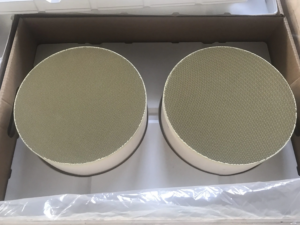
For customers seeking technical clarity, a diesel scr catalyst typically falls into two main categories: Vanadium-based catalysts and molecular-sieve-based catalysts. Both options convert NOx into nitrogen and water through Urea-SCR chemistry, but their operating windows and durability characteristics differ. In our product line, the “SCR Catalyst For Diesel Engines Catalytic Converter” includes formulations suitable for trucks, buses, off-road equipment, and stationary units. We design catalysts with consideration for mechanical strength, temperature adaptability, and pressure-drop performance, ensuring the internal geometry supports stable reaction conditions. Whether customers prioritize wide operating ranges or specific thermal requirements, we work to provide structures and coatings that match their equipment profile. For professional users, these characteristics are integral to maintaining consistent NOx conversion while supporting long-term service reliability.
Conclusion: How SCR Emission Control Fits Into Our Work
SCR emission control is a practical and widely used method for managing NOx emissions in diesel applications. Through our development experience, we have gained a clear understanding of the engineering factors that influence catalytic efficiency, temperature behavior, and long-term stability. By offering diesel SCR products that align with real-world operating conditions, we aim to support customers who rely on proven after-treatment systems. Our approach ensures that SCR emission control remains an effective and reliable component within their diesel engine platforms.