As we work with customers who already understand emission control systems, we focus on solutions that reliably support advanced diesel engine platforms. Our experience with Hualian Catalyst allows us to evaluate why selective catalytic reduction systems have become a practical choice for stable NOx reduction. In our daily engineering practice, we see how a well-matched structure and coating design influence conversion efficiency and long-term operation. When assessing options for NOx treatment, the characteristics of an SCR honeycomb catalyst directly affect pressure drop, heat stability, and catalyst utilization. Through continued development, we have confirmed that a properly formulated selective catalytic reduction catalyst provides the broad temperature performance window that diesel engines require under variable loads.
Why SCR Achieves High NOx Conversion Efficiency
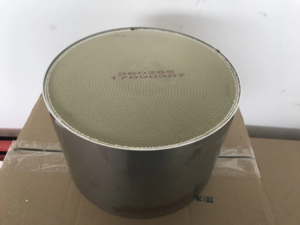
From our technical observations, SCR remains efficient because the reaction path is controllable and adaptable to diesel exhaust conditions. Ammonia-based reduction enables continuous conversion of NOx without altering combustion strategies, which helps maintain engine performance and fuel economy. For mobile and stationary applications, we provide wash-coated solutions using Fe/zeolite, Cu/zeolite, vanadium-based oxides, or Mn-containing oxides, all designed to meet specific exhaust temperatures. The honeycomb structure of our diesel SCR catalyst ensures low pressure drop, which supports fuel efficiency during high-load operation. A high surface area further increases reaction contact, contributing to stable conversion and consistent output. These features enable the SCR design to handle demanding NOx limits while remaining compatible with modern after-treatment configurations.
Supporting Reliability Through Material and Structural Stability
In practice, long-term stability is equally important as conversion efficiency. During our product development, we maintain strict control of ceramic substrate properties to ensure predictable thermal performance. A low thermal expansion coefficient keeps deformation within safe limits during temperature cycling, helping prevent cracking over extended service periods. Good water-absorption consistency also ensures even coating distribution, reducing operational risks in humid or fluctuating environments. Our SCR honeycomb catalyst structure is designed to support durability under vibration and thermal shock, which is essential in heavy-duty diesel applications. Because of this reliable base structure, our selective catalytic reduction catalyst can match Fe-zeolite, Cu-zeolite, or V-based formulations, giving us flexibility to adapt catalyst windows from low-temperature urban driving to higher-temperature industrial settings.
Conclusion: Why SCR Remains the Most Practical NOx Reduction Method
Based on our engineering experience, SCR continues to offer the most balanced solution for diesel NOx control. Its compatibility with different active components, ability to provide a wide temperature window, and stable structural performance make it well suited for customers requiring predictable and efficient emission control. Our work with Hualian Catalyst reinforces this understanding, as we have seen how a carefully designed selective catalytic reduction catalyst and a stable SCR honeycomb catalyst structure can perform reliably across diverse applications. For diesel engines operating under variable loads and strict emission standards, SCR remains the technology that meets both performance expectations and operational requirements.