Diesel engines are powerful but can emit high levels of nitrogen oxides (NOx), which are harmful to the environment. One of the most effective ways to control these emissions is through the use of a selective catalytic reduction catalyst. These catalysts are engineered to interact with NOx in the exhaust, converting it into harmless nitrogen and water. At Hualian Catalyst, we focus on designing high-performance SCR systems that optimize emission control while maintaining engine efficiency.
Understanding the Chemistry of SCR Catalysts
The core function of a selective catalytic reduction catalyst involves chemical reactions that reduce NOx in exhaust gases. There are two main reaction pathways: Standard SCR, which occurs when NO2 is low, and Fast SCR, which happens in the presence of both NO and NO2. For example, standard SCR converts NO into nitrogen and water using ammonia, while fast SCR accelerates the reaction when NO2 is present. Hualian Catalyst develops SCR catalysts with precise control over cell density, surface area, and thermal properties to ensure these reactions occur efficiently in real-world diesel engines.
Types of SCR Catalysts and Applications
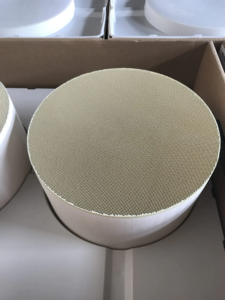
At Hualian Catalyst, our products include a variety of SCR types to suit different operating conditions. These include Fe/zeolite catalysts capable of withstanding high temperatures up to 620°C, Cu/zeolite catalysts for moderate-temperature applications, vanadium-based metal oxides optimized for 230–470°C, and manganese-containing oxide catalysts for lower-temperature settings. We offer both square and cylindrical honeycomb structures, with cell densities ranging from 40 to 600 CPSI, allowing engineers to select the optimal design based on engine type and exhaust composition.
Selecting SCR Catalyst Manufacturers
Choosing the right SCR catalyst manufacturers is critical for achieving reliable NOx reduction and long-term durability. At Hualian Catalyst, we prioritize consistent quality, low pressure drop, and excellent heat and water absorption characteristics. Our team works closely with clients to provide customized solutions, including tailored honeycomb sizes and optional NH3-slip catalysts, ensuring that each system meets stringent emission standards while maintaining engine performance.
Conclusion
In modern diesel engines, a selective catalytic reduction catalyst is essential for controlling NOx emissions effectively. By partnering with experienced SCR catalyst manufacturers like Hualian Catalyst, operators can achieve high conversion efficiency, thermal resilience, and adaptability across a range of engine types. At Hualian Catalyst, our team is committed to delivering advanced SCR solutions, combining robust materials with precise engineering to support sustainable and compliant diesel operation.