How to Add a Diesel Oxidation Catalyst to a Generator? Step-by-Step Guide from Hualian Catalyst
For industrial facilities, data centers, and remote operations that rely on diesel generators as backup or primary power sources, meeting emission standards like Euro 6 and China VI is both a regulatory requirement and a commitment to sustainability. A diesel oxidation catalyst (DOC) is the most reliable solution for reducing harmful pollutants—carbon monoxide (CO) and hydrocarbons (HC)—from generator exhaust. Yet many 2B clients face a practical challenge: How do you properly add a DOC to a generator without disrupting operations or compromising performance? As a leading provider of diesel oxidation catalytic converter and aftertreatment diesel oxidation catalyst solutions, Hualian Catalyst draws on 30+ years of expertise in industrial emission control to deliver a safety-focused, generator-specific guide—ensuring compliance, efficiency, and minimal downtime.
Pre-Installation Preparation: Choose the Right Aftertreatment Diesel Oxidation Catalyst
Proper preparation is the foundation of a successful installation, starting with selecting a DOC tailored to your generator’s specs:
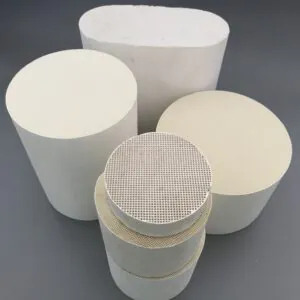
Match Generator Capacity & Emission Needs: Hualian’s aftertreatment diesel oxidation catalyst is customizable for generators ranging from 10–2000 kW. Calculate your generator’s exhaust flow rate (L/min) and pollutant output (CO/HC levels) to select the right DOC size. For example, a 100 kW generator typically requires a DOC with a 200–300 CPSI (cells per square inch) honeycomb substrate—Hualian’s SiC (silicon carbide) or cordierite substrates are engineered to withstand generator exhaust temperatures (250–600°C) and heavy-duty cycling.
Verify Compliance & Performance: Ensure the DOC meets Euro 6/China VI standards (requiring 90%+ CO/HC conversion efficiency). Hualian’s diesel oxidation catalytic converter exceeds this benchmark with 95%+ conversion, backed by ISO 9001/IATF 16949 certifications to simplify regulatory audits.
Inspect the Generator’s Exhaust System: Check for leaks, corrosion, or soot buildup in the exhaust pipe. Repair damaged sections and clean out debris—clogs or leaks will reduce DOC efficiency and risk premature failure.
Safety & Equipment Prep: Mitigate Risks for Generator Installations
Generator exhaust systems operate at extreme temperatures, so safety and equipment readiness are non-negotiable:
Prioritize Safety: Turn off the generator and allow the exhaust system to cool completely (2–4 hours) to avoid burns. Wear heat-resistant gloves, safety goggles, and a dust mask when handling the DOC (to protect against substrate dust).
Gather Essential Tools: Prepare wrenches, flanges, high-temperature gaskets, exhaust sealant, and a pipe cutter (if adjusting exhaust length). Hualian’s DOC kits include optional custom flanges that match standard generator exhaust ports (2–6 inch diameter), eliminating the need for custom fabrication.
Clear & Prepare the Installation Space: Ensure the DOC mounting area has adequate ventilation (to dissipate heat) and is free from flammable materials. Generators often have compact engine bays—Hualian’s low-profile DOC designs fit tight spaces without modifying core generator components (e.g., turbochargers or fuel lines).
Core Installation Steps: Mount the Diesel Oxidation Catalytic Converter
Follow these generator-specific steps for a secure, leak-free installation:
Step 1: Position the DOC Correctly: Install the DOC 1–3 feet downstream from the turbocharger (or exhaust manifold) to ensure the exhaust reaches the 250°C+ temperature needed for DOC activation. Hualian’s DOCs feature clear “IN”/“OUT” markings—align “IN” with the direction of exhaust flow.
Step 2: Secure with Flanges & Gaskets: Use the provided flanges and high-temperature gaskets to connect the DOC to the exhaust pipe. Tighten bolts evenly to 30–40 N·m torque to prevent leaks (air leaks reduce conversion efficiency and can damage the DOC). Apply exhaust sealant to gasket edges for extra protection against high-temperature airflow.
Step 3: Accommodate Thermal Expansion & Vibration: Generators vibrate heavily during operation—use flexible exhaust connectors (included in Hualian’s kits) to attach the DOC. This allows for thermal expansion/contraction and absorbs vibration, preventing cracking of the ceramic substrate (a common issue with rigid mounts).
Step 4: Verify Alignment: Install the DOC straight (not angled) to ensure uniform gas flow. Hualian’s 200–300 CPSI honeycomb substrate relies on even flow to maximize pollutant conversion—misalignment causes hotspots and shortens service life.
Post-Installation Testing: Validate Performance for Generator Use
After installation, testing ensures the DOC works seamlessly with your generator:
Warm Up & Inspect for Leaks: Start the generator, idle for 10 minutes, then ramp up to 50% load for 20 minutes (to reach operating temperature). Check for leaks using soapy water (bubbles indicate gaps) or a smoke tester, and listen for abnormal noises (rattling may signal loose mounts).
Measure Conversion Efficiency: Use a portable emission analyzer to test CO/HC levels before and after the DOC. Hualian’s diesel oxidation catalytic converter should reduce pollutants by 95%+—if efficiency is low, recheck for leaks or confirm the DOC is properly sized for your generator.
Monitor Pressure Differential: Install pressure gauges before and after the DOC—differentials above 5 kPa indicate clogging. Clean the exhaust pipe or verify DOC sizing to resolve the issue.
Long-Term Maintenance: Extend DOC Lifespan for Generators
Proper maintenance ensures your aftertreatment diesel oxidation catalyst serves 8,000+ operating hours (Hualian’s average lifespan):
Regular Cleaning: Remove the DOC every 12 months (or 1,000 operating hours) and clean ash/debris with high-pressure air (blow in the reverse flow direction). For heavy-use generators (e.g., data center backups), Hualian offers professional cleaning services to restore substrate flow.
Use Quality Fuel & Oil: Low-grade diesel or oil with high sulfur content poisons the DOC’s Pt/Pd catalytic coating. Hualian recommends ultra-low-sulfur diesel (ULSD) and CJ-4 grade oil to extend DOC life by 30%.
Quarterly Inspections: Check for substrate cracking, gasket wear, or exhaust leaks. Hualian’s 24/7 technical support team can troubleshoot issues—early intervention avoids costly generator downtime.
Trust Hualian Catalyst for Generator-Specific DOC Solutions
Adding a diesel oxidation catalyst to a generator doesn’t have to be complex—with the right aftertreatment diesel oxidation catalyst, tailored preparation, and step-by-step guidance, you can achieve compliance without disrupting power reliability. Hualian Catalyst’s diesel oxidation catalytic converter is engineered specifically for generator applications: customizable sizes, durable SiC/cordierite substrates, and 95%+ pollutant conversion, backed by 5,000+ global 2B client partnerships and 278,000+ successful projects.
Whether you’re retrofitting an existing generator or integrating a DOC into a new system, Hualian delivers end-to-end support: custom DOC design, pre-fitted installation kits, and fast delivery (15–20 working days for custom orders). For generator operators seeking reliable, compliant emission control, Hualian isn’t just a supplier—it’s a partner that understands your need for uninterrupted power and regulatory peace of mind. When adding a DOC to your generator, trust the experts who specialize in industrial power solutions: Hualian Catalyst delivers performance that lasts as long as your generator doe