How to Test a Diesel Oxidation Catalyst? Practical Methods for 2B Clients
For fleet managers, industrial operators, and generator owners, the proper functioning of a diesel oxidation catalyst (DOC) is not only a mandatory requirement for meeting Euro 6/China VI emission standards but also directly impacts operational costs and equipment stability. Over time, DOCs may experience performance degradation due to soot buildup, catalyst poisoning, or thermal stress. Failure to test and address these issues promptly can result in costly compliance fines and unplanned equipment downtime. But for 2B clients, how can you accurately test a doc diesel oxidation catalyst without specialized laboratory equipment? As a leading provider of diesel exhaust catalyst solutions, Hualian Catalyst leverages 30+ years of industrial expertise to deliver a step-by-step guide tailored to 2B needs, combining actionable testing methods with insights into product performance and maintenance.
DOC Diesel Oxidation Catalyst: Pre-Testing Preparation & Safety
Before testing, proper preparation ensures accuracy and safety—especially for high-temperature diesel exhaust systems:
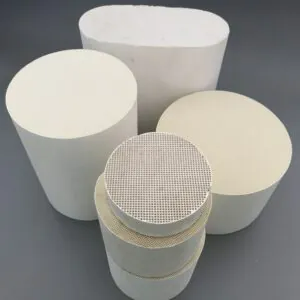
Safety First: Turn off the equipment (truck, generator, or industrial machine) and let the exhaust system cool for 2–4 hours to avoid burns. Wear heat-resistant gloves, safety goggles, and a dust mask. For Hualian’s DOC diesel oxidation catalyst, which features a robust SiC (silicon carbide) or cordierite substrate (200–300 CPSI), avoid hitting or dropping the catalyst to prevent substrate damage.
Gather Essential Tools: Prepare a portable emission analyzer (to measure CO/HC levels), pressure gauges (to check backpressure), a non-contact infrared thermometer, and a smoke tester. Hualian’s DOC test kits include optional compatible gauges for seamless testing—designed to match their diesel exhaust catalyst’s standard ports.
Inspect the DOC & Exhaust System: Visually check the DOC for physical damage (cracks, dents) or exhaust leaks (pay close attention to flanges and gaskets). Clear debris from the exhaust pipe to ensure unobstructed gas flow—clogs can skew test results. Hualian’s DOCs feature a durable honeycomb structure with ≥120 N/pellet crush strength, minimizing the risk of physical damage during inspection.
Emission Efficiency Test: Verify CO/HC Conversion (Core Test for Compliance)
The primary function of a DOC is to convert harmful CO (carbon monoxide) and HC (hydrocarbons) into CO₂ and water—this test measures how well it’s performing:
Step 1: Locate Test Points: Drill two small holes (1/4 inch diameter) in the exhaust pipe—one 6–12 inches upstream (before) the DOC, and one 6–12 inches downstream (after) the DOC. These points will measure pollutant levels before and after conversion.
Step 2: Measure Baseline & Post-DOC Levels: Start the equipment, run it at 50% load (to reach operating temperature: 250–600°C, the optimal range for Hualian’s diesel exhaust catalyst), and insert the emission analyzer probes into the test holes. Record CO/HC readings for both points.
Step 3: Calculate Conversion Efficiency: Use the formula: (Upstream Level – Downstream Level) / Upstream Level × 100%. Hualian’s doc diesel oxidation catalyst should deliver ≥95% CO/HC conversion efficiency (exceeding Euro 6’s 90% requirement). If efficiency drops below 85%, the DOC may need cleaning or replacement.
Pro Tip: Hualian’s DOCs use Pt/Pd catalytic coatings optimized for diesel exhaust, ensuring consistent conversion even in variable load conditions—so test results should remain stable across different operating modes.
Pressure Differential Test: Check for Clogging
Clogging from soot or ash is the most common DOC issue—this test identifies restrictions that reduce airflow and efficiency:
Step 1: Install Pressure Gauges: Attach pressure gauges to the upstream and downstream test holes (used in the emission test). Ensure gauges are rated for high temperatures (≥600°C) to match exhaust conditions.
Step 2: Measure Pressure at Operating Load: Run the equipment at 75% load (typical for industrial use) and record both pressure readings. Calculate the differential: Upstream Pressure – Downstream Pressure.
Step 3: Interpret Results: For Hualian’s DOCs (200–300 CPSI honeycomb substrate), a pressure differential ≤5 kPa is normal. Readings above 8 kPa indicate significant clogging—use high-pressure air (blown in reverse flow) to clean the substrate, or rely on Hualian’s professional cleaning services for heavy buildup.
Hualian’s diesel exhaust catalyst is engineered with a low-backpressure design—its uniform honeycomb structure minimizes ash accumulation, extending the time between cleanings.
Temperature Rise Test: Validate Catalytic Activity
A functional DOC generates heat during the oxidation reaction—this test confirms the catalyst is actively converting pollutants:
Step 1: Measure Temperatures: Use a non-contact infrared thermometer to record exhaust temperatures at the upstream and downstream test points (equipment running at 50% load).
Step 2: Check for Temperature Increase: A healthy DOC will show a 10–30°C temperature rise downstream. For example, if upstream temperature is 300°C, downstream should be 310–330°C. No temperature rise indicates the catalyst is inactive (likely due to poisoning or coating degradation).
Step 3: Troubleshoot Inactivity: If temperatures don’t rise, inspect fuel/oil quality (high sulfur content poisons Pt/Pd coatings). Hualian’s doc diesel oxidation catalyst uses high-purity catalytic coatings (99%+ Pt/Pd) and anti-poisoning additives, reducing the risk of premature inactivity—their technical team can help identify root causes.
Post-Test: Interpret Results & Maintain Your Diesel Exhaust Catalyst
After testing, use these benchmarks to assess your DOC’s condition (based on Hualian’s product standards):
Pass: ≥95% CO/HC conversion, ≤5 kPa pressure differential, 10–30°C temperature rise. Continue with regular maintenance (quarterly inspections, annual cleaning).
Marginal: 85–94% conversion, 6–8 kPa differential, 5–9°C temperature rise. Clean the DOC immediately and retest—Hualian’s low-profile DOC designs make cleaning accessible without removing core equipment.
Fail: <85% conversion, >8 kPa differential, no temperature rise. Replace the DOC with a compliant model—Hualian’s diesel exhaust catalyst is available in custom sizes (10–2000 kW equipment) with 15–20 working day delivery.
Why Hualian Catalyst’s DOC Diesel Oxidation Catalyst Stands Up to Testing
Hualian’s doc diesel oxidation catalyst is engineered for reliability and easy testing, with features that ensure consistent performance:
Robust Substrate Materials: SiC or cordierite substrates (200–300 CPSI) resist thermal shock and clogging, maintaining pressure differential and temperature rise even after 8,000+ operating hours.
High-Purity Catalytic Coatings: 99%+ Pt/Pd coatings deliver ≥95% conversion efficiency, making emission tests straightforward to pass.
ISO-Certified Quality: Backed by ISO 9001/IATF 16949 certifications, Hualian’s DOCs are trusted by 5,000+ global 2B clients for 278,000+ projects—ensuring test results align with regulatory requirements.
Hualian also offers 24/7 technical support for testing troubleshooting: if your DOC fails a test, their team can help diagnose issues (e.g., exhaust leaks, fuel quality) and recommend solutions, from cleaning to custom replacement.
Trust Hualian Catalyst for Reliable DOC Testing & Performance
Testing a diesel oxidation catalyst doesn’t require complex equipment—with scientific methods and a high-quality doc diesel oxidation catalyst from Hualian, you can easily ensure compliance, reduce downtime, and extend equipment life. Whether you’re testing fleet vehicles, industrial generators, or manufacturing machinery, Hualian’s diesel exhaust catalyst delivers consistent performance that stands up to regular testing, serving as a reliable backbone for your business operations.
For 2B clients, a dependable DOC is never just a compliance tool—it’s a core asset for cost reduction and efficiency improvement. With 30+ years of deep expertise in emission control, Hualian doesn’t just provide Euro 6/China VI-compliant high-quality catalysts; we offer full-lifecycle technical support—from testing guidance and troubleshooting to cleaning solutions and customized replacements—supporting your operations every step of the way. Choosing Hualian Catalyst means simpler DOC testing, more stable performance, and a hassle-free partnership.