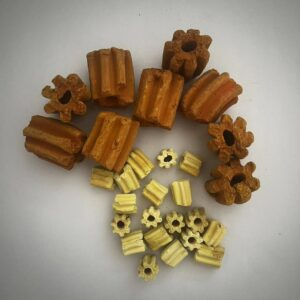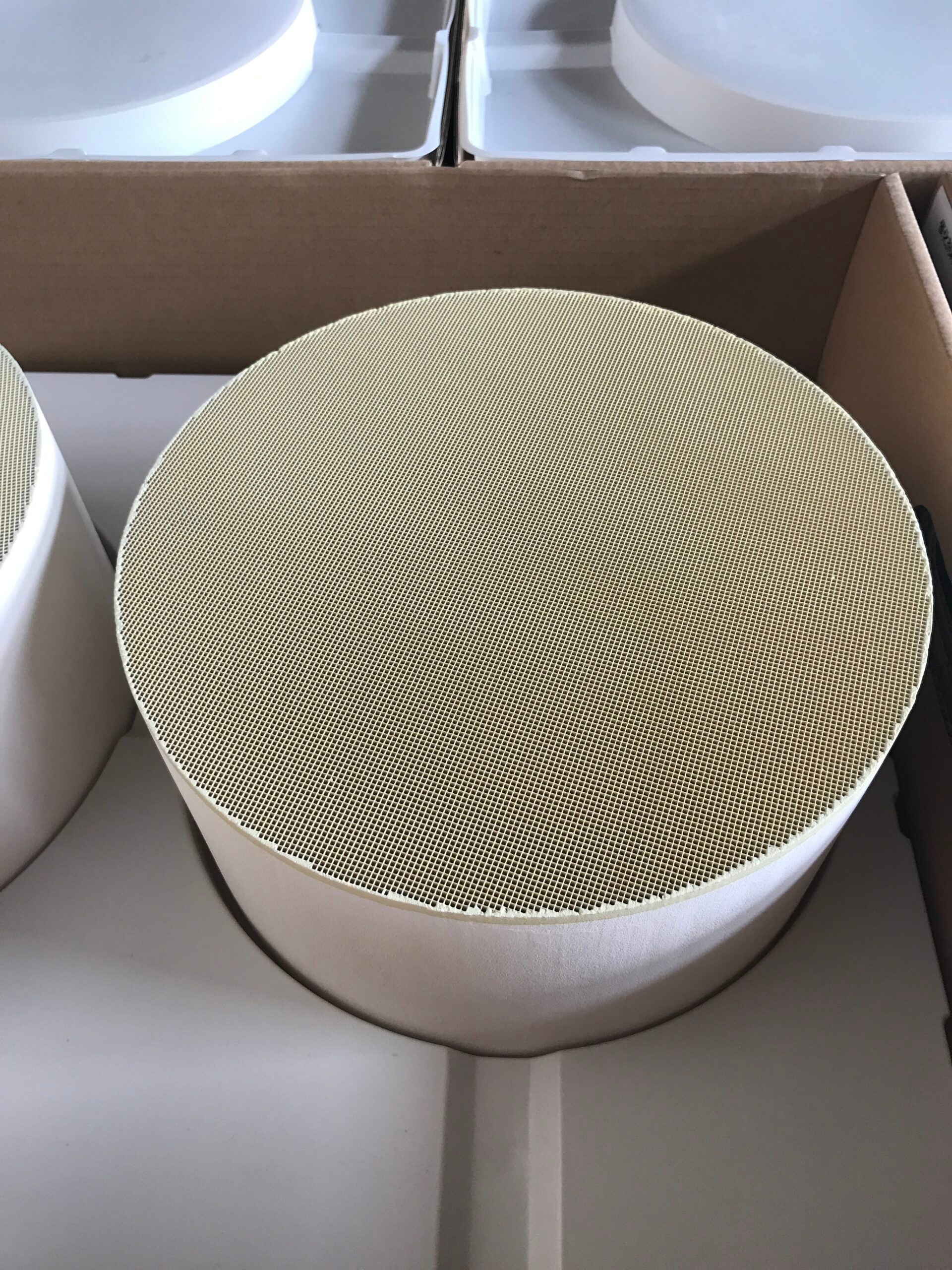
The word structure can mean the carrier material, the shape of an individual catalyst piece, or the way a reactor bed is arranged. Each matters for a different reason. A gas-phase stream, a liquid feed, and a mixture of reactants place unlike demands on contact and flow.
Selecting hydrogenation catalysts therefore begins by naming the actual reaction and phase conditions, then examining whether the active chemistry and physical form suit the vessel in which they will operate.
Define the Reaction Before Comparing Shapes
Hydrogenation adds hydrogen in reactions that can have different feedstocks and product targets. The conditions for benzene-to-cyclohexane conversion, for example, cannot be assumed to match those for treating a petroleum oil.
Reactant phase, hydrogen supply, impurities, temperature, and pressure govern what reaches the catalyst. A cylindrical piece with a stated surface area is only one part of that arrangement. Without the process definition, a shape comparison has no stable performance basis.
Gas-phase treatment adds its own questions about how a stream moves through a reactor and contacts an active surface. Yet the list of applications supplied for one hydrogenation product includes liquid-phase desulfurization as well as several oil-treatment duties.
It would be inaccurate to describe every listed use as gas-phase. The category in the title is a comparison of structure choices across processes, not a claim that one set of reactor conditions applies to them all. Phase identification has to come before selecting the bed design.
Flow resistance, bed loading, and contact opportunity are linked. Smaller pieces may expose more external area per volume, while their packed arrangement can also influence pressure loss. Larger or stronger pieces may respond differently to handling and load.
These are engineering relationships, not rankings of hydrogenation catalysts without test data. A meaningful comparison states the feed, required conversion or purification task, flow, and mechanical conditions together with the proposed catalyst form.
Separate Active Chemistry From the Carrier
The carrier provides physical support and surface on which the active component is distributed. The active chemistry determines what reaction the material is intended to promote.
In our HL-1HC product at Hualian Catalyst, alumina is the carrier and nickel is the main active component; the listed composition is NiO-Al₂O₃. Stating both roles avoids treating surface area as a stand-in for hydrogenation activity or assuming that all alumina-supported materials serve the same feed.
Our listed HL-1HC applications include aviation-kerosene dearomatization, benzene-to-cyclohexane hydrogenation, phenol-to-cyclohexanol hydrotreating, industrial crude-hexane hydrofining, and hydrogenation of white oil and lube oil. The same product information also names liquid-phase desulfurization and sulfur protection in catalytic reforming.
This breadth identifies candidate duties, not a single shared operating recipe. Each application still needs its own feed specification and acceptance test before a catalyst loading is fixed.
The distinction matters when comparing hydrogenation catalysis with a generic gas-cleaning catalyst. One may use hydrogen as a reactant to change an organic molecule, while another gas-phase task may aim to remove a contaminant by a different chemistry.
Similar reactor housings do not make the active materials substitutes. The first technical decision is thus the reaction family; structure is evaluated after the chemistry can plausibly serve the required conversion.
In hydrogenation catalysis, a chemically suitable nickel material can still face an unsuitable flow or handling environment, and a mechanically convenient bed can still be wrong for the feed. Those are different failure paths. Keeping the activity test beside a physical loading assessment makes it clear whether the open question concerns chemistry, reactor structure, or both.
Use Physical Data to Plan Loading and Service
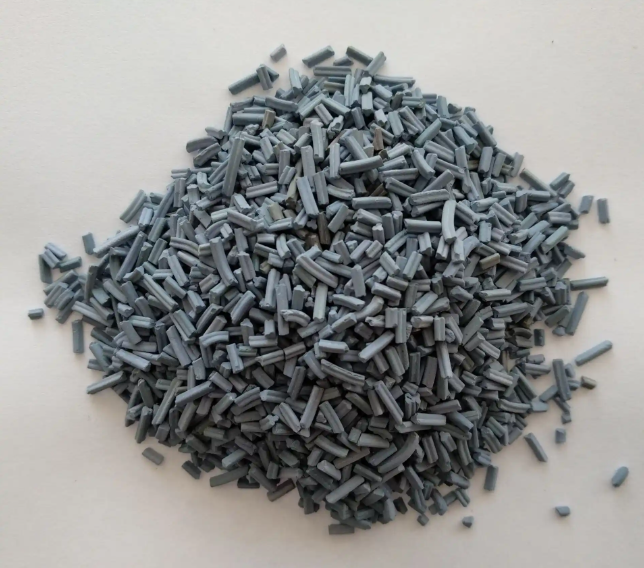
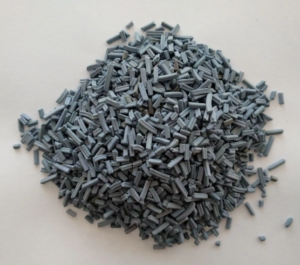
HL-1HC is listed as a black cylindrical catalyst with bulk density of 0.80–0.90 kg/L, surface area of 80–180 m²/g, and crushing strength of at least 50 N/cm. Bulk density helps estimate the mass associated with a given bed volume.
Surface area describes one physical opportunity for contact, while crushing strength describes resistance to mechanical load under a stated test. None of these numbers is a conversion guarantee for a new feed.
In a packed bed, physical dimensions and strength affect loading, settlement, and the risk of broken pieces changing the flow route. The supplied values are useful for early vessel planning, but a complete design also needs the piece dimensions, bed geometry, feed conditions, and an application-specific pressure-loss assessment.
A numerical surface area cannot replace that work. For hydrogenation catalysts, mechanical suitability and chemical suitability need to be checked as separate requirements that meet in the same reactor.
The product information states that HL-1HC can be reused after regeneration. That offers a maintenance path to discuss if performance declines, but the cause of decline determines whether regeneration is appropriate and what recovery can be expected.
Fouling, contaminants, and operating changes are not all the same problem. Comparing activity before and after treatment under like feed conditions is more useful than treating reuse as automatic.
We would assess an HL-1HC inquiry from the named reaction outward: feed and phase, desired product or impurity removal, reactor dimensions and flow, then the physical data of the cylindrical nickel-on-alumina material.
The outcome is a catalyst choice supported by process conditions, not by the fact that two applications both use the word hydrogenation. In hydrogenation catalysis, structure earns its role when the selected chemistry can be operated and maintained in that specific vessel.