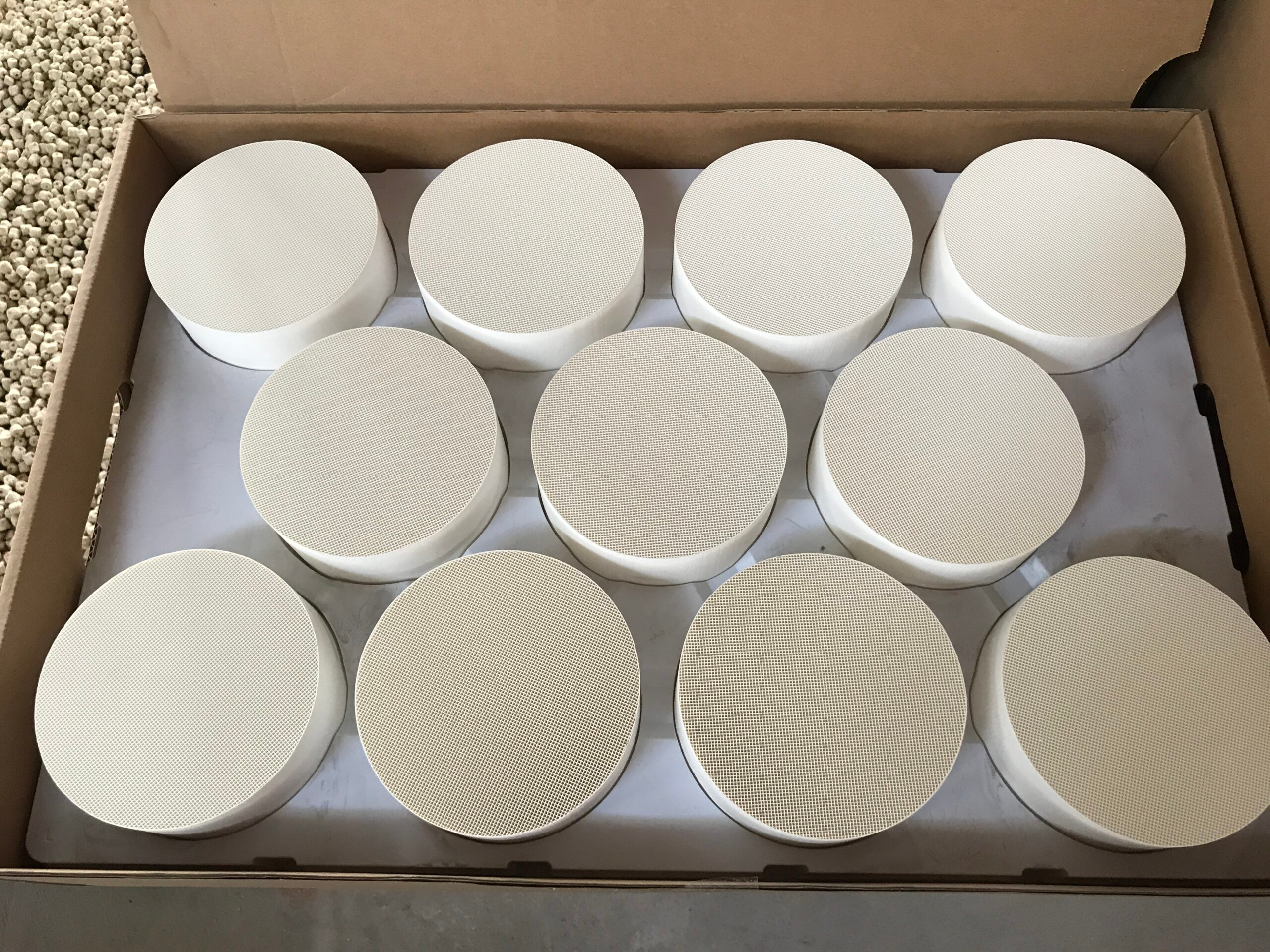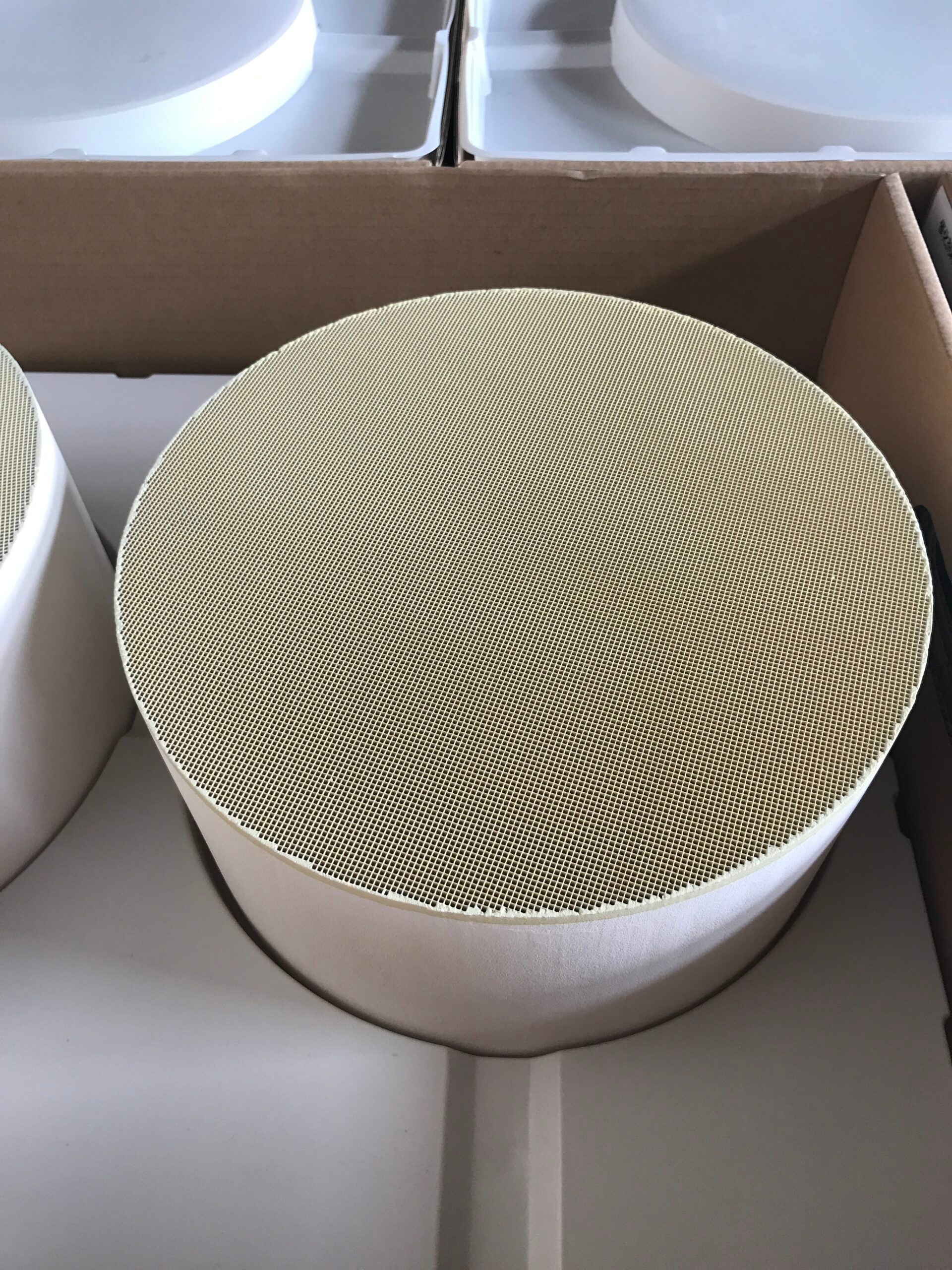
Pressure loss across a sulfuric acid converter bed matters because process gas has to pass through enough active material for SO₂ oxidation without imposing an unexamined flow penalty. Catalyst shape is part of that balance.
A bed of shaped pieces has open routes between pieces as well as active surfaces that the gas can reach. Geometry affects those routes, while temperature and chemistry determine whether the sulfuric acid catalyst can perform the intended SO₂-to-SO₃ conversion in that bed.
Separate Bed Flow From Catalytic Activity
The contact-process reaction converts SO₂ to SO₃ over a V₂O₅-based material. Bed pressure drop is a flow measurement, not a direct measure of conversion. It changes with gas rate, bed depth, packing, piece geometry, and bed condition.
A lower pressure reading alone cannot show that the target SO₂ outlet has been achieved; a high conversion result alone cannot show that the gas-moving duty is acceptable. Both belong in the converter design record.
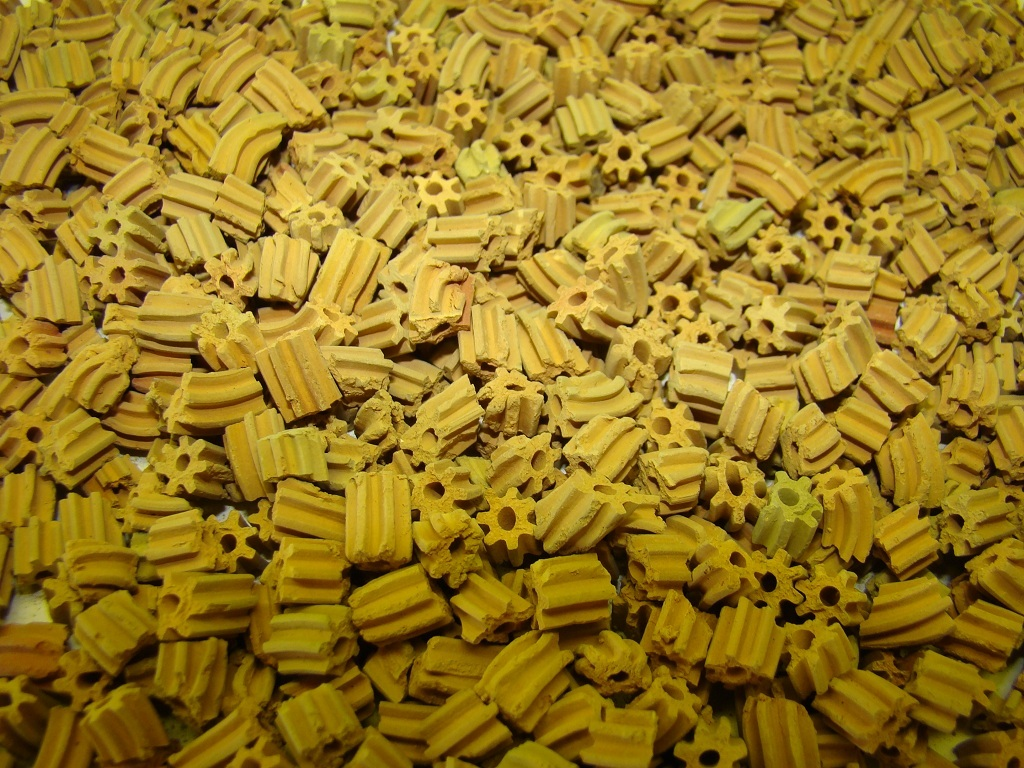
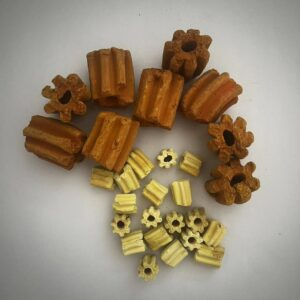
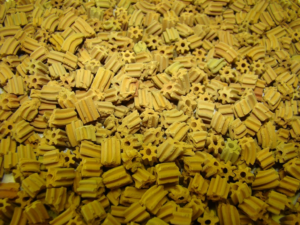
Shape affects how pieces pack and how gas moves through the spaces between them. A special daisy form differs from a simple solid cylinder in external contour, which can change available flow passages and accessible surface.
Before a special-daisy profile can be credited with lower pressure loss, the two shapes need to be run at matched bed depth and gas rate; the current listings give geometry, not that comparison. Treating geometry as a design variable is sound, but declaring a percentage advantage without a matched test would exceed the evidence.
Bed condition is another variable. Loading practice, settling, deposits, or broken pieces can alter the flow path after installation. A useful baseline records pressure at an identified gas flow and temperature after loading, then follows changes over operation.
If pressure rises, the cause may lie in the bed’s physical condition rather than in the catalyst formulation’s oxidation activity. The two diagnoses need related but separate measurements.
A geometry comparison becomes transferable only when bed depth, gas rate, and temperature accompany the pressure figure. Without that context, a result from one converter may describe its loading and flow more than the intrinsic difference between catalyst shapes.
Read the Special-Daisy Grade in Its Own Range
We use Hualian Catalyst V201-M as the concrete geometry example: this sulphuric acid catalyst has an 11 mm special-daisy form and K promotion. It lists a 360°C ignition temperature, 400–630°C continuous operating range, and 650°C thermal stability.
These numbers describe the stated grade and its temperature duty. They do not quantify pressure drop across a particular converter bed. The grade’s shape belongs in the same engineering discussion as the actual packing depth and process-gas flow.
The 11 mm dimension gives a concrete starting point for a loading plan, but it does not reveal all void space in an installed bed. Vessel diameter, distribution hardware, and how the pieces settle influence the route the gas takes.
A sulfuric acid catalyst study can use the listed geometry to design a comparison, then measure flow resistance under the intended conditions. That is different from assuming that a distinctive profile guarantees a fixed pressure-loss reduction.
K promotion and the stated ignition and continuous-operation temperatures concern catalytic behavior, while the special-daisy profile concerns physical flow and contact. The two sets of properties meet in one bed but answer different questions.
A grade selected for a workable inlet temperature still needs acceptable pressure loss; a shape that suits flow still needs the activity required at that bed’s temperature. Keeping those measurements separate prevents a favourable result in one from standing in for the other.
Match the Other Grades to Bed Conditions
V208-M is promoted with Cs and K, has a listed ignition temperature of 340°C, and operates continuously within a stated range of 400–630°C. It is particularly suitable for Bed 3, where the process gas contains significant amounts of SO₃. V212-M is Cs-promoted, has a listed ignition temperature of 310°C, and operates continuously within a stated range of 370–630°C. It is intended for applications requiring lower operating temperatures or reduced SO₂ emissions, subject to the converter’s actual operating conditions.
All three grades list bulk density of 0.38–0.43 kg/L. That shared density range helps compare loading mass for a proposed bed volume, but it does not mean their activity or pressure-loss behavior is identical.
For a lower-temperature location, the V212-M ignition figure calls for a different review from V201-M’s stated 360°C value. Bed 3 positioning makes V208-M a candidate for that part of a converter, but its full duty still needs the plant’s temperature and gas data.
Neither grade’s listing supplies a pressure-drop figure for the planned bed. Geometry, loading arrangement, and operating flow must be evaluated alongside the grade’s temperature purpose.
We would compare the sulfuric acid catalyst options on two coordinated sheets: one for SO₂ conversion and temperature conditions, another for bed geometry, loading, and pressure loss. The available source facts specify the models’ promoters, selected temperature data, common bulk density, and V201-M’s special-daisy size.
They leave plant-specific flow resistance to be measured or calculated for the proposed converter. That boundary keeps the comparison useful without turning a product dimension into an unsupported operating guarantee.
A converter decision joins those sheets at each bed’s actual duty. V201-M’s geometry can be considered against pressure loss, while V208-M and V212-M are assessed for their stated bed or temperature roles. The selected sulphuric acid catalyst must fit both the oxidation conditions and the flow conditions established for that converter.