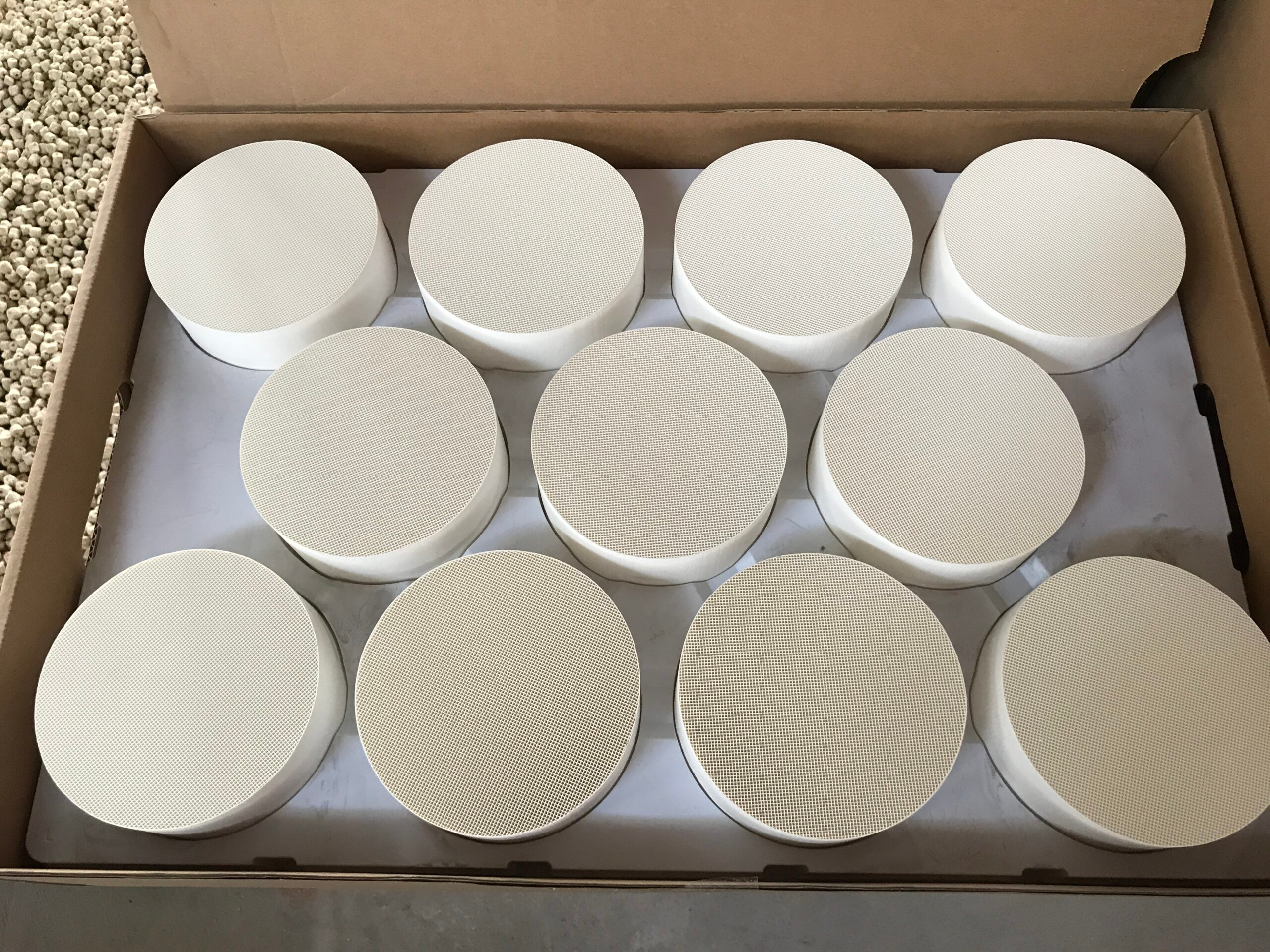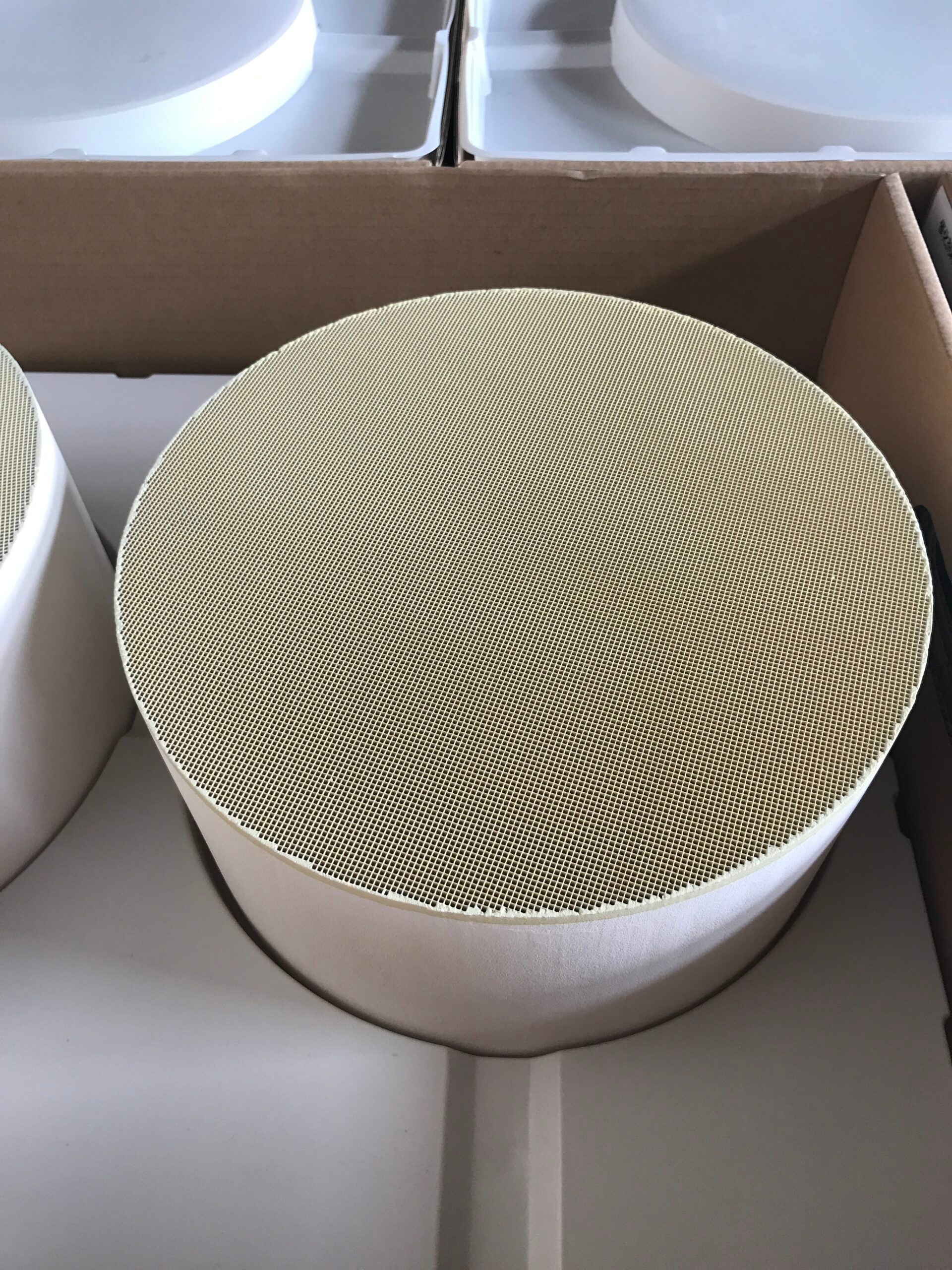
In the sulfuric acid contact process, the useful task is specific: convert sulfur dioxide to sulfur trioxide as a gas stream passes through a catalytic bed. A catalyst described as highly active is valuable only if it continues to promote that reaction under the converter‘s real temperature and feed conditions.
The vanadium pentoxide catalyst is therefore best understood by answering three connected questions: Where does the oxidation occur? How does the bed behave during continuous operation? What changes as the catalyst ages?
Start With the SO₂ Oxidation Duty
V₂O₅ is used to promote oxidation of SO₂ to SO₃. The gas must reach accessible active material, and the bed must give the reaction enough contact under the chosen flow conditions.
Conversion is not a property of the chemical name alone; inlet composition, temperature, gas distribution, and bed condition also matter. In a large fixed-bed reactor, those conditions can vary between the entry and exit of a bed, so a single temperature reading cannot describe the whole catalytic duty.
The contact process is a continuous operation rather than a brief laboratory exposure. Gas flow, heat release, and the target SO₂ outlet all shape how a V₂O₅ catalyst is assessed. A quoted activity claim is meaningful when the feed gas, temperature, and conversion criteria are stated.
Without those details, two catalysts described as highly active may have been measured under different conditions. The useful comparison is a matched process result, not a qualitative claim from a catalogue.
Industrial application also defines the limits of the discussion. V₂O₅ in this article concerns oxidation of SO₂ in sulfuric acid production. Its role should not be confused with the ammonia-fed NOx reduction in diesel SCR systems, even though vanadium can appear in both applications.
The reactants, process arrangement, and performance measures differ. We present the Hualian Catalyst vanadium pentoxide catalyst for this contact-process oxidation duty, without carrying its claims into an unrelated exhaust application.
Read the Temperature Window as an Operating Range
A catalyst bed has to start reacting at a workable temperature and remain effective as the process heats it. Too little heat can leave conversion limited, while excessive temperature or repeated excursions may accelerate loss of useful activity.
The specified temperature window therefore represents a balance between reaction rate and material durability, not merely the maximum temperature the catalyst can withstand. Bed-by-bed temperature measurements help reveal where the intended reaction takes place and where a separate thermal concern begins.
The V₂O₅ category data presents this catalyst as a high-activity oxidation catalyst for the contact process. It also lists high thermal stability and suitability for continuous high-temperature service. It also highlights high conversion efficiency and resistance to thermal degradation and poisoning.
These category properties do not establish a single numerical operating window for every grade. A converter specification still needs the relevant product’s temperature limits and test conditions before performance can be tied to a particular bed.
Thermal stability does not mean that temperature ceases to matter. An oxidation bed can see a different inlet temperature after a process change, and heat generated by reaction can change conditions deeper in the bed.
The location of a hot zone, the duration of an excursion, and the feed entering that zone must all be included in an evaluation of a vanadium pentoxide catalyst. A product may be suitable for continuous high-temperature operation while still requiring boundaries for its particular formulation and converter arrangement.
Connect Activity to Service Life and Maintenance
Long service life depends on more than initial activity. Feed contaminants, thermal history, and changes to flow distribution can alter what reaches the active material over time.
The category information identifies resistance to poisoning and thermal degradation, but it does not eliminate either risk. When conversion changes, compare present operation with earlier measurements at similar feed and temperature conditions. This gives a sounder diagnosis than attributing every change to permanent catalyst failure.
Large fixed-bed reactors also place physical demands on a V₂O₅ catalyst. The bed must be loaded and operated so gas can reach the catalyst across its cross-section. Pressure and temperature must also remain manageable.
Bed depth, pressure loss, and replacement interval depend on the proposed plant and selected grade; none is specified as a universal number in the category facts. Operating data for that combination are therefore needed before the physical bed design can be judged. The catalytic reaction and the bed construction cannot be evaluated independently.
Our category notes that catalysts can be regenerated through specific treatments. Regeneration is an option to investigate after the cause of declining performance is known. It is not a guarantee that every loss mechanism is reversible.
The appropriate treatment and the expected recovery depend on the formulation and operating history. If contaminants or temperature damage are suspected, the esvidence needs to be reviewed before deciding whether treatment, operating correction, or replacement is justified.
An industrial V₂O₅ specification is complete when the oxidation duty, feed composition, bed temperatures, flow conditions, and service history are documented together. We can discuss our catalyst category against those inputs and identify the grade information needed for the proposed converter.
The next decision then depends on matched operating data for the SO₂-to-SO₃ duty, with activity and long-term condition examined on the same basis.