An auto exhaust catalyst is an essential component in modern vehicle emission control systems. It helps convert harmful compounds in engine exhaust into less harmful substances before they are released into the atmosphere. Different catalyst technologies target different pollutants, and their performance depends on engine type, exhaust temperature, substrate structure, and catalyst formulation.
For vehicle manufacturers, parts suppliers, and emission-control system developers, understanding these differences is important when selecting a suitable solution. Although catalytic converters may look similar from the outside, their internal structures and chemical functions can vary significantly.
How Does an Automotive Exhaust Catalyst Work?
An automotive exhaust catalyst uses a coated substrate to promote chemical reactions without being consumed in the process. As exhaust gas passes through the catalyst, active materials on the substrate surface accelerate reactions that convert pollutants into less harmful compounds.
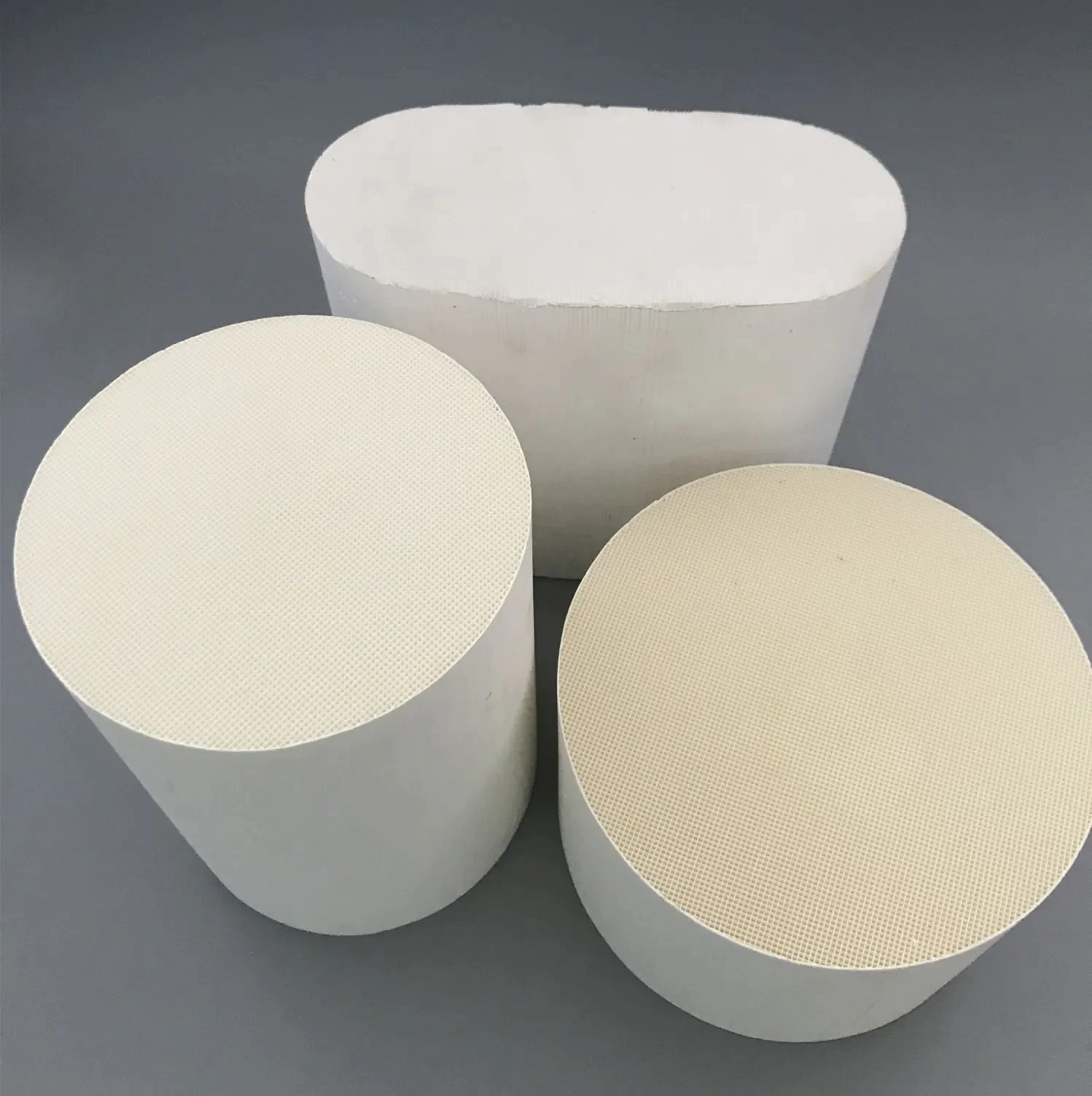
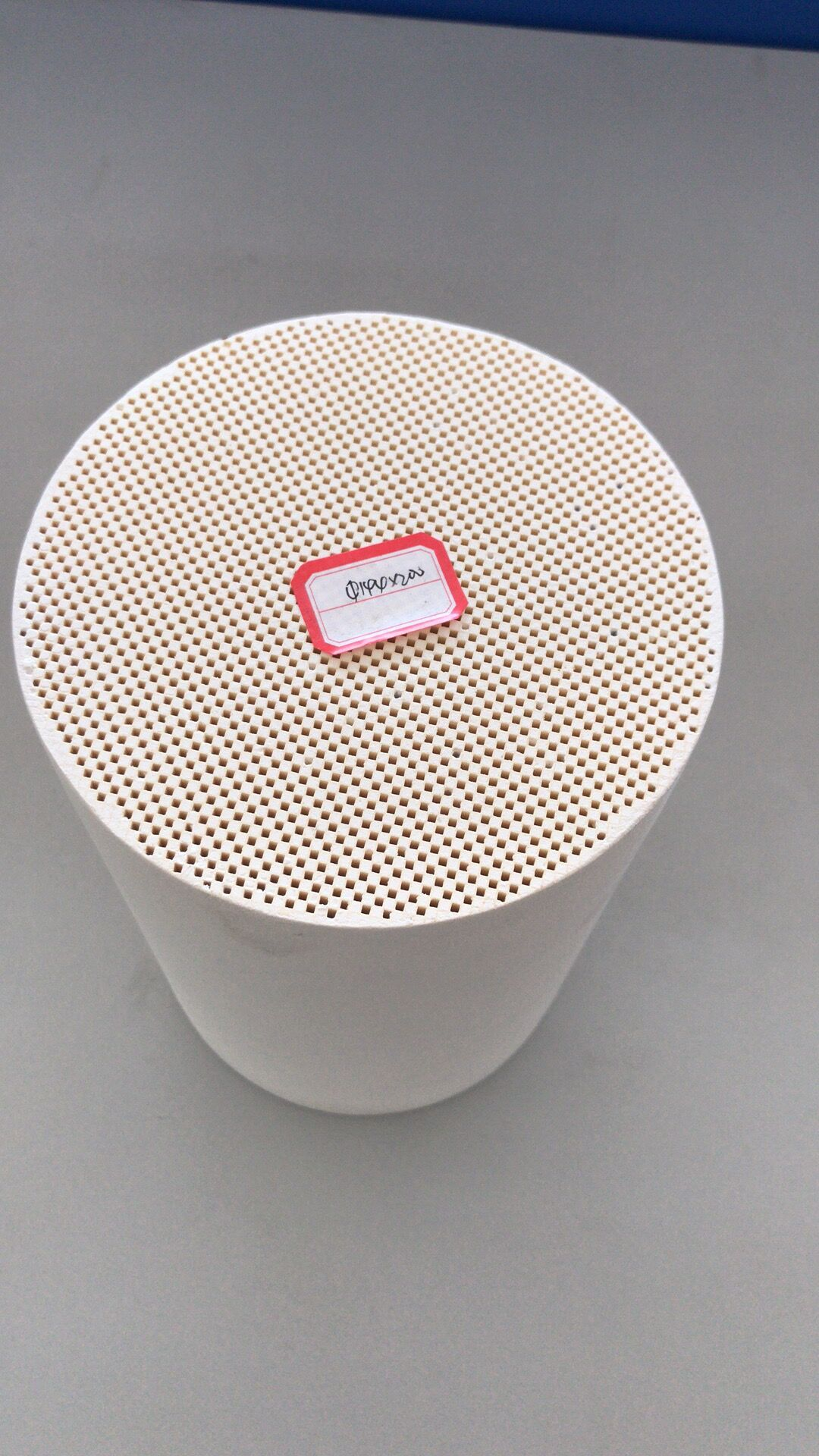
Common active materials include platinum, palladium, and rhodium in automotive catalytic converters. Their precise blend depends on catalyst type and target application. The substrate provides a large surface area for exhaust gas to contact the catalytic coating. A honeycomb structure is widely used because its parallel channels allow gas to flow through the unit while providing extensive contact surfaces.
Catalyst performance is influenced by several operating conditions. Exhaust temperature affects how quickly catalytic reactions begin and how efficiently they proceed. Gas composition, flow rate, and the condition of the coating also matter. A catalyst must therefore be matched to the engine and exhaust system rather than selected by appearance alone.
One factor that can shorten catalyst service life is catalyst poisoning. Contaminants such as sulfur compounds in fuel and phosphorus or other metallic residues from engine oil can interfere with active catalyst sites. Over time, this may reduce conversion efficiency, making fuel quality, engine condition, and correct lubricant selection relevant to emission-system durability.
Main Types of Automotive Exhaust Catalysts
Different catalyst technologies are designed to address specific pollutants. The main types used in vehicle exhaust after-treatment systems include three-way catalysts, diesel oxidation catalysts, diesel particulate filters, and selective catalytic reduction systems.
Three-way catalysts (TWC) are commonly used in gasoline engines. They perform three main functions: oxidizing carbon monoxide (CO), oxidizing unburned hydrocarbons (HC), and reducing nitrogen oxides (NOx). These reactions convert pollutants into carbon dioxide, water vapor, and nitrogen. TWC performance is closely associated with maintaining an appropriate air-fuel ratio, which allows oxidation and reduction reactions to take place effectively.
Diesel oxidation catalysts (DOC) are designed primarily for diesel exhaust. They promote the oxidation of CO and HC and can also reduce the soluble organic fraction of diesel particulate matter. A DOC may be used as a standalone component or integrated with other after-treatment technologies. In some systems, it helps support downstream DPF regeneration by influencing exhaust gas composition and temperature.
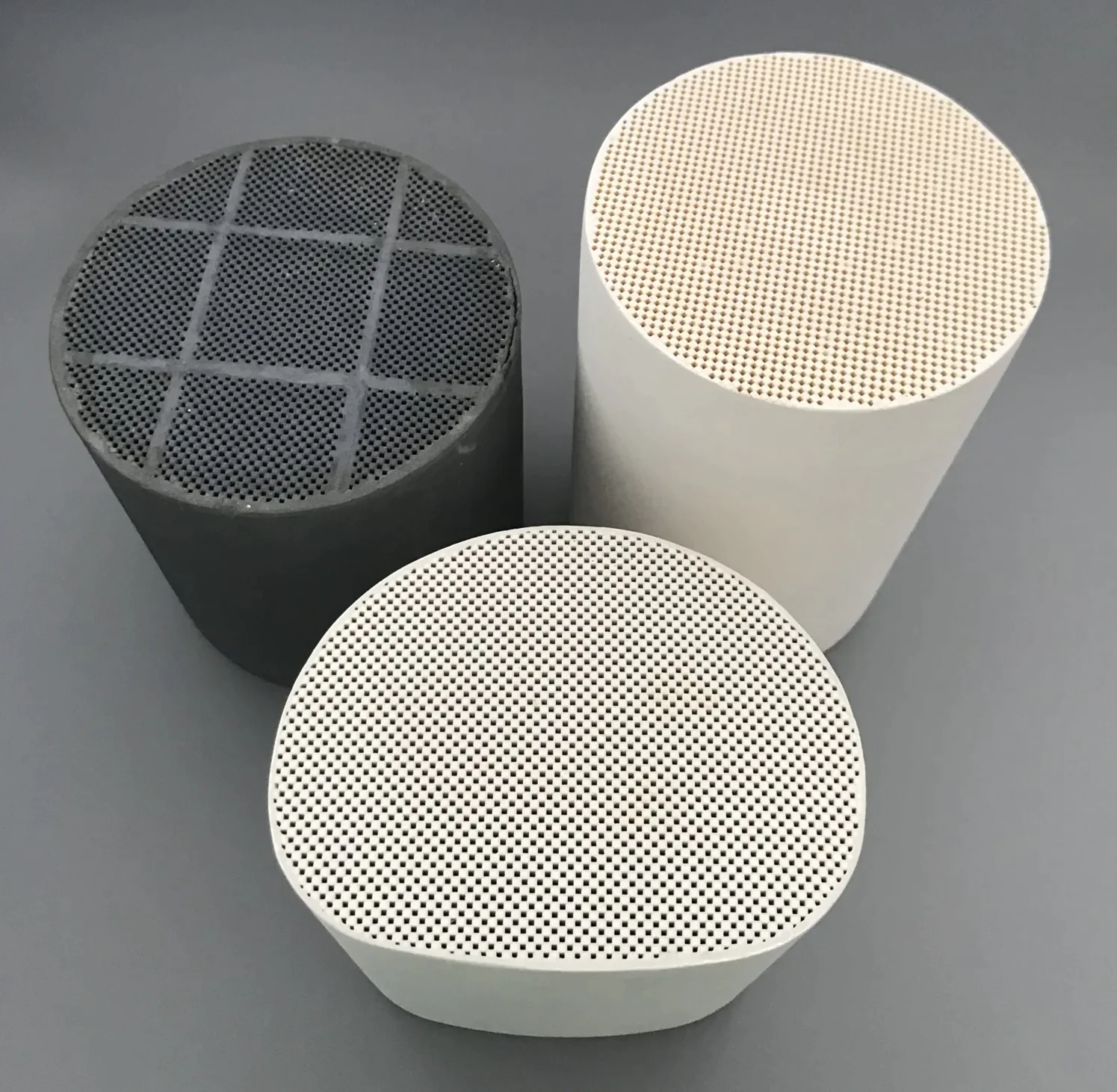
Diesel particulate filters (DPF) serve a different purpose. Rather than relying mainly on oxidation reactions across a flow-through substrate, a DPF captures particulate matter in a porous filter structure. Accumulated soot is oxidized during regeneration, primarily producing carbon dioxide. Non-combustible ash remains in the filter and must be removed through periodic cleaning. The filter material and regeneration strategy are important considerations in diesel applications.
Selective catalytic reduction (SCR) systems target nitrogen oxides in diesel exhaust. They use a reducing agent, commonly an aqueous urea solution such as diesel exhaust fluid (DEF), to support chemical reactions that convert NOx primarily into nitrogen and water. SCR is often combined with DOC and DPF technologies as part of a larger exhaust after-treatment system.
Honeycomb Ceramic Catalyst Design and Specifications
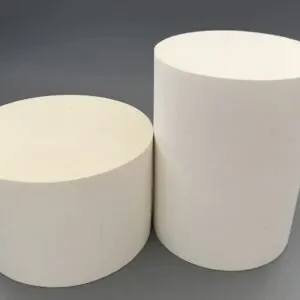
The substrate is a key part of an exhaust catalyst because it supports the active coating and determines how exhaust gas passes through the unit. Ceramic honeycomb substrates are widely used due to their high surface area, thermal stability, and flow-through channel design. Cordierite is a common ceramic substrate material, while silicon carbide is also used in certain particulate-filter applications.
Cell density is commonly expressed in CPSI, meaning cells per square inch. A higher cell density can provide more geometric surface area, but it may also affect exhaust flow resistance. The appropriate configuration depends on the engine, operating conditions, coating, and system design. It is not accurate to assume that a higher CPSI value always produces better overall performance.
At Hualian Catalyst, we offer DOC configurations with both ceramic and metallic substrates, including round, oval, and racetrack-shaped options. Our listed cell densities include 200, 300, 400, and 600 CPSI, depending on the substrate type. For ceramic DOCs, our listed examples include dimensions of 101.6 × 123.3 mm and 101.6 × 152.4 mm. These specifications apply to our listed DOC series and should not be generalized to other catalyst categories, as the appropriate configuration depends on the specific application and system requirements.
Applications Across Automotive and Diesel Equipment
Automotive exhaust catalysts are used in passenger vehicles, motorcycles, commercial vehicles, and off-road equipment. Gasoline vehicles commonly use three-way catalysts to control CO, HC, and NOx emissions. Diesel vehicles may combine DOC, DPF, and SCR technologies to address gaseous pollutants and particulate matter.
Heavy-duty trucks, construction machinery, agricultural equipment, and other diesel-powered machines often operate under demanding conditions. Their after-treatment systems must account for exhaust temperature, engine load, operating cycles, available installation space, and applicable emission requirements. A catalyst engineered for one engine platform cannot be directly reused for a different platform. Differences in exhaust flow, temperature range, and system layout can affect both compatibility and performance.
For this reason, catalyst selection should begin with the engine and after-treatment system requirements. Substrate dimensions, cell density, coating formulation, and pollutant targets should be evaluated together. The applicable emission standard is also important, but a standard label alone does not establish that a catalyst is suitable for every engine configuration.
Selecting the Right Auto Exhaust Catalyst
For manufacturers and system integrators, understanding the differences between TWC, DOC, DPF, and SCR technologies helps identify the right catalyst structure and specifications. Product selection should be based on actual engine requirements and verified technical data.
At Hualian Catalyst, we supply honeycomb ceramic catalysts, DOC, DPF, SCR, and metallic catalytic converters for automotive emission-control applications. Visit Hualian Catalyst to explore our product range and technical details.