Modern vehicles must meet increasingly demanding exhaust emission requirements while maintaining engine performance, thermal stability, and long-term durability. Catalytic converters play an essential role in this process by converting harmful exhaust pollutants into less harmful substances through chemical reactions. Among the available designs, metal substrates offer practical advantages in applications where fast catalyst activation, compact packaging, and mechanical strength are important.
For vehicle manufacturers, exhaust system developers, and aftermarket suppliers, selecting the right substrate involves more than comparing material costs. Factors such as exhaust flow, operating temperature, vibration exposure, and installation space all influence converter performance. A properly designed metal catalytic converter can address these requirements while supporting modern vehicle emission-control systems.
How Metal Catalytic Converters Improve Exhaust Treatment
A catalytic converter uses active catalyst materials to promote oxidation and reduction reactions in exhaust gas. Depending on the catalyst formulation and engine type, these reactions convert carbon monoxide (CO), unburned hydrocarbons (HC), and nitrogen oxides (NOx) into less harmful substances.
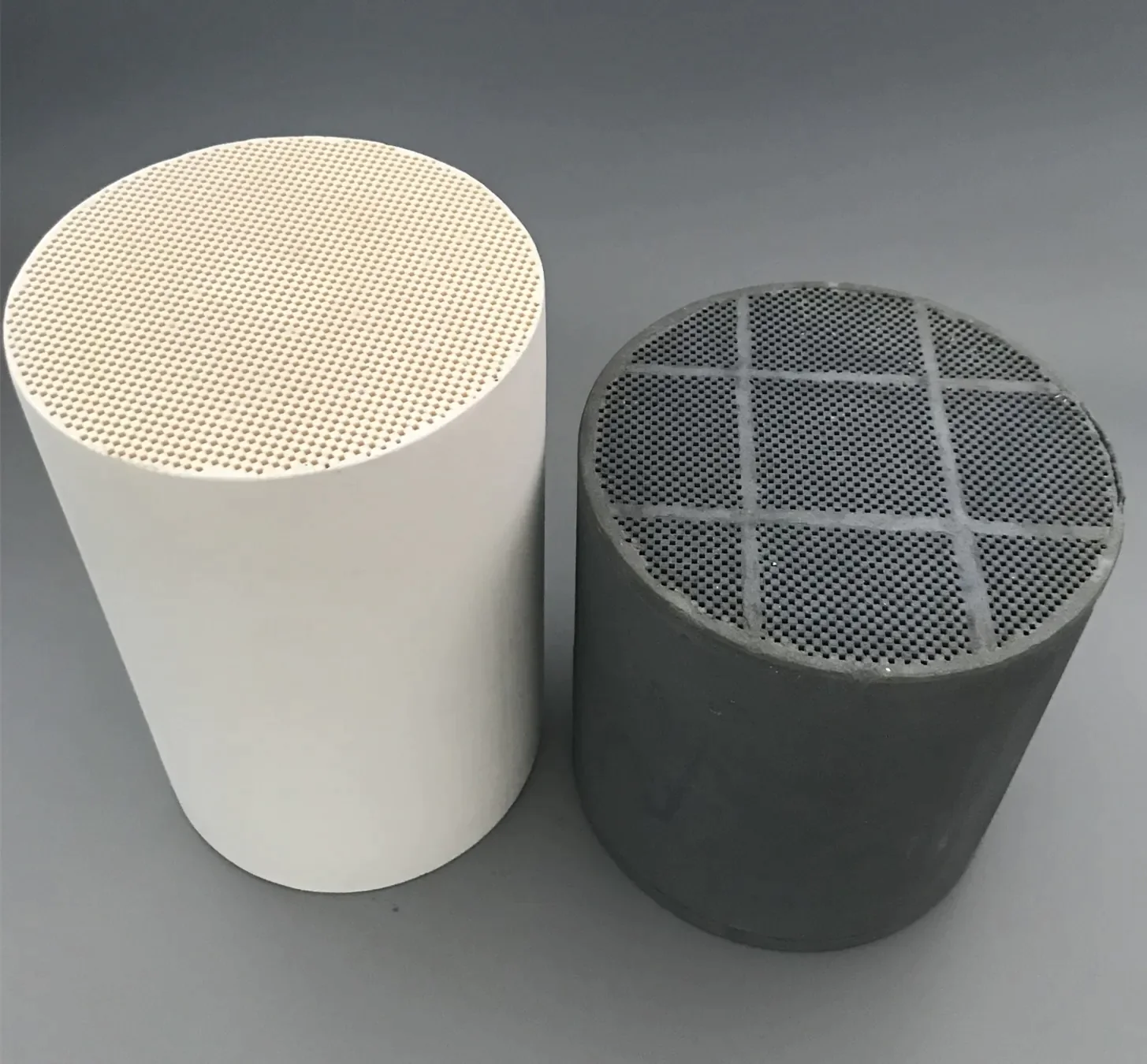
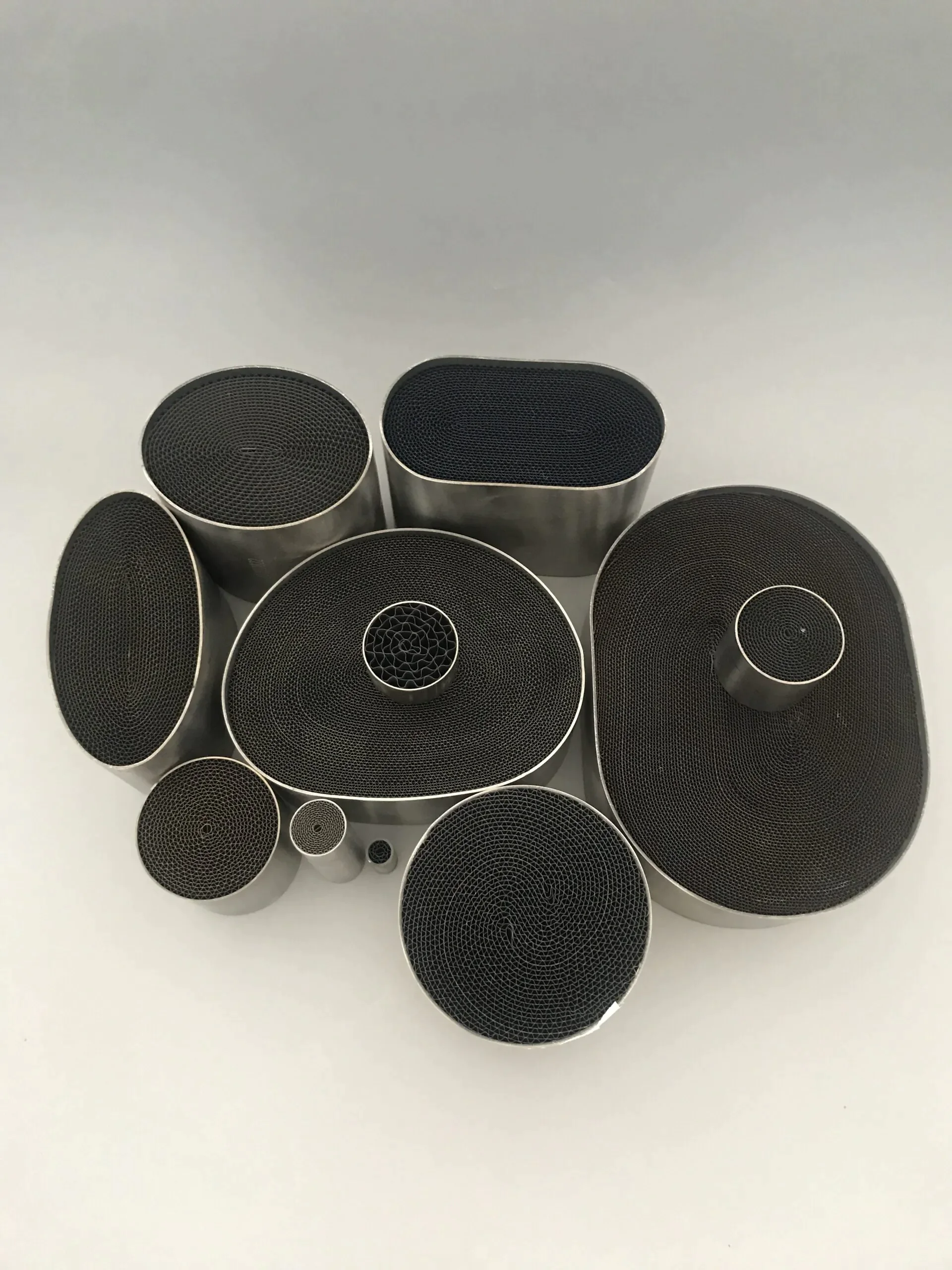
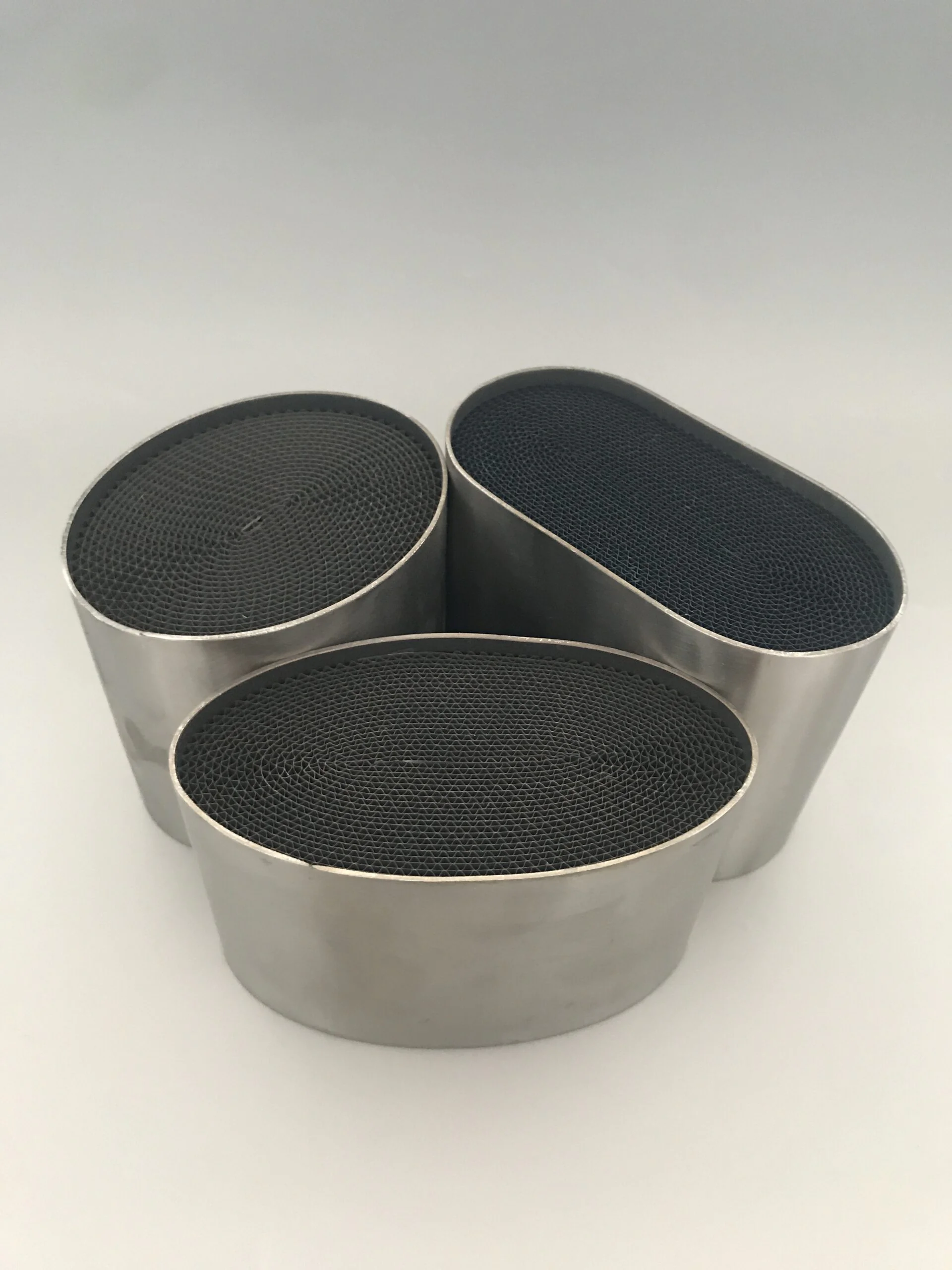
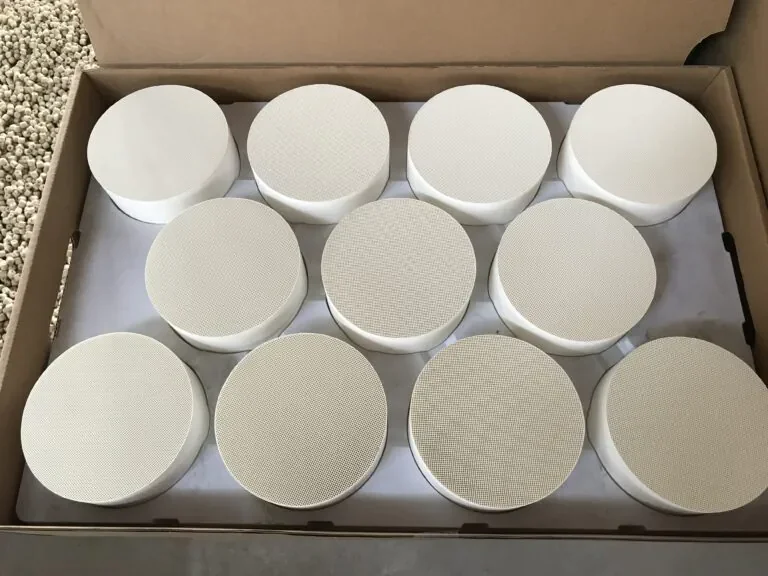
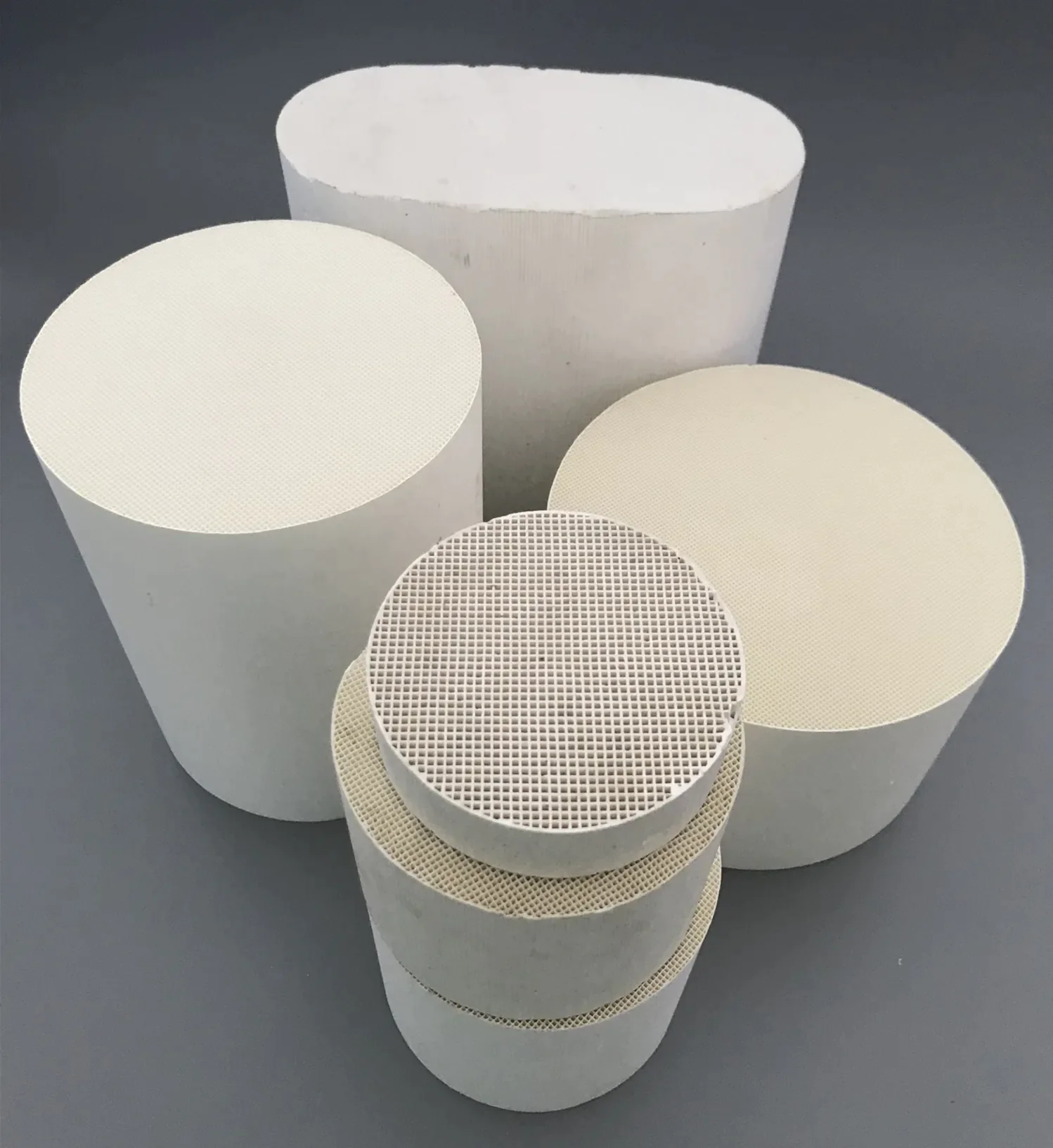
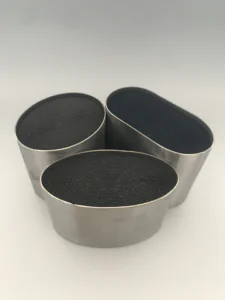
A metal catalytic converter uses a metallic honeycomb substrate instead of a conventional ceramic core. Its structure typically consists of thin, corrugated metal foils arranged into numerous parallel channels. These channels provide the surface area needed for catalyst coatings while allowing exhaust gases to pass through the converter.
The metallic substrate commonly uses iron-chromium-aluminum (FeCrAl) alloy, combined with a stainless steel outer shell. Precious metals such as platinum (Pt), palladium (Pd), and rhodium (Rh) form part of the active catalyst coating. In three-way catalytic applications, these materials support the oxidation of CO and HC and the reduction of NOx.
One important characteristic of metal substrates is their thermal response. Compared with conventional ceramic structures, metallic substrates generally offer higher thermal conductivity and lower thermal mass. This allows them to reach operating temperatures relatively quickly under suitable conditions, helping reduce the time required for effective catalytic conversion after engine startup.
Key Benefits of Using a Metal Catalytic Converter
Metal substrates offer several advantages for vehicle emission-control applications. Their value depends on the specific engine configuration, catalyst formulation, and operating environment.
Faster Light-Off Performance
Catalyst activation temperature directly affects how quickly an emission-control system begins treating exhaust effectively. During cold starts, engines can produce elevated pollutant emissions before the catalyst reaches its operating temperature.
Metal substrates transfer heat efficiently, helping the catalyst reach light-off temperature sooner in suitable applications. This characteristic is particularly useful in close-coupled exhaust configurations, where the converter is installed near the engine to receive hotter exhaust gas.
Lower Exhaust Backpressure
Exhaust flow resistance is another important consideration in catalytic converter design. Excessive backpressure can increase engine pumping losses and affect overall system efficiency.
Metal honeycomb substrates use thin foil walls to create open channels for exhaust flow. This structure can provide sufficient gas-flow capacity while maintaining contact between exhaust gases and the active catalyst coating. However, actual pressure drop depends on cell density, channel geometry, substrate dimensions, and exhaust flow rate. Proper engineering evaluation remains necessary.
Mechanical Strength and Design Flexibility
Vehicles and mobile machinery experience continuous vibration, thermal cycling, and mechanical stress. These conditions place considerable demands on exhaust aftertreatment components.
Metallic substrates offer useful mechanical strength and thermal shock resistance for demanding applications. Their flexible manufacturing options also support different geometries and compact exhaust layouts. These characteristics make them suitable for motorcycles, passenger vehicles, and off-road equipment, provided that the complete converter assembly is properly designed.
Applications in Modern Vehicles and Engine Systems
Metal catalytic converters are used across several vehicle categories, although their configurations vary according to engine characteristics and emission requirements.
In motorcycles, compact exhaust dimensions and frequent changes in engine speed make thermal response and packaging important design considerations. A suitable motorcycle catalyst helps treat exhaust pollutants while accommodating the limited installation space available in motorcycle exhaust systems.
For passenger vehicles, metallic substrates can be considered for close-coupled catalytic converters and other applications requiring compact packaging. Commercial vehicles and off-road machinery may also benefit from their mechanical strength, particularly where vibration and demanding operating conditions need to be considered.
The appropriate catalyst configuration depends on engine type, exhaust composition, operating temperature, and applicable emission regulations. Euro emission standards should therefore be treated as system-level compliance requirements rather than guaranteed outcomes from substrate selection alone.
Selecting the Right Metallic Catalyst Specifications
Choosing a suitable converter requires careful evaluation of substrate materials, cell density, dimensions, and catalyst coating formulations. Each parameter influences exhaust flow, catalytic contact, thermal behavior, and installation compatibility.
Our metallic catalytic converter range provides several customization options. According to its product specifications, the available configurations include:
- Shell materials:Ferritic stainless steel SUS444, SUS441, and SUS430, as well as austenitic stainless steel SUS304 and SUS316.
- Core materials:Domestic FeCrAl (2073/216) and imported FeCrAl (1.4725/1.4767).
- Cell density:50, 100, 200, 250, 300, 400, 500, and 600 CPSI listed in the specification range.
- Dimensions:Diameters from 28 mm to 550 mm, with lengths up to 300 mm.
- Foil thickness:03 mm, 0.04 mm, 0.05 mm, 0.06 mm, 0.08 mm, and 0.10 mm.
- Available shapes:Round, oval, racetrack, and other customized geometries.
The product also uses nickel-based solder for brazing and supports customized catalyst coating formulations. Buyers should confirm the availability of their required material, dimensions, and cell density with the manufacturer before ordering.
Beyond individual specifications, engineering teams should evaluate the relationship between cell density and pressure drop. Higher cell density provides more channels within a given cross-sectional area, but it can also increase flow resistance depending on channel geometry and foil thickness. The final design should balance catalytic performance, exhaust capacity, and available installation space.
Developing Customized Catalyst Solutions for Different Applications
Selecting a suitable metal catalytic converter requires consideration of thermal response, exhaust flow, mechanical durability, and substrate compatibility. Matching these factors to the intended engine and operating environment helps manufacturers develop reliable emission-control systems.
With more than 30 years of experience in catalyst manufacturing, we supply metallic and ceramic catalyst products for motorcycles, passenger vehicles, commercial vehicles, and industrial applications. Our OEM and ODM services allow customers to customize substrate dimensions, cell densities, geometries, and coating formulations to meet their specific project requirements. Explore our product range at Hualian Catalyst.
For vehicle manufacturers and exhaust system integrators, these options provide flexibility when developing catalytic converter solutions for different technical requirements and emission-control applications.