Choosing between a metal and ceramic catalytic converter is an important decision in vehicle exhaust system design. Both substrates support catalytic reactions that reduce harmful emissions, but their material properties influence thermal response, mechanical strength, exhaust flow, and installation flexibility. For automotive manufacturers, motorcycle exhaust system developers, and aftermarket suppliers, understanding these differences is essential when selecting components for specific engine platforms.
Neither material is universally better. Ceramic substrates are widely used because of their thermal stability and established manufacturing processes, while metallic substrates offer faster heat transfer and greater mechanical flexibility. The right choice depends on engine operating conditions, packaging constraints, emission targets, and production requirements.
How Metal and Ceramic Catalytic Converters Differ
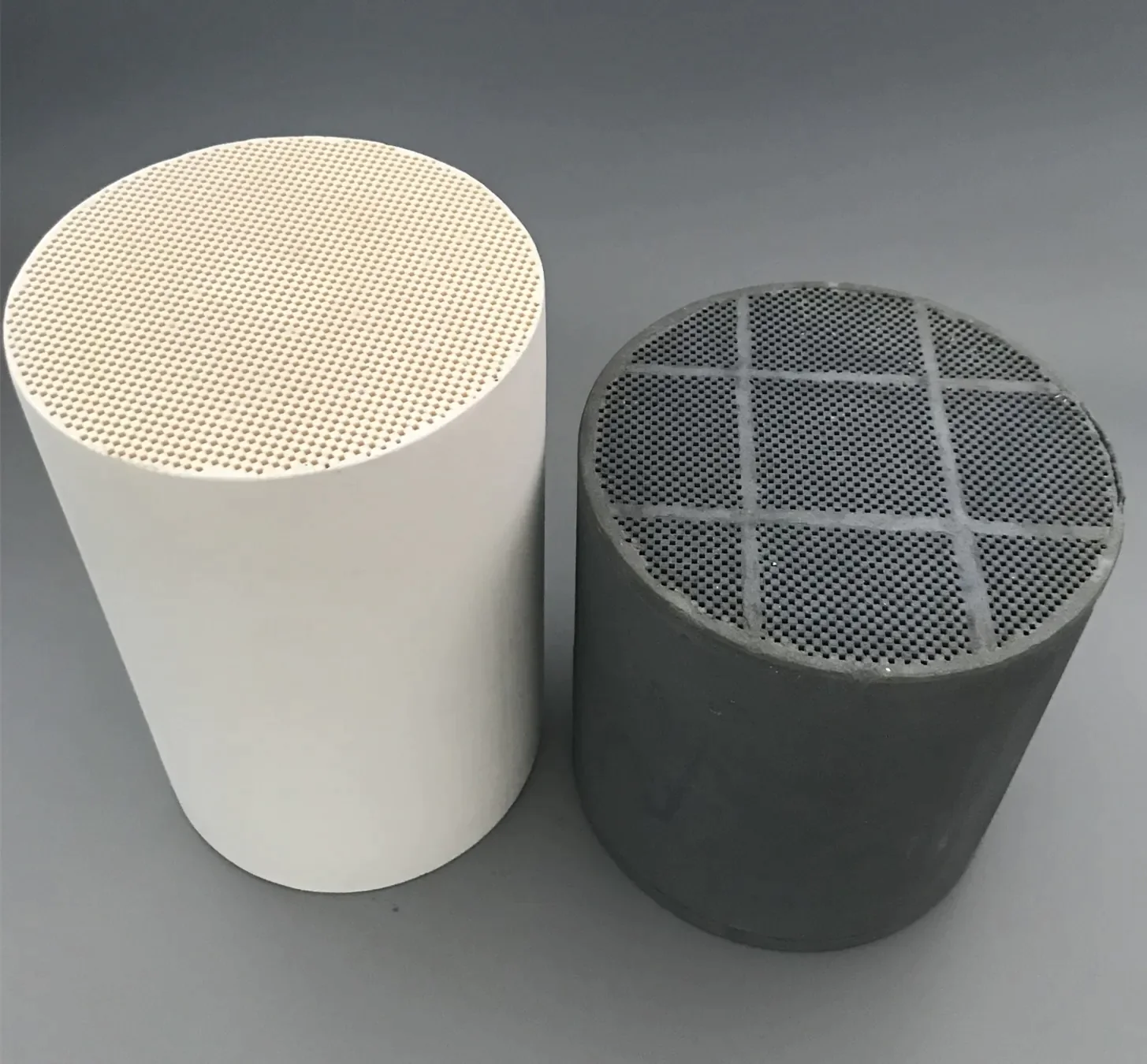
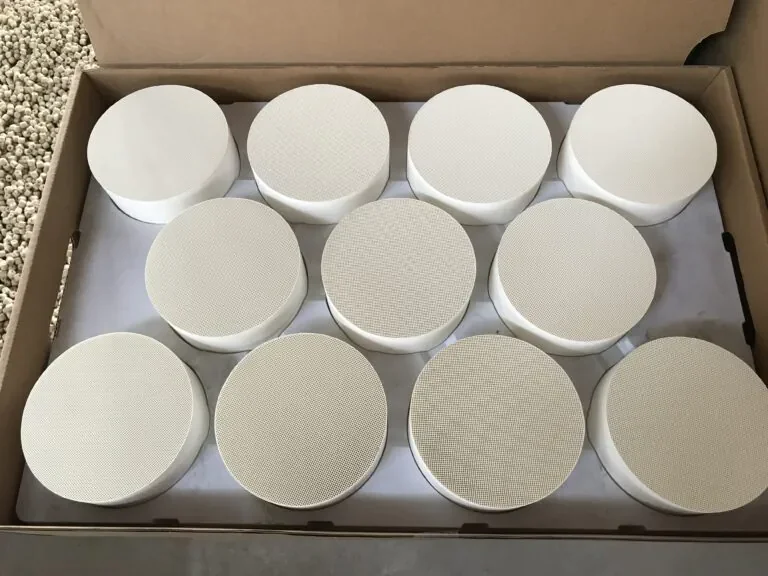
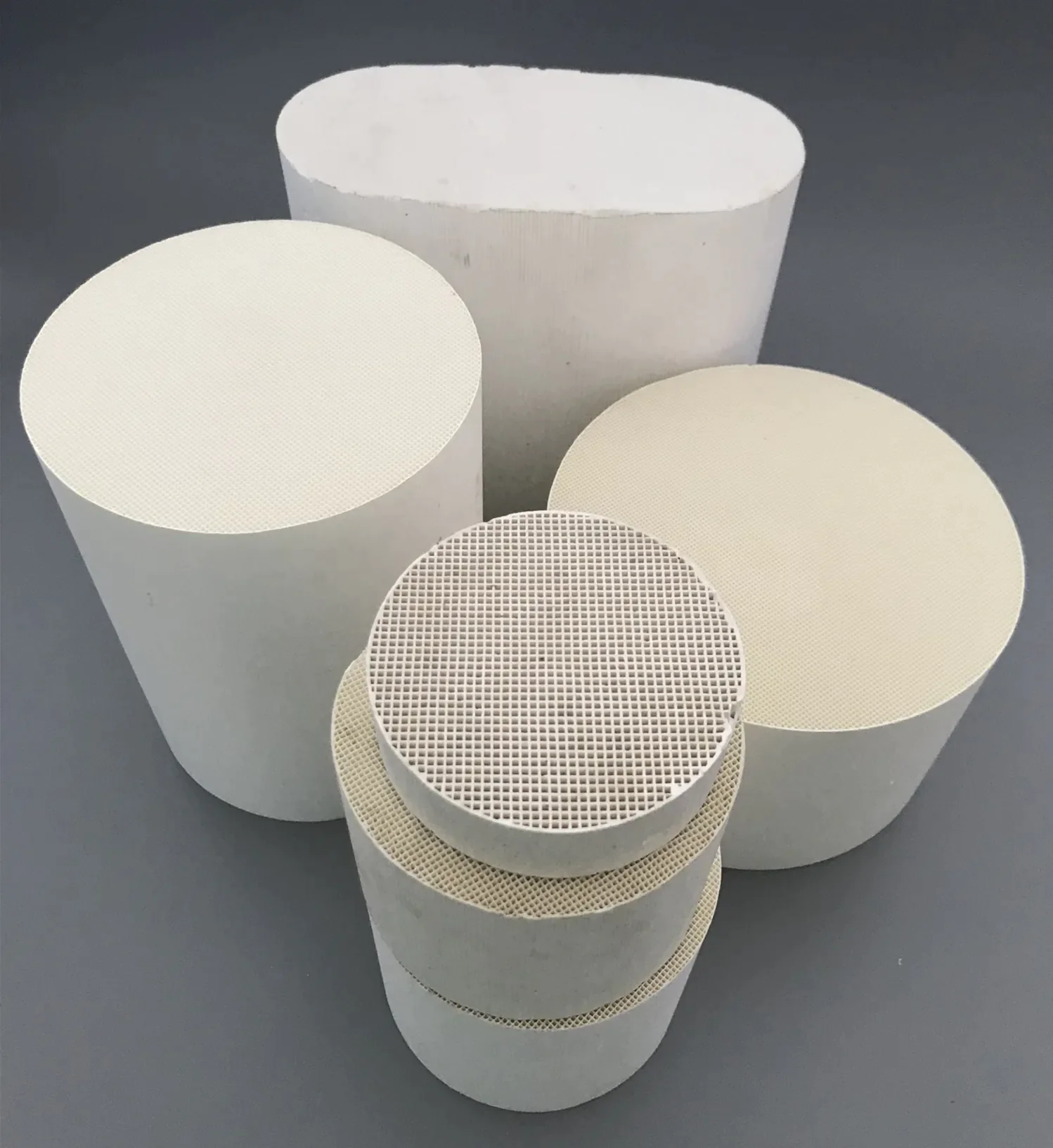
The primary difference between these converters lies in their substrate construction. A ceramic catalytic converter typically uses a honeycomb structure made from cordierite or silicon carbide (SiC). Its channels provide a large surface area for catalyst coatings while allowing exhaust gases to pass through the converter. Ceramic substrates are commonly selected for their thermal stability and cost-effectiveness.
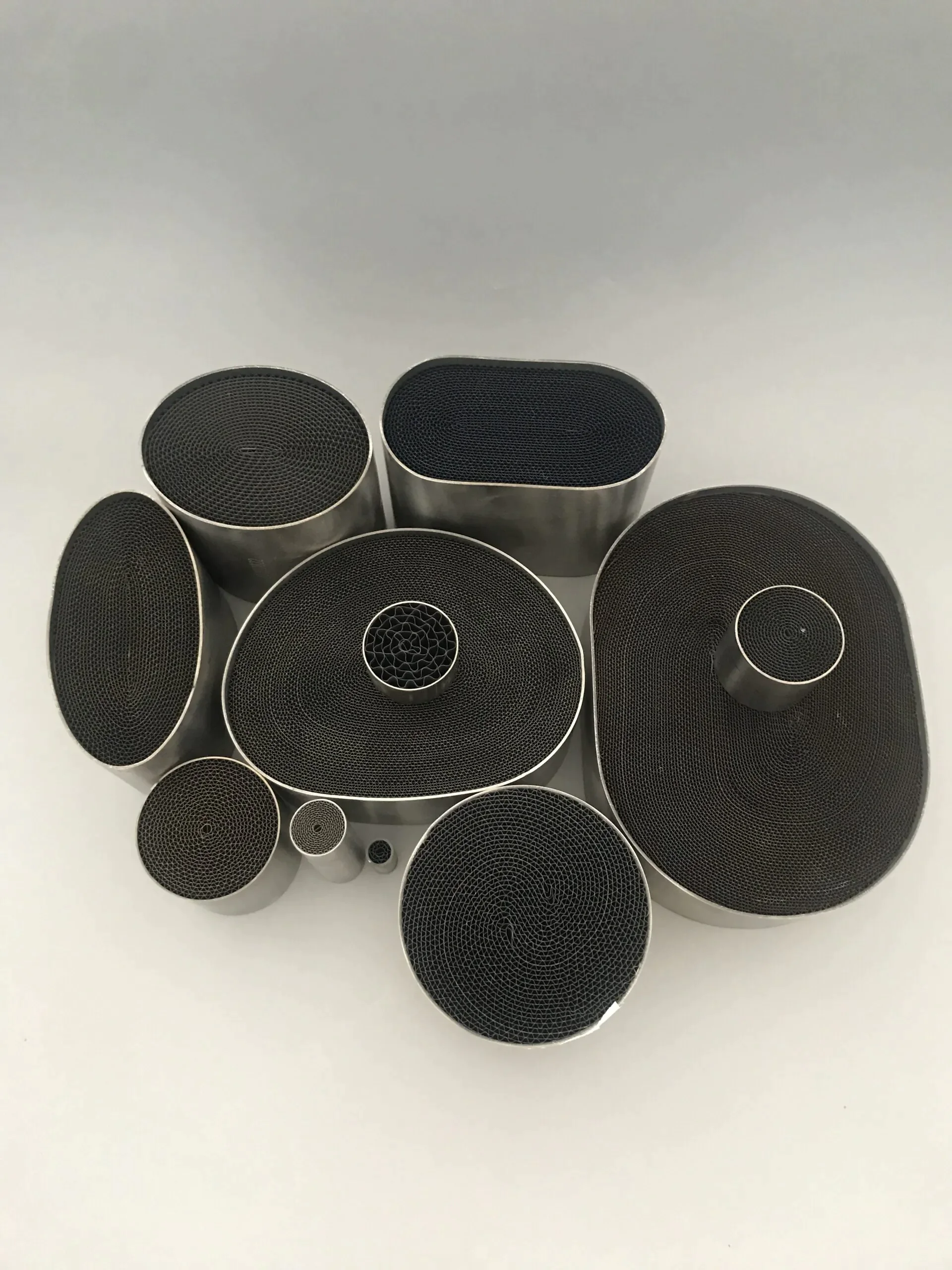
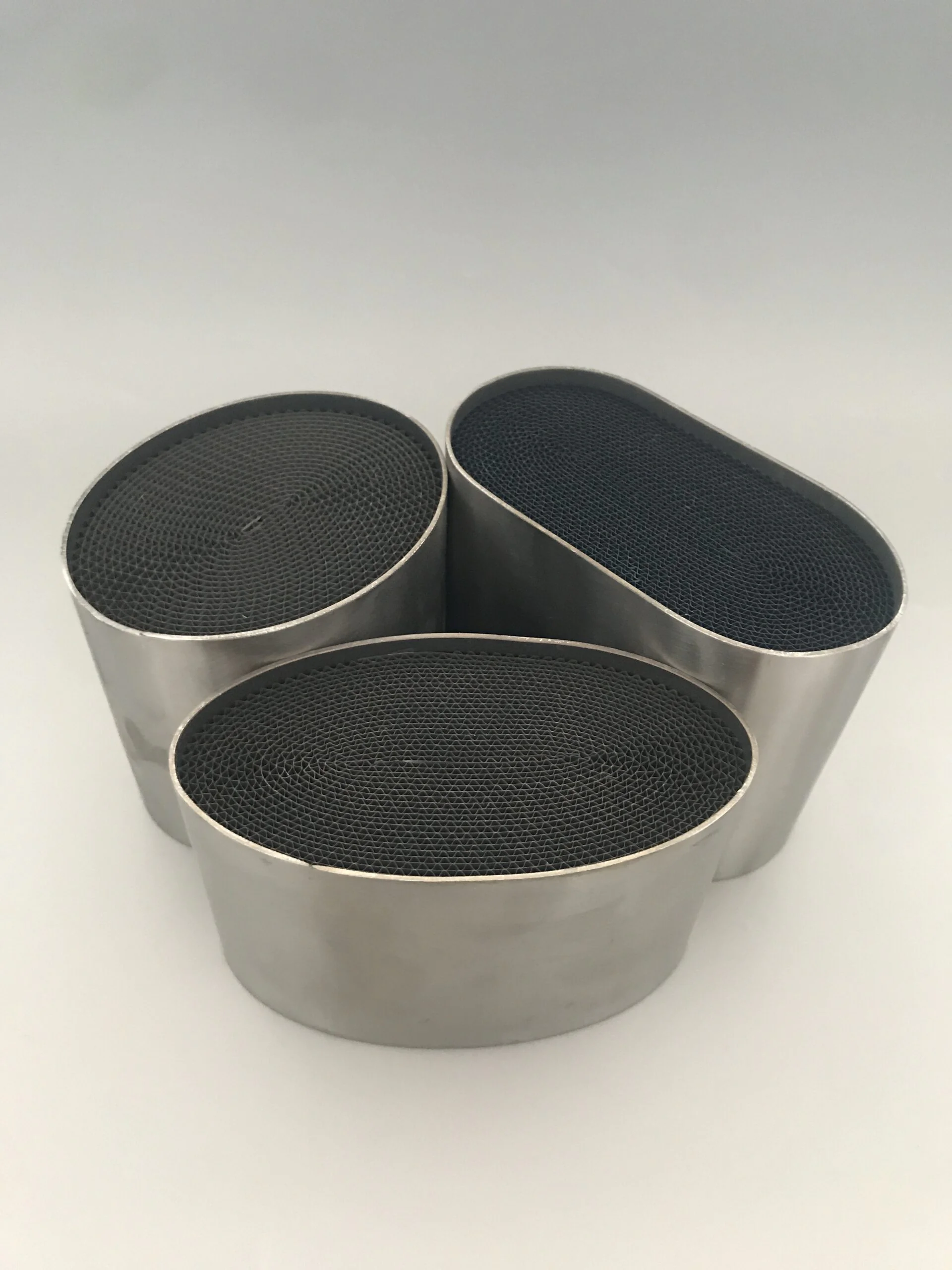
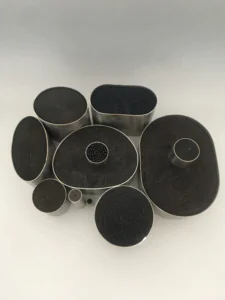
A metallic catalytic converter uses thin metal foils arranged into a honeycomb structure. The core commonly consists of iron-chromium-aluminum (FeCrAl) alloy, supported by a stainless steel outer shell. Precious metals such as platinum (Pt), palladium (Pd), and rhodium (Rh) are used in the active coating to promote oxidation and reduction reactions.
Both designs can support the conversion of carbon monoxide (CO), hydrocarbons (HC), and nitrogen oxides (NOx), depending on the catalyst formulation and engine application. However, their different substrate properties influence how they perform under varying exhaust temperatures, vibration levels, and packaging conditions.
Thermal Performance and Catalyst Activation
Thermal response is one of the most important differences between metallic and ceramic substrates. A catalytic converter must reach its light-off temperature before it can achieve effective pollutant conversion. During cold starts, emissions can remain elevated until the catalyst becomes sufficiently active.
Metal substrates generally have higher thermal conductivity and lower thermal mass than comparable ceramic structures. This allows them to transfer heat more rapidly and reach operating temperatures sooner under suitable conditions. Faster light-off can be particularly valuable in compact exhaust systems where the converter is installed close to the engine.
Ceramic substrates, especially cordierite, offer good thermal stability and can withstand the temperature conditions associated with many vehicle applications. Their thermal characteristics make them suitable for exhaust systems with relatively stable operating conditions.
The final thermal performance depends on more than substrate material. Catalyst coating, precious metal loading, exhaust temperature, converter location, and gas flow also influence activation behavior. Engineers should evaluate the complete system rather than relying on material properties alone.
Mechanical Strength, Exhaust Flow, and Installation Flexibility
Mechanical durability is another consideration when comparing the two substrate types. Vehicle exhaust systems experience vibration, repeated thermal cycling, and mechanical stress. These factors are particularly relevant for motorcycles, off-road machinery, and vehicles operating under demanding conditions.
Metallic substrates provide high mechanical strength and good resistance to vibration when properly manufactured and installed. Their thin-foil construction also allows manufacturers to develop compact geometries and customized shapes. This flexibility can help when available installation space is limited.
Ceramic substrates have a rigid honeycomb structure that provides effective catalytic surface area. However, ceramic materials can be more sensitive to mechanical impact and certain thermal shock conditions. Proper canning, mounting, and thermal management are therefore important for maintaining structural integrity.
Exhaust backpressure must also be considered. Metallic honeycombs can use thin walls to provide relatively large open frontal areas, supporting efficient exhaust flow. Ceramic substrates can also achieve low pressure drop through appropriate cell density and channel design. Actual performance depends on substrate dimensions, cell density, coating thickness, and exhaust mass flow. Neither material automatically guarantees lower backpressure in every application.
Which Catalytic Converter Is Better for Different Applications?
The choice between metallic and ceramic substrates should reflect the operating environment and technical priorities of the vehicle.
For motorcycles, metallic substrates are often attractive because of their compact structure, fast heat transfer, and mechanical strength. A suitable motorcycle catalyst can be integrated into restricted exhaust layouts while supporting the required catalytic reactions. These characteristics are also relevant to off-road engines and machinery exposed to frequent vibration.
For passenger vehicles and diesel exhaust aftertreatment systems, ceramic substrates remain a practical option where thermal stability, established production methods, and cost considerations are important. Ceramic DOC products can also be integrated with downstream components such as diesel particulate filters (DPF) and selective catalytic reduction (SCR) systems.
Metallic substrates may be preferable when rapid catalyst activation, compact packaging, and vibration resistance are major design priorities. Ceramic substrates may be more appropriate when the operating conditions and system layout favor their established thermal and manufacturing characteristics.
Comparing Product Specifications and Customization Options
Material selection should be supported by actual product specifications rather than general performance claims. We offer metallic honeycomb catalyst solutions with different materials, dimensions, and cell densities to accommodate various exhaust system requirements.
According to our product specifications, our metallic catalytic converter supports the following configurations:
- Shell materials:Ferritic stainless steel SUS444, SUS441, and SUS430, plus austenitic stainless steel SUS304 and SUS316.
- Core materials:Domestic FeCrAl (2073/216) and imported FeCrAl (1.4725/1.4767).
- Cell density:50, 100, 200, 250, 300, 400, 500, and 600 CPSI.
- Dimensions:Diameters from 28 mm to 550 mm, with lengths up to 300 mm.
- Foil thickness:03 mm, 0.04 mm, 0.05 mm, 0.06 mm, 0.08 mm, and 0.10 mm.
- Shapes:Round, oval, racetrack, and other customized geometries.
These options allow manufacturers to match substrate configurations with engine specifications, exhaust flow requirements, and installation constraints. Ceramic DOC solutions are also available in different dimensions and cell densities, including 300, 400, and 600 CPSI configurations for listed ceramic models.
Before confirming a design, buyers should evaluate catalyst formulation, coating adhesion, operating temperature, pressure drop, and applicable emission standards. The required specifications should be verified for the selected model rather than assuming every combination is available.
Choosing the Right Catalyst Partner
The choice between metal and ceramic catalytic converters ultimately depends on the requirements of the exhaust system. Metal substrates offer advantages in thermal response, mechanical strength, and compact design, while ceramic substrates provide established thermal performance and cost-effective options for many applications.
We provide metallic and ceramic catalyst solutions for automotive, motorcycle, diesel, and industrial exhaust treatment. Backed by more than 30 years of experience in catalyst manufacturing, our OEM and ODM services cover substrate materials, dimensions, cell densities, and catalyst coatings. For vehicle manufacturers and exhaust system integrators, we offer customization options to help develop catalyst configurations that meet specific technical and production requirements. Explore our solutions at Hualian Catalyst.