Carbon monoxide, unburned hydrocarbons, and soluble organic fractions leave a diesel engine as different constituents of the exhaust stream. A DOC addresses them through oxidation—not by trapping gas in a filter Molecules must reach the active coating, meet the required temperature, and react as exhaust flows through the substrate.
Following those steps shows both what an oxidizing catalyst does and why coating chemistry and flow structure matter together. It also prevents an easy confusion: oxidation changes the chemical form of these compounds; it is not the same process as collecting solid soot in a DPF.
Identify What Enters the DOC
Carbon monoxide is a gas formed when carbon-containing fuel is not completely oxidized in the engine. Hydrocarbons are another group of unburned or partly burned fuel compounds. Soluble organic fractions are associated with the organic portion of diesel particulate matter and can be oxidized as exhaust passes through a suitable catalyst.
The three descriptions are not interchangeable, even though a DOC may act on all of them. Their concentrations and the exhaust temperature change with the operating conditions..
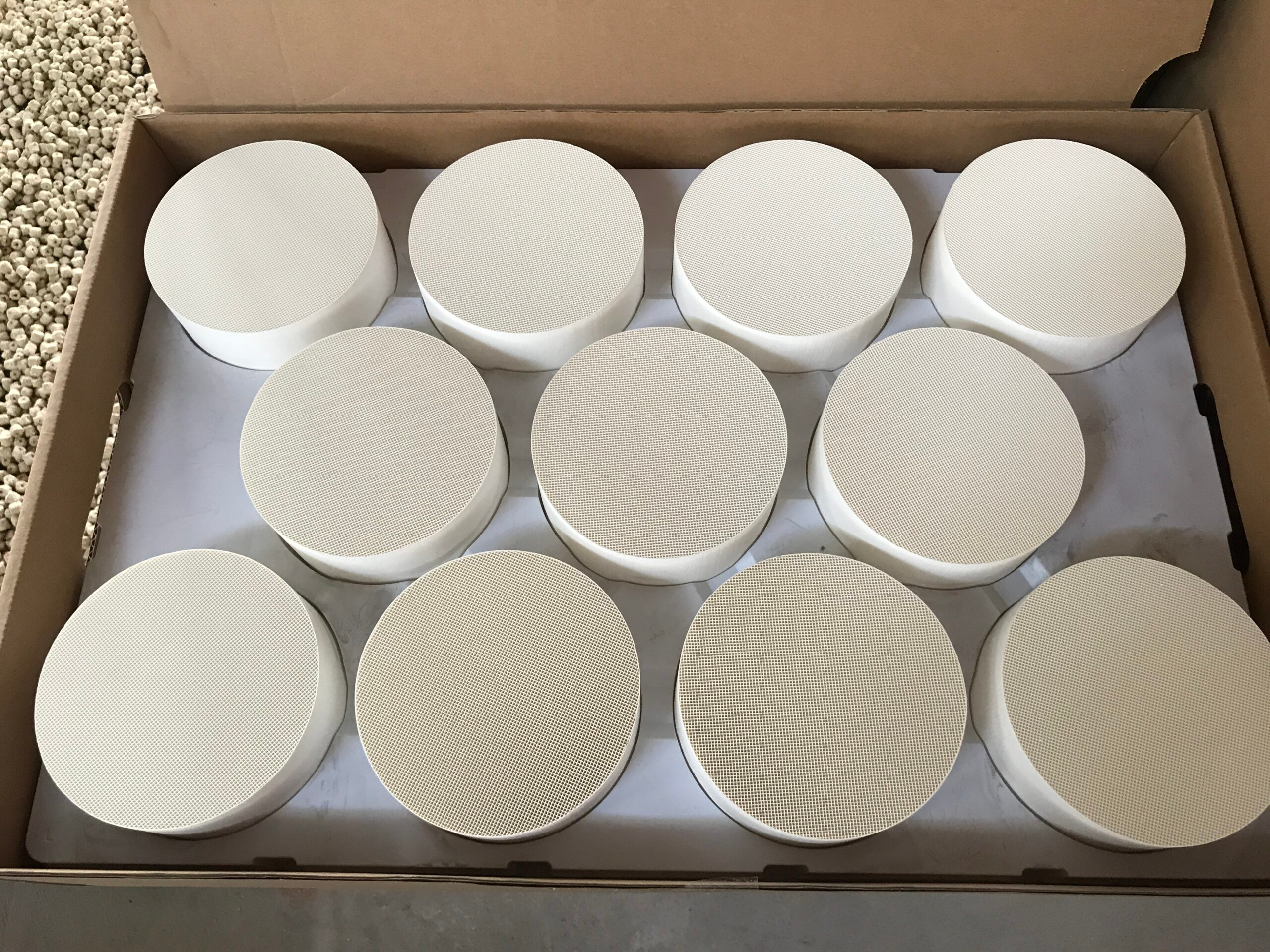
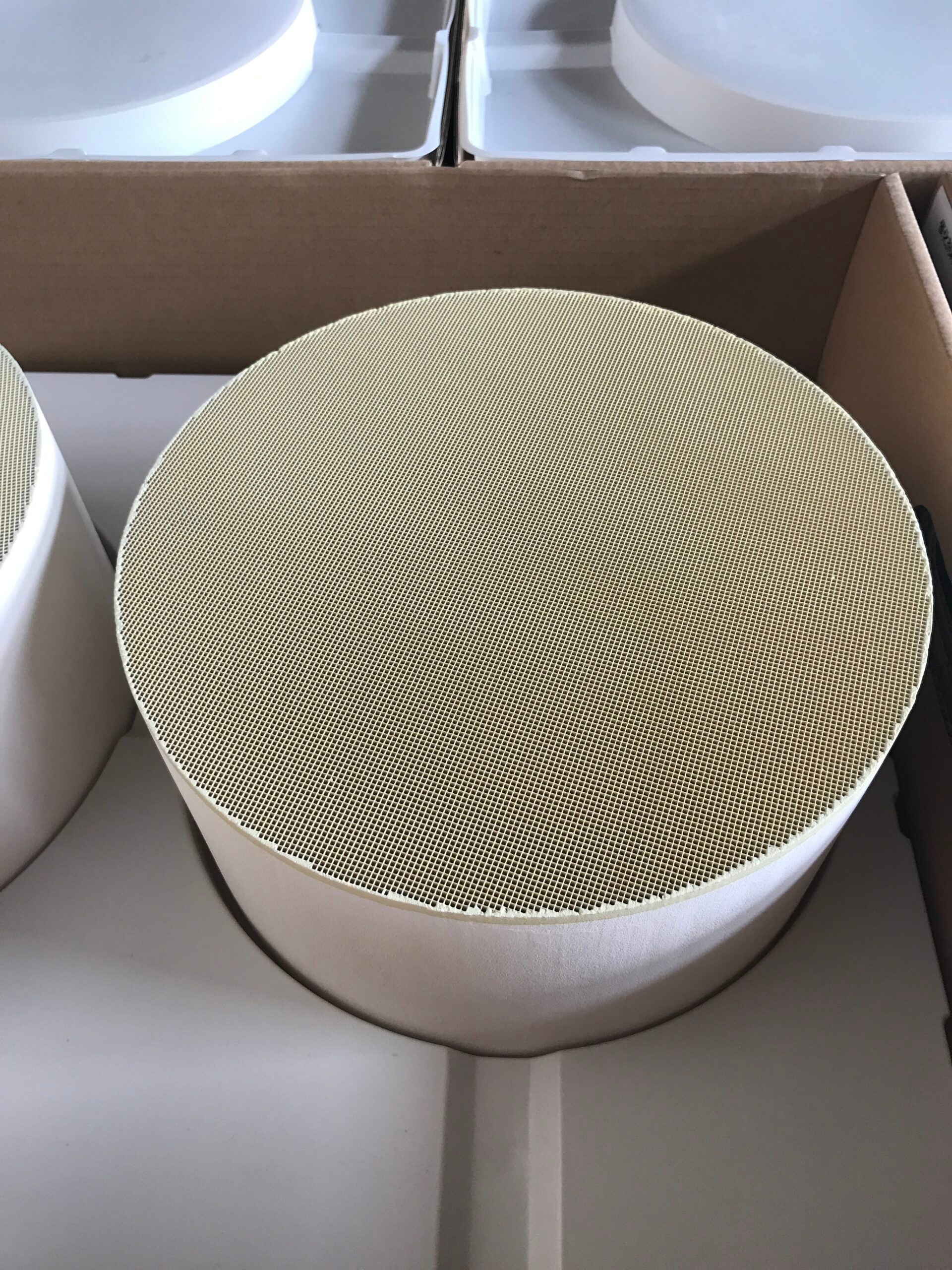
In a diesel oxidation catalyst, exhaust enters many channels in a honeycomb substrate. The channels expose gas to the coated surfaces without forcing it through a wall-flow filter. Some molecules in the moving stream reach those surfaces and participate in oxidation reactions.
The available surface area and the residence time both influence contact. However, neither property alone guarantees a particular conversion result. A low-temperature stream can pass over an active material without reaching the same reaction rate as a hotter stream.
The phrase oxidizing catalyst describes the chemical role of the device, not an ability to remove every exhaust constituent. CO, hydrocarbons, and soluble organic fractions are the relevant targets in the supplied DOC information.
Solid soot capture, NOx reduction, and other aftertreatment tasks involve different mechanisms or additional components. Keeping those boundaries clear makes it easier to assign each part of an exhaust system a realistic duty.
Trace the Oxidation at the Active Surface
Platinum- and palladium-based coatings provide active sites for the reactions described in our DOC information. Carbon monoxide is oxidized to carbon dioxide. Hydrocarbons and soluble organic fractions are oxidized toward carbon dioxide and water.
The coating changes the reaction pathway, while oxygen in the exhaust supplies a reactant for oxidation. Heat and gas composition affect how quickly the reactions proceed; a chemical equation does not, on its own, specify conversion across an engine’s entire duty cycle.
The diesel oxidation catalyst thus has to present a useful coating to the gas under the temperatures it will actually experience. Too little contact, an unsuitable temperature, or a coating formulation mismatched to the application can limit the result.
Pressure loss creates a separate constraint. Making channels more restrictive in pursuit of contact could interfere with exhaust flow. The design problem, therefore, is to maintain access to the active layer while keeping low backpressure and conversion as connected—not separate—goals..
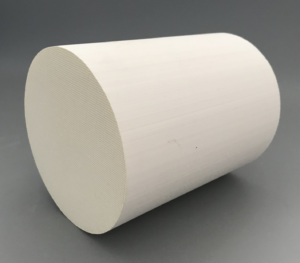
Our Hualian Catalyst DOCs use platinum- and palladium-based coatings to oxidize CO, hydrocarbons, and soluble organic fractions. Ceramic or metal substrates and customized coating formulations are available for different diesel applications.
Those options let us discuss the reaction task and the physical installation together. We would need the customer’s exhaust conditions to determine which configuration merits evaluation; the coating description alone does not establish an outcome for a particular engine.
Keep the Flow Path Compatible With the Reaction
The honeycomb substrate is designed for low pressure loss as exhaust moves through its channels. That construction differs from a wall-flow DPF, where gas must pass through porous walls to leave solid particles behind.
In a DOC, the intention is to bring gas near the active layer while retaining a relatively open route through the component. Channel geometry, substrate dimensions, and exhaust flow determine how well that intention fits a given system.
An oxidizing catalyst also operates within a larger exhaust path. Gas distribution at the inlet affects which coated areas receive flow, and the component’s position influences the temperatures it sees. A product description cannot replace those installation details.
If flow concentrates in one part of the substrate, some surface may contribute less than expected; if the device spends long periods cold, the coating may have fewer opportunities for effective oxidation. These are reasons to examine the operating pattern, not to assume a single fixed percentage of removal.
Our substrate options give us a way to discuss material and coating together, but the treatment objective must remain specific. A diesel oxidation catalyst is intended to oxidize named gaseous and soluble organic components.
The candidate design should therefore be reviewed against the expected composition, temperature range, and allowed pressure loss. A clear statement of those conditions makes any later performance evidence easier to interpret.
The chemistry and the flow path answer different parts of the same question. Platinum- and palladium-based coatings provide the oxidation function; the honeycomb guides exhaust past that coating with limited resistance.
Actual conversion depends on how those features meet the exhaust stream in service. The most useful conclusion is a bounded one: identify the compounds to be treated, then verify that temperature, contact, and flow support the intended reaction.