Substrate, cell density, and coating are often listed as separate DOC specifications. In operation, they behave as a combination. A metal substrate may reach a useful temperature sooner than a ceramic one, yet its channel design still has to pass the expected exhaust flow.
A coating can promote oxidation only when the gas reaches its active surface under suitable conditions. Selecting a diesel oxidation catalyst therefore starts with the application: temperature pattern, flow range, available space, target exhaust components, and installation mechanical demands.
The purpose of comparing parts is to find a workable combination of these variables, rather than a winning value in one column of a catalog.
Let Operating Conditions Narrow the Substrate Choice
Temperature and mechanical load are useful first filters. A substrate must tolerate the exhaust environment and remain sound through the application’s thermal cycles and vibration Ceramic and metal constructions offer different responses to those loads.
Their outer dimensions may appear interchangeable, but the support material affects heat transfer and the way the component fits a constrained exhaust layout. The relevant comparison includes how quickly the system warms, how long it remains hot, and what physical loads the mounting arrangement transfers to the part.
The diesel oxidation catalysts in an equipment family may therefore require more than one substrate option. A steady duty cycle with generous packaging presents a different design problem from a compact unit with frequent starts.
Neither operating pattern alone determines the finished DOC. Each simply identifies which substrate properties should be examined first. An application drawing, flow data, and temperature profile make the discussion more useful than a material preference stated without conditions.
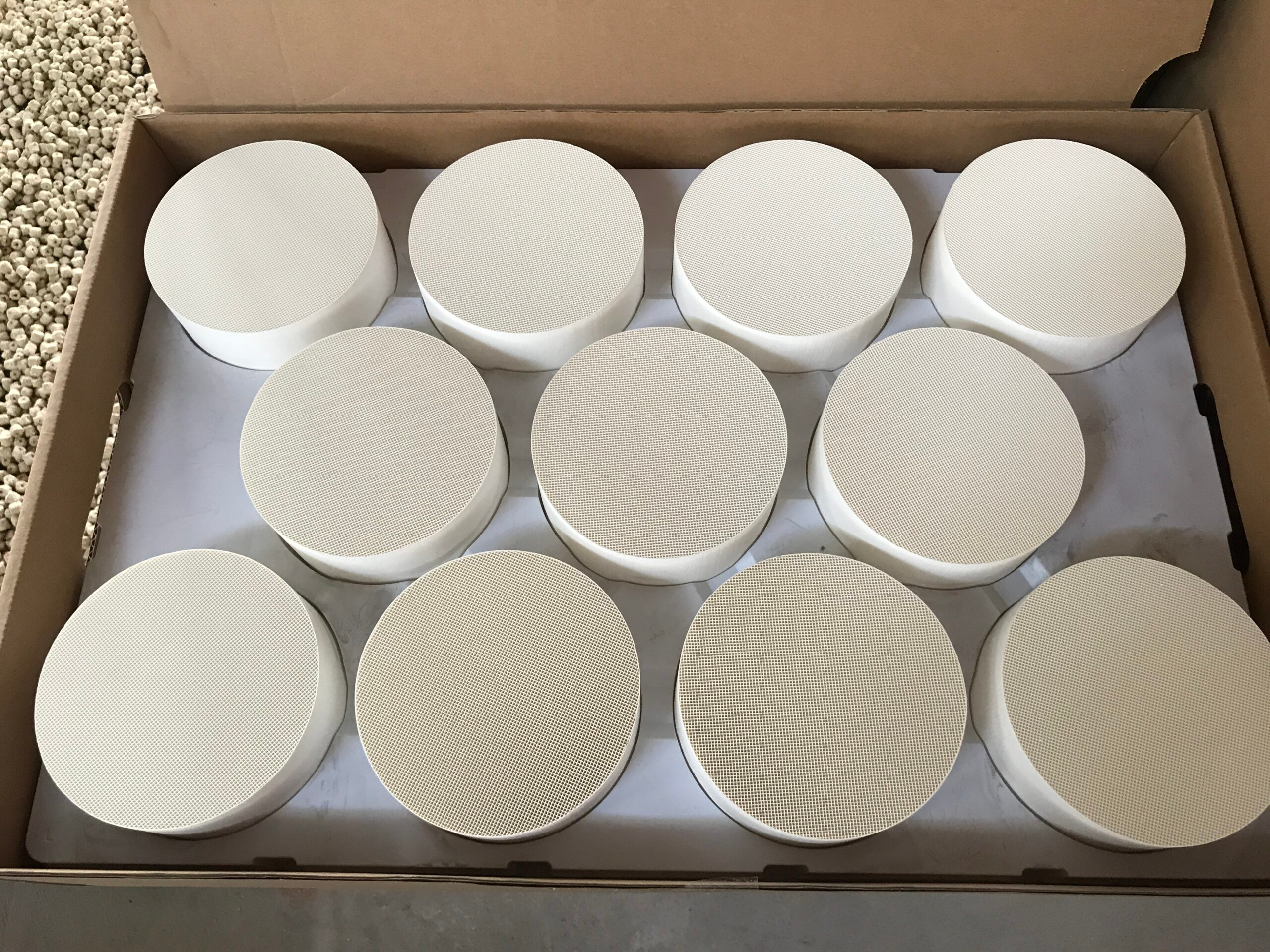
Space and temperature first narrow our Hualian Catalyst DOC options; ceramic or metal cores then take round, oval, or racetrack forms in customized dimensions. We describe a substrate suitable for exhaust temperatures above 600°C.
That material tolerance is not a promise that oxidation will be equally effective at every temperature below or above that point. It addresses survival under the stated thermal condition; reaction performance still depends on the coating, gas composition, and operating cycle. A substrate choice should keep those distinct questions visible.
Treat CPSI as a Flow and Contact Variable
CPSI counts the cells within one square inch of substrate cross-section. More cells can create a different distribution of channel wall area, but they also change the dimensions of the flow passages.
A specification that names CPSI without substrate diameter, length, wall construction, and expected flow cannot establish the resulting pressure loss. Gas must enter, traverse, and leave the channels; a restriction at any part of that path can matter to the exhaust system.
For a diesel oxidation catalyst, channel density is valuable because it helps determine the relationship between contact area and resistance. The required balance changes with flow rate. At high load, a denser or longer structure may impose a larger penalty than it does at low load.
At low temperature, added surface area cannot compensate for an unsuitable reaction temperature. These effects explain why CPSI is a design input to assess alongside geometry and coating, not an efficiency grade that can be read in isolation.
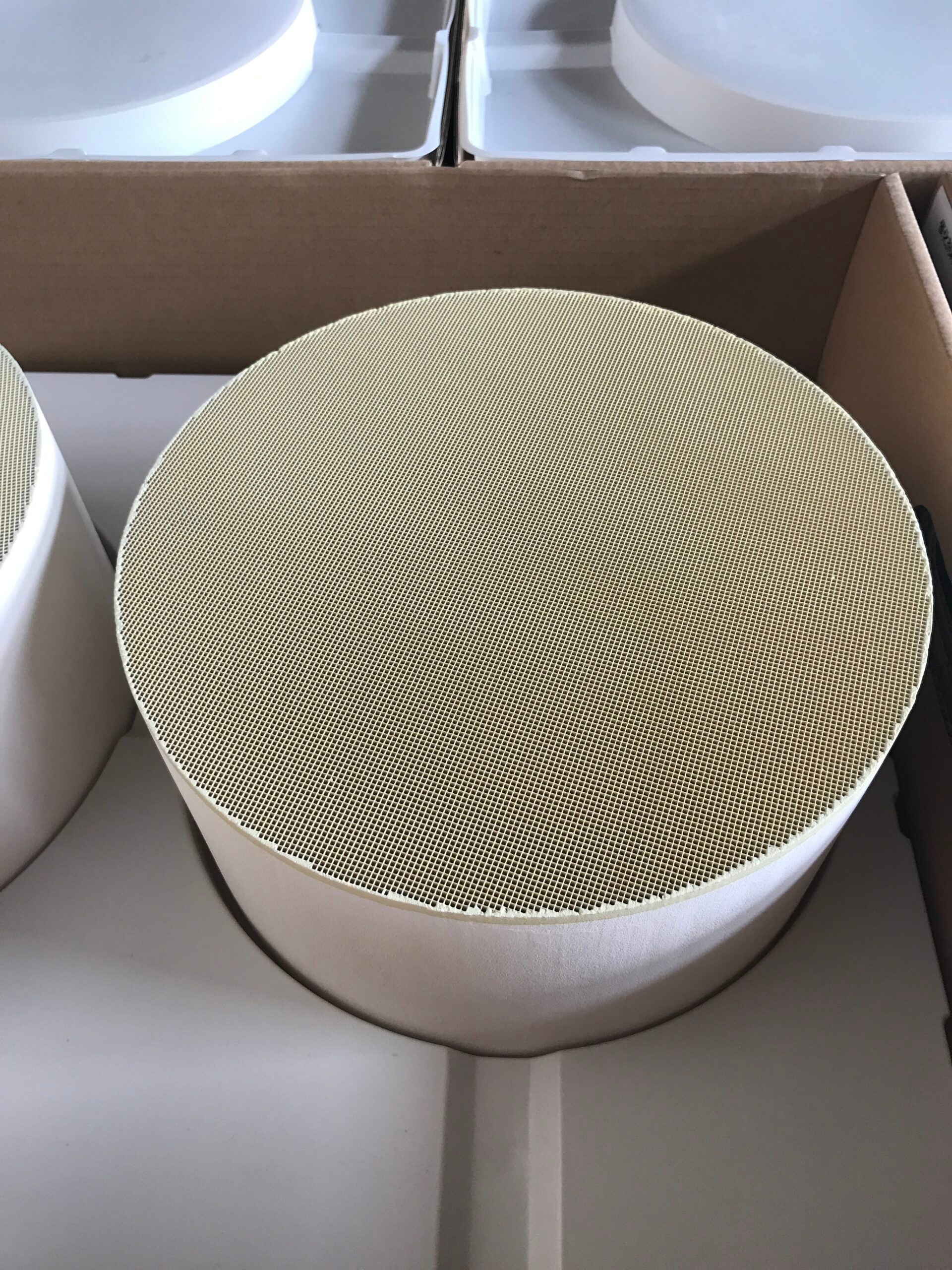
The listed 200, 300, 400, and 600 CPSI options are starting points for the flow and contact assessment, not ordered efficiency grades. The honeycomb structure is described as promoting low backpressure while providing a path for exhaust to contact the coated surfaces.
The choice among those cell densities still needs the customer’s flow range, installation envelope, and treatment target. For diesel oxidation catalysts used in different equipment layouts, the same CPSI can produce a different system result if substrate size or inlet arrangement changes. Comparing candidates at the same stated flow condition keeps the tradeoff intelligible.
Match the Coating to the Exhaust Task
The active coating addresses the chemical side of the selection. Platinum- and palladium-based formulations oxidize carbon monoxide, hydrocarbons, and soluble organic fractions in diesel exhaust. Which formulation is suitable depends on the pollutants to be treated and the temperature conditions in which the DOC spends its time.
A support with ample surface area cannot compensate for a coating that is poorly matched to the intended duty, just as a capable coating cannot remove a physical flow restriction created by unsuitable geometry.
Coating decisions also interact with the substrate. Its channels carry the gas past the active layer, while its material and shape influence packaging and heat transfer. Our coating formulations can be customized alongside substrate dimensions and geometry.
In that discussion, we would ask what the diesel oxidation catalyst must process, what temperature range it will experience, and how much pressure loss the system can accept. Those answers provide a reasoned basis for selecting among the available physical and chemical options.
An evaluation should compare the proposed combination under realistic conditions rather than assuming that a preferred substrate, the highest CPSI, or a particular coating will dominate every application.
The useful selection record identifies the flow and temperature inputs, target exhaust components, allowable dimensions, and the evidence used to judge the result. A sound DOC specification is the combination that fits those conditions as a system.