Diesel emissions include gases and solid particles, so an exhaust system needs more than one treatment mechanism. A catalytic converter exposes gaseous compounds to coated surfaces for chemical reactions; a particulate filter retains soot as exhaust passes through porous walls. Both may appear in the same exhaust system, yet each retains a distinct function.
The phrase “EPA compliant” adds another question: which exact product configuration was tested, against which requirement, and with what result? A reference to an agency or a vehicle standard is useful context, but it does not by itself establish that every converter and filter combination meets a particular rule.
Keep Conversion and Filtration Separate
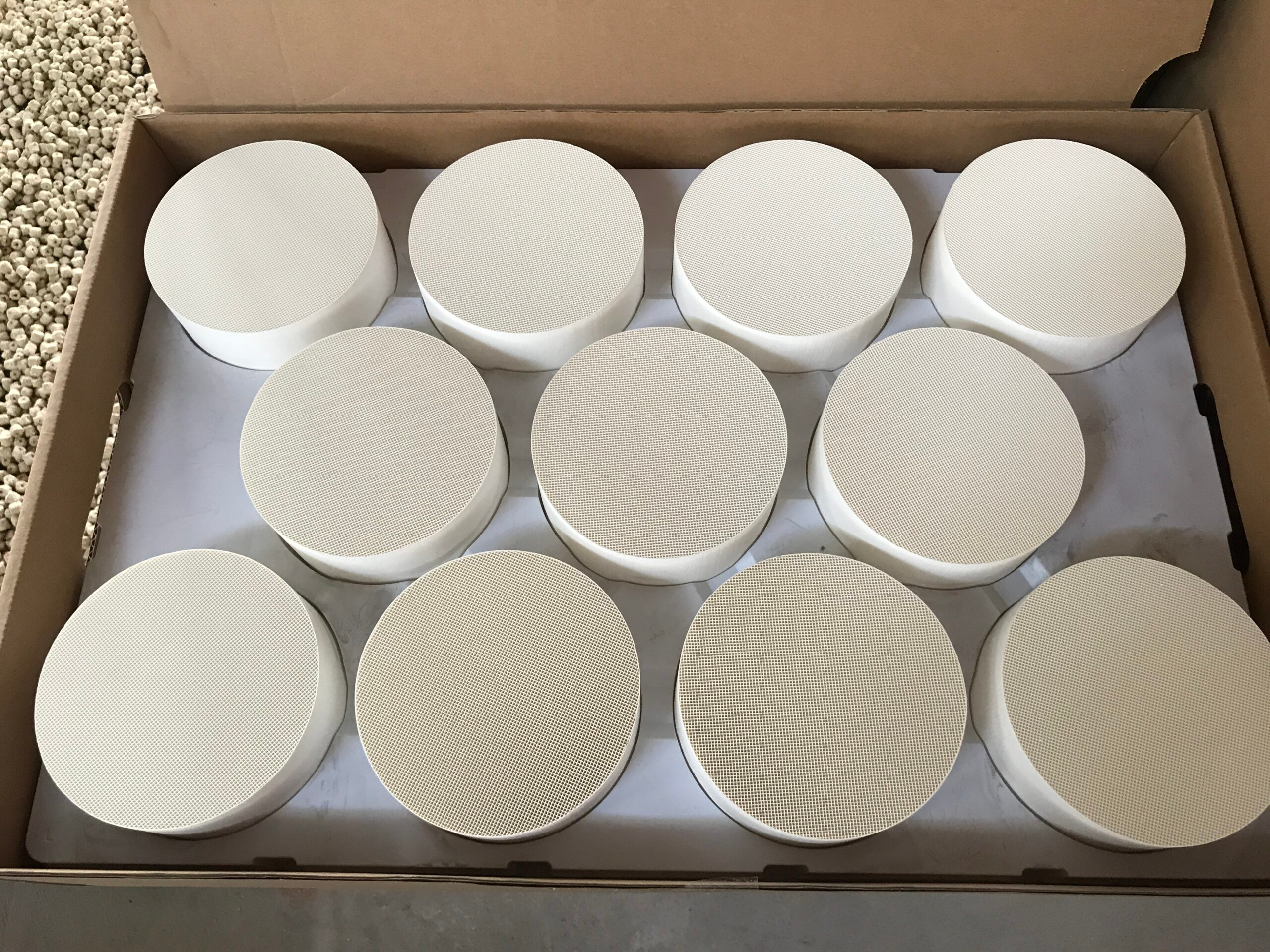
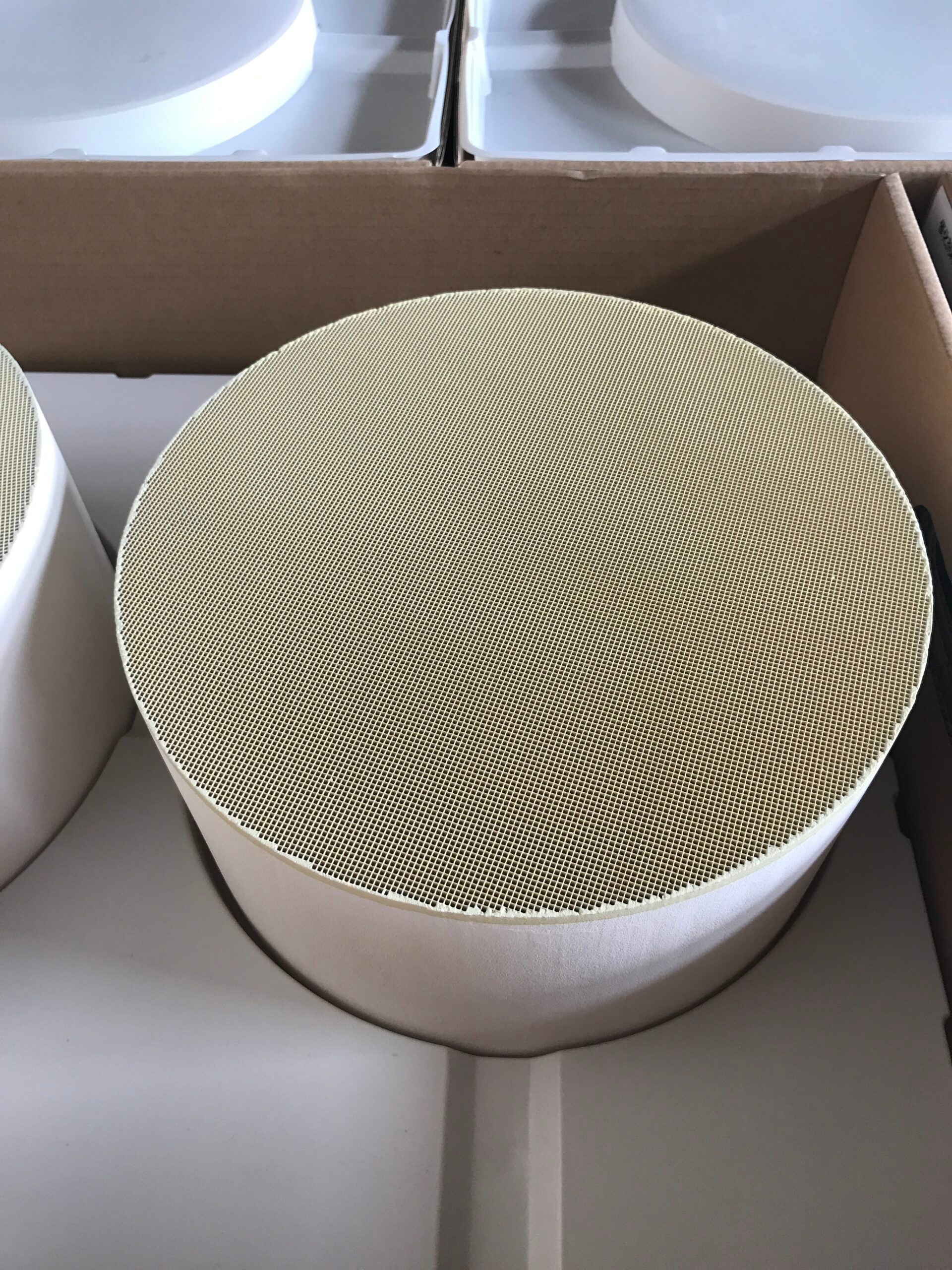
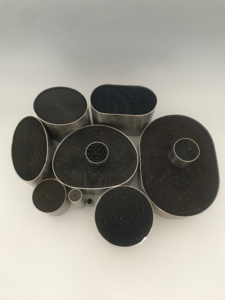
A metallic catalytic converter uses a structured metal honeycomb to guide exhaust along coated channels. Thin-wall construction can reduce flow resistance and allow heat to transfer quickly through the substrate. Its conversion performance depends on the catalyst formulation, the target pollutant, and the operating temperature.
A DPF addresses a different physical task: it captures particulate matter rather than merely passing the gas along open channels. Combining the two functions may be necessary for a diesel application, but each component needs evidence for the duty assigned to it.
Descriptions of epa compliant catalytic converters are meaningful only when the tested configuration and applicable standard are identified. The same principle applies to filters, whose capture and regeneration behavior cannot be deduced from a converter’s substrate specifications.
A statement about fast heat transfer in a metal honeycomb says something about the converter material; it does not establish soot filtration efficiency. A buyer assessing a combined exhaust line needs to keep those evidence categories separate.
Flow resistance adds a practical connection between the devices. Both occupy the exhaust path, so the installed system’s pressure loss reflects the converter, filter, pipework, and operating condition together.
A low-resistance converter may leave more room in a backpressure budget, but that observation does not quantify the DPF contribution. The result has to be evaluated for the complete configuration at the relevant flow points.
Read the Metallic Converter’s Evidence Precisely
Our metallic converter information at Hualian Catalyst describes a high-strength metal honeycomb with thin-wall construction, fast heat transfer, low exhaust resistance, and resistance to vibration. These features can matter where the component faces tight packaging or mechanical movement.
They describe the converter’s structure and intended behavior; they do not replace an emissions test for a specific installation. In a metallic catalytic converter project, dimensions, coating, and operating conditions remain part of the chosen configuration.
We offer metallic catalytic converters for applications aligned with Euro 3–6 and Tier IV emission standards. Our product information also references Euro 3/4 and CARB/EPA testing. Those are not identical claims. A listed suitability range identifies the markets or standards the product is presented for; a testing reference points to evidence that needs its own scope and result.
Neither phrase alone says that every assembled exhaust system is EPA compliant. The exact report and product variant matter, especially if dimensions or coatings are customized.
A combined converter-and-filter claim has to be tested against both gas treatment and particle capture in the assembled configuration. Our metal-substrate page covers converter construction and references testing, yet supplies no DPF construction or filtration result.
A soot-capture percentage belongs to the selected filter’s own specification and test record. The applicable EPA or vehicle standard must also be identified before any compliance result is interpreted.
Evaluate the Combination Against the Actual Standard
An emissions requirement applies to a defined engine or vehicle configuration and test method, not simply to a component name. The converter’s gas-treatment duty and the filter’s particulate duty must both be represented in the evidence.
Temperature, exhaust flow, component placement, and regeneration strategy can change what the assembled system does. A report for one configuration cannot automatically be transferred to a different substrate size, coating, or filter without examining the differences.
The term epa compliant catalytic converters can also conceal whether the speaker means component testing, vehicle approval, or suitability for a particular project. Those are different questions.
A clear technical file identifies the standard, the tested article, its configuration, and the measured outcome. For a filter, the file also needs relevant filtration and regeneration evidence. Without those details, the label is too broad to settle a purchase or engineering decision.
Our metal honeycomb can be discussed as one part of such a system. Its thin-wall, heat-transfer, and vibration characteristics bear on packaging and flow, while the downstream or adjacent filter has its own particle-control role.
The combined backpressure and emissions result depends on the installed layout, not on either product description in isolation. A metallic catalytic converter selected for the system still needs to be assessed beside the actual filter and engine conditions.
Converter and filter functions complement each other only when their configuration and evidence align. The metallic substrate information establishes what can be said about our converter; the supplied page leaves DPF capture performance unspecified. A defensible compliance claim identifies the exact assembly and the test record supporting it. It also includes separate evidence for particle control.