Engine movement reaches a converter through its mounts as repeated vibration and occasional shock, while thermal cycling adds expansion and contraction. The substrate must remain intact, and its coating and flow passages must continue to serve the exhaust task. A material comparison is therefore about more than heat tolerance in a catalog.
Metallic and ceramic supports respond differently to motion and temperature change, while the housing and installation determine how those loads reach the core. In a high-vibration application, the useful choice starts with the load path. The material and shell are then examined around that path.
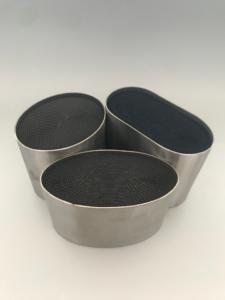
Trace the Loads Into the Substrate
Vibration can come from the engine, vehicle frame, or attached pipework. Mounting position and support affect how strongly that movement reaches a converter. Thermal cycling adds expansion and contraction as exhaust temperature rises and falls.
A core that is sound under a steady laboratory condition may face a different combination of mechanical and thermal stress in service. The material decision should account for that combined exposure rather than a single maximum-temperature figure.
A metallic converter is often considered for compact or high-vibration installations because the substrate offers mechanical strength and thermal-shock resistance in the supplied information. Those properties are relevant where the system shakes or has little room for a large support structure.
They do not remove the need for appropriate mounting or make every metal design equivalent. Core geometry, shell material, and the way the assembly is supported still influence durability.
The exhaust-treatment task remains in view. A metallic catalytic converter must maintain open channels and coating access while it withstands vibration. A structure chosen solely for strength could still be unsuitable if its dimensions create excessive restriction or if its active formulation does not match the application. Mechanical survival and emissions performance must be considered together, yet each addresses a different engineering requirement.
Repeated motion can concentrate stress near a support or connection rather than across the substrate evenly. Thermal expansion may add a second movement at the same location.
That is why an installation drawing and the expected operating cycle matter to the material comparison: they show where a strong core might still need suitable support, and where a ceramic alternative would face the same loads. The mounting arrangement is part of the test condition, not a detail to add after selecting the substrate.
Compare Metal and Ceramic Under the Same Conditions
Metallic substrates are described as providing faster light-off, greater mechanical strength, and better thermal shock resistance. Faster heat transfer can matter during frequent starts, while strength can matter at locations exposed to vibration.
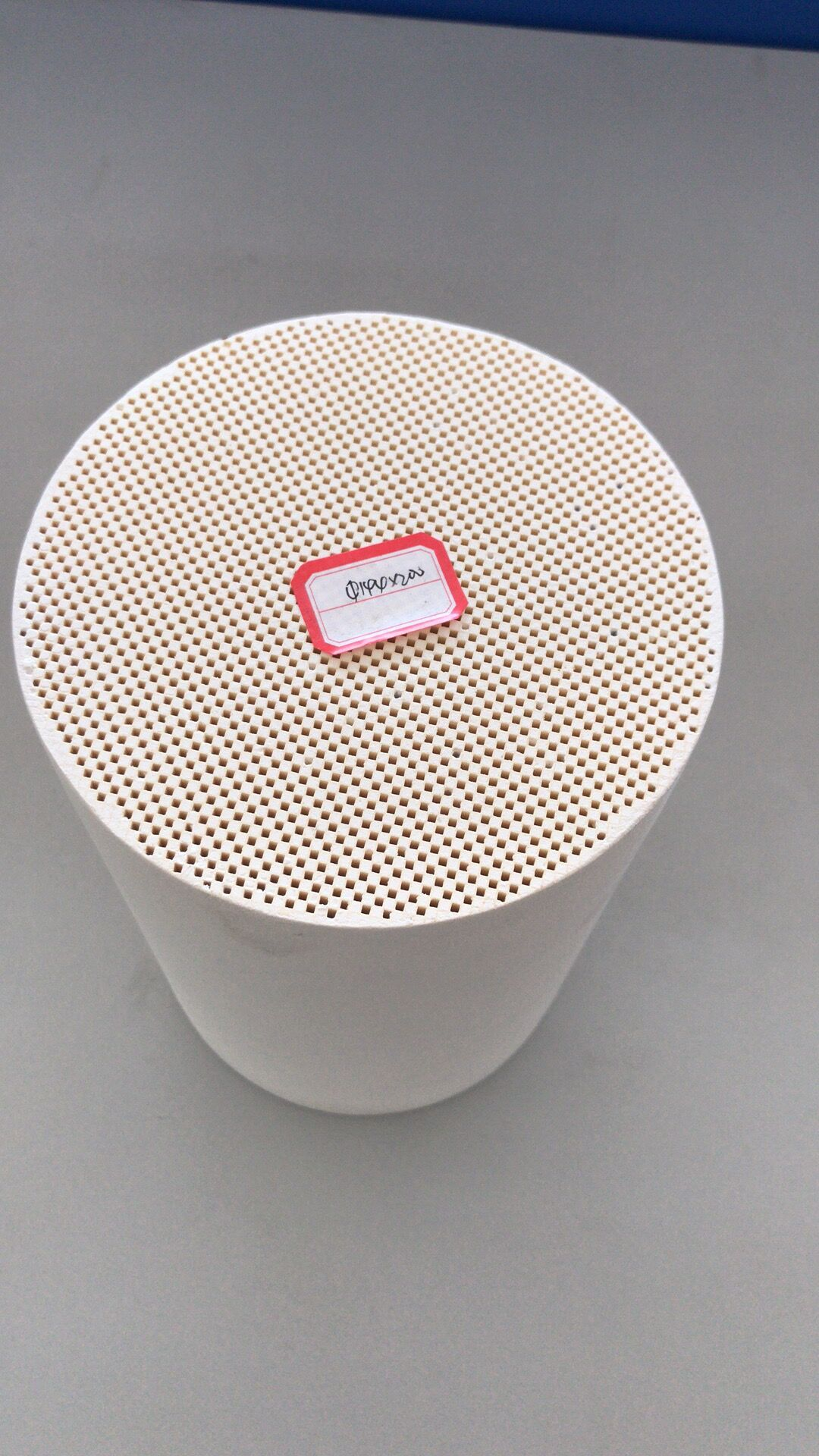
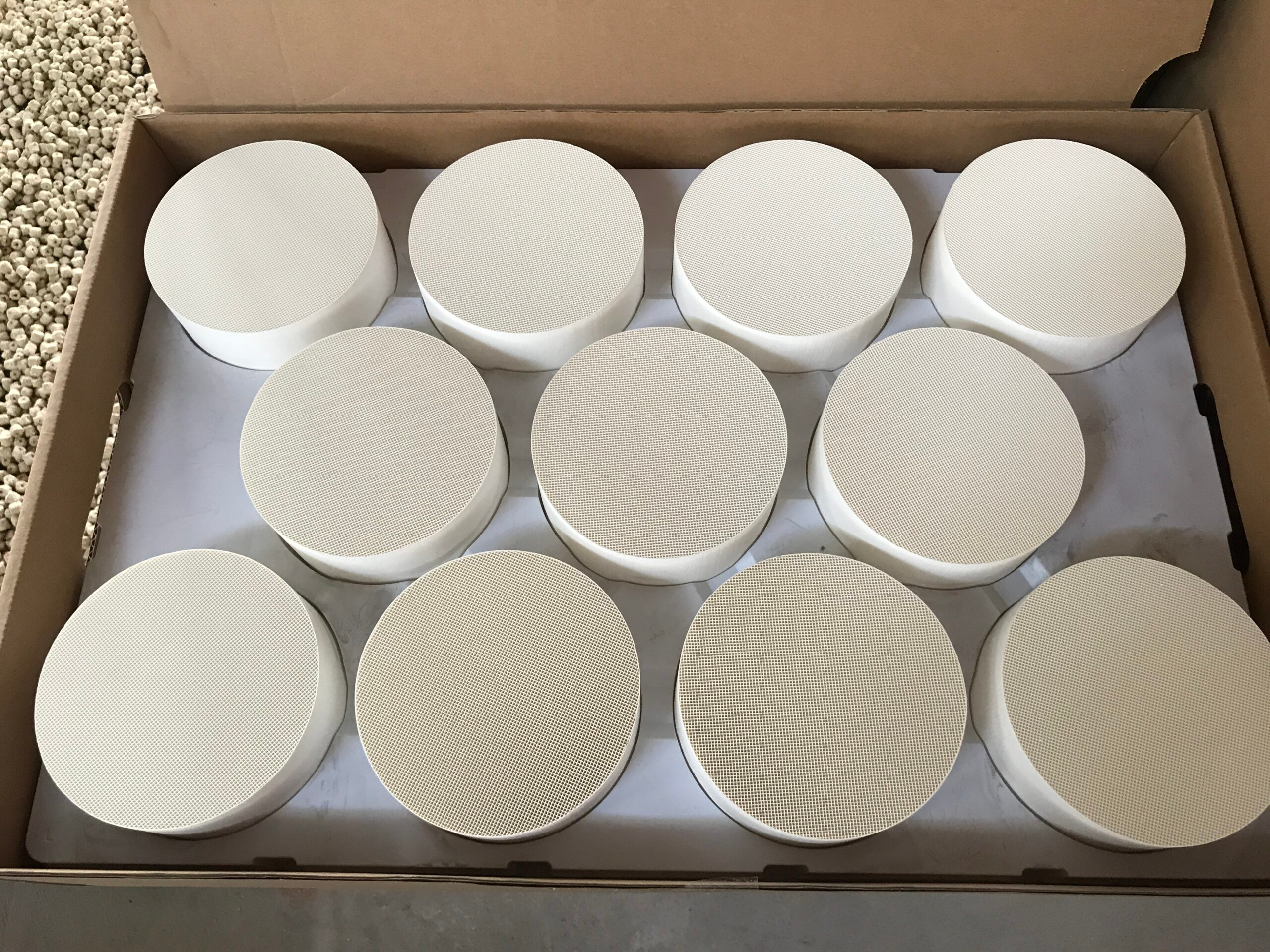
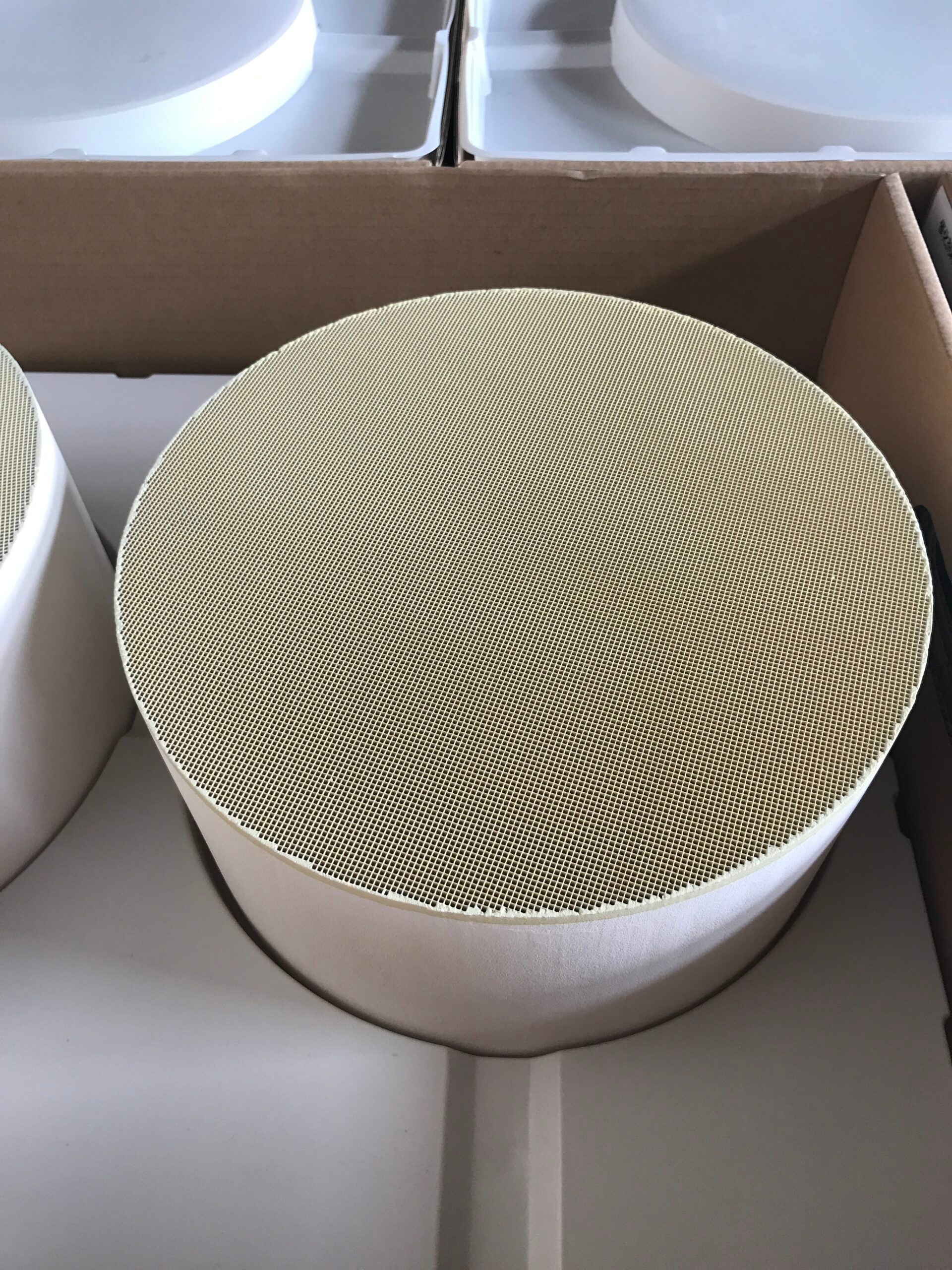
Ceramic substrates are presented as thermally stable and cost-effective. Their advantages may carry more weight in a steadier installation or where packaging and load conditions allow a suitable ceramic structure.
This comparison is not an absolute ranking of materials. If the engine remains hot and mounting isolates much of the motion, a ceramic option may deserve serious consideration. If repeated starts and severe vibration dominate, the metal properties become more relevant.
A metallic converter chosen for those reasons still needs a matching coating, size, and flow path. The decision is conditional on the application’s stress history, not on a claim that one material is universally more advanced.
Compact, high-vibration installations are the applications we cite for Hualian Catalyst metallic substrates, whose stated properties include faster light-off and greater strength. Those properties frame a discussion about duty cycle and installation; they do not establish a universal service life.
For a metallic catalytic converter, evidence under the expected vibration and thermal conditions would be more informative than a generic comparison made without the actual mounting arrangement.
Examine the Core and Shell as an Assembly
The metal core materials listed for our converters include FeCrAl. Stainless-steel shell options include SUS444, SUS441, SUS430, SUS304, and SUS316. These are different parts of the assembly: the core forms the flow structure, while the shell surrounds and supports it.
A shell grade named in a specification does not, by itself, describe the vibration exposure of the core or the finished converter’s durability. Geometry, joining, and support in the exhaust system remain relevant.
For a high-vibration metallic converter, a technical discussion can start with mounting location, expected movement, temperature cycling, and available space. Those conditions then guide review of core design, shell choice, and coating duty.
The same information helps compare a ceramic alternative fairly, because both candidates are assessed against the same installation requirements. A comparison that changes the load conditions between materials cannot isolate what the substrate choice contributed.
Our listed core and shell options provide material choices for that assessment, but the final configuration belongs to the customer’s application. The desired result is an assembly that retains its physical integrity without losing the flow and reaction path the exhaust system requires.
A metallic catalytic converter may be favored under severe motion, while a ceramic candidate can remain appropriate under a different balance of thermal, mechanical, and cost constraints.
High-vibration selection becomes clearer when the loads are described before the materials are ranked. Metal’s strength and thermal response and ceramic’s stability and cost position are relevant for different reasons. The final comparison belongs to the installed converter, where mounting, core, shell, and operating cycle determine which property matters most.