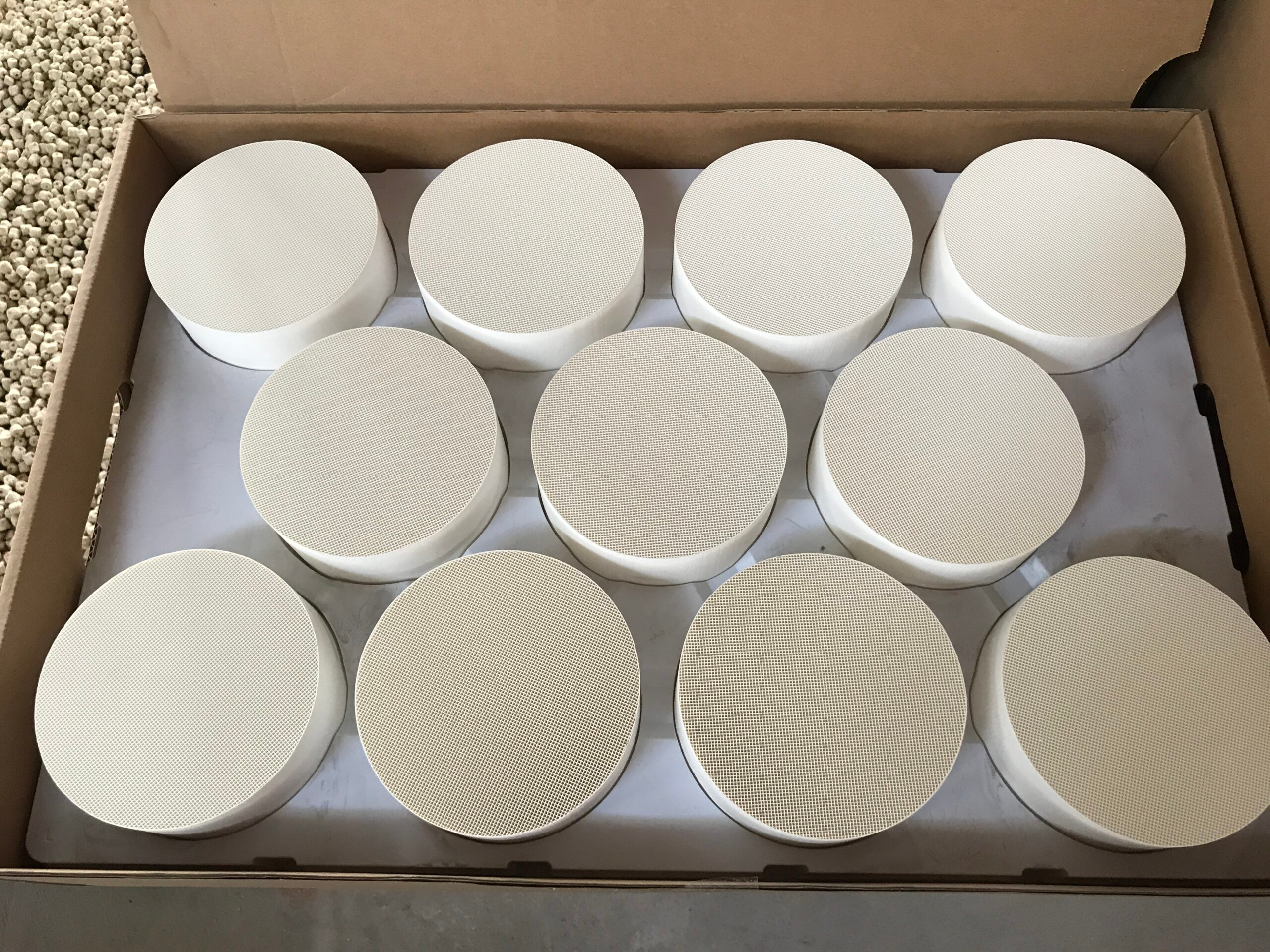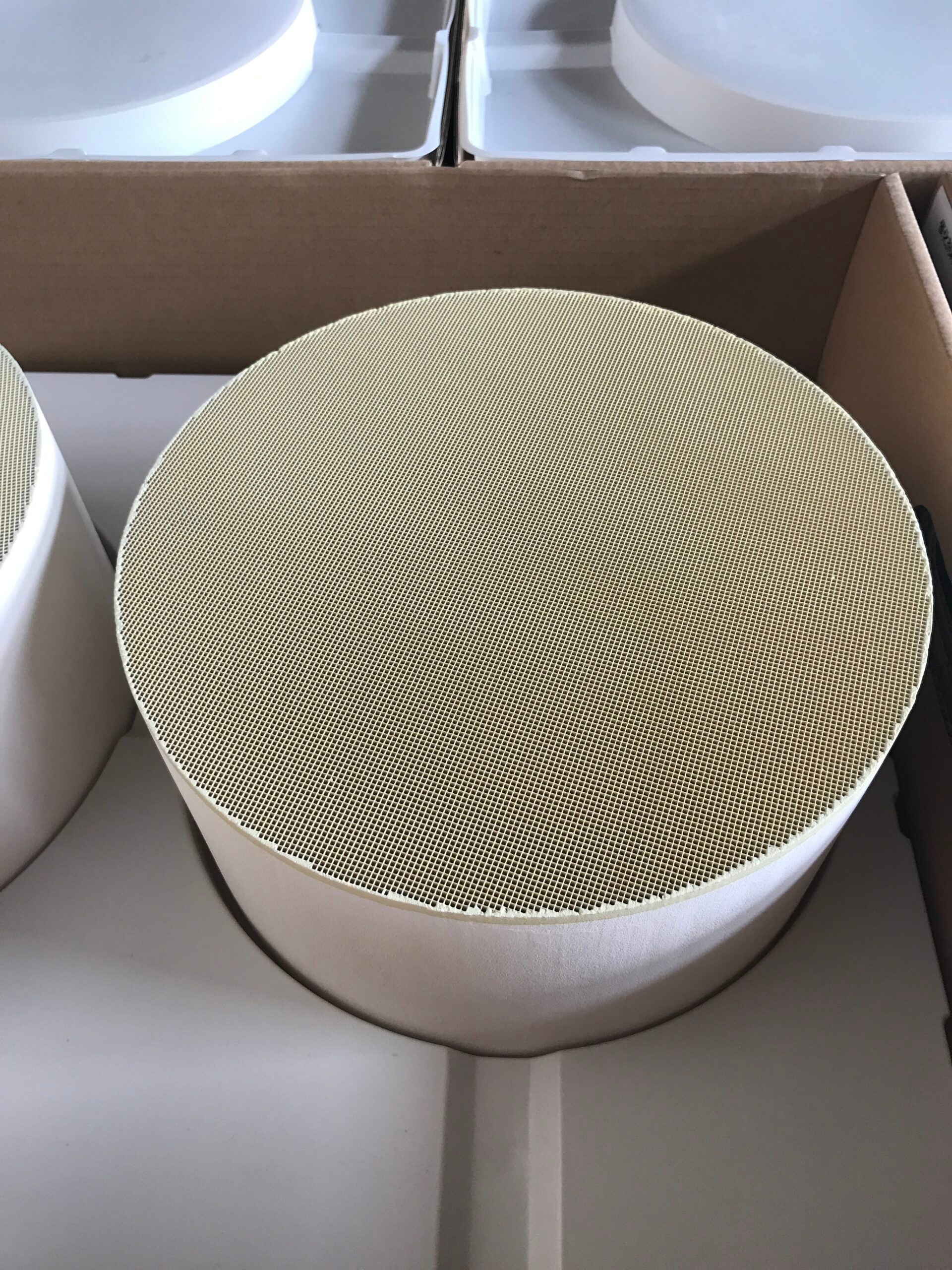
Soot capacity is not a fixed property of a filter material alone. Exhaust conditions determine how quickly soot accumulates, while regeneration determines how often it is removed. Cordierite and SiC respond differently to the thermal and mechanical demands of that cycle.
An exhaust particulate filter must therefore be evaluated across the full capture-loading-cleaning cycle, not judged from an unused core on a specification sheet. The operating pattern that fills the filter also determines the regeneration events that may restore its available capacity.
Follow Soot Through the Wall-Flow Core
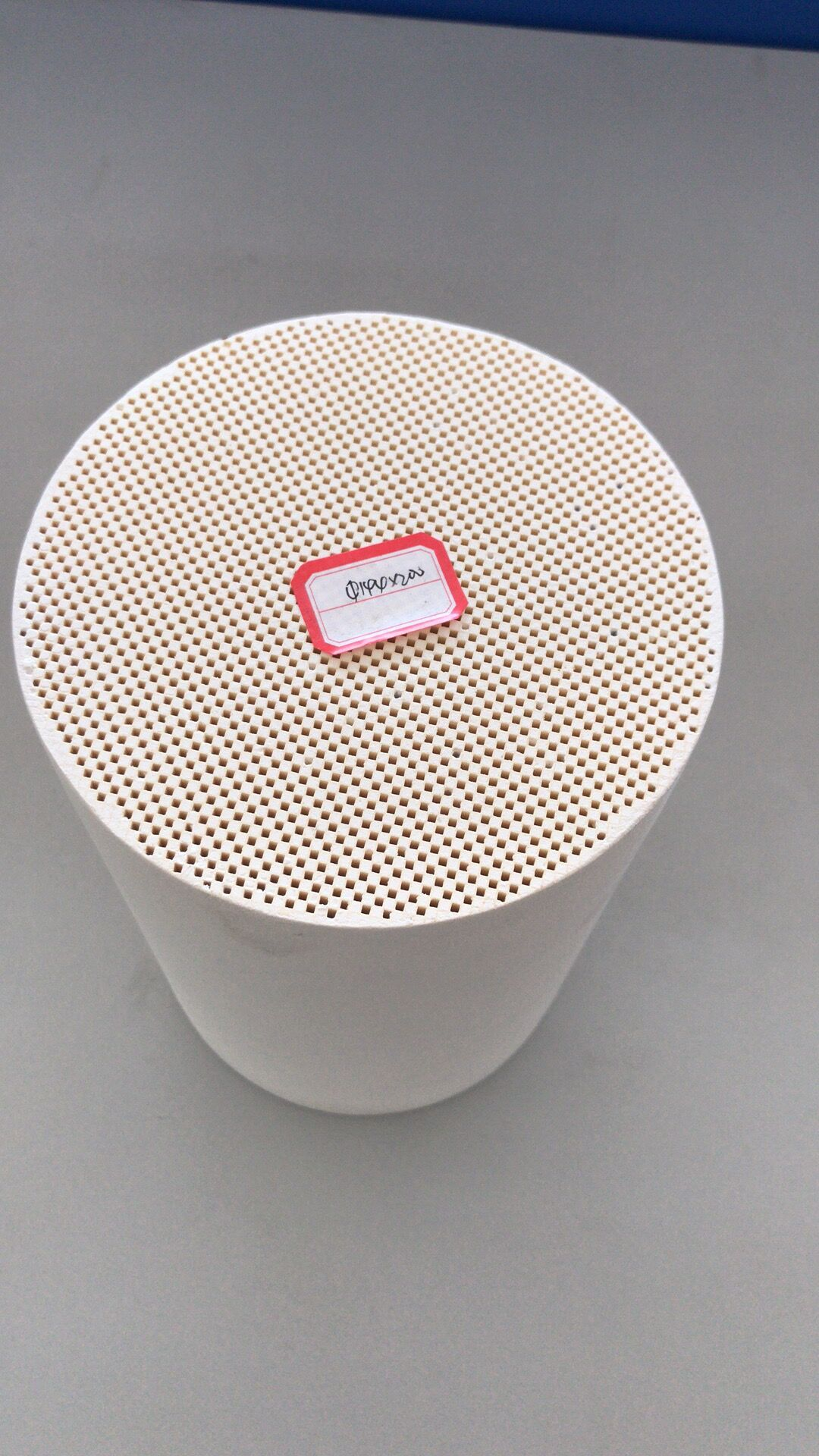
A DPF closes alternate ends of its honeycomb channels so exhaust crosses porous walls to reach an open outlet. Solid particles remain on or within those walls while treated gas passes onward.
As soot accumulates, resistance can increase and the filter has less room for further loading before a regeneration event is needed. The exact soot capacity depends on substrate size, pore structure, exhaust flow, and operating strategy. Material name alone does not define a universal mass limit.
For a diesel particulate filter, capture efficiency and backpressure must be considered together. A structure that retains a high share of soot still has to pass the required exhaust volume. The clean-filter condition is only one point in the service cycle.
Pressure at a higher soot load can have a greater impact on the engine, and the chosen regeneration strategy affects how long the filter remains at each state. A useful assessment records both capture and pressure across relevant operating conditions.
Our filters at Hualian Catalyst use wall-flow construction with Cordierite or SiC and are described as trapping more than 95% of soot. That figure describes capture efficiency in the information we provide, not a universal soot-storage capacity for every size.
We present the structure as low-backpressure and suitable for high-temperature operation, but an installed result still depends on the filter configuration and loading state. Capacity needs its own test or specification for the proposed application.
Read Passive and Active Regeneration as Different Events
During a sufficiently hot duty cycle, soot held in the porous walls can burn without a separate heating command. That passive route reduces loading while the machine operates, provided the temperature persists long enough. Active regeneration adds heat when normal exhaust temperature is insufficient.
Both routes burn stored soot, but they expose the filter to different timing and thermal patterns. Material selection therefore relates to how often each route is expected and how the component handles repeated temperature changes.
The diesel particulate filter in a stop-and-go urban vehicle may experience frequent low-temperature operation, making passive regeneration less consistently available. A heavy-duty machine under sustained load may present a different temperature history, though its soot production and mechanical demands can also differ.
Neither duty description alone proves a regeneration interval. It indicates which temperatures, loading rates, and control events need to be measured before a material or size is finalized.
An exhaust particulate filter must tolerate the heat of regeneration without losing its wall-flow function. Thermal shock is one concern when temperature changes rapidly; heat distribution through the core is another.
A material with higher conductivity can spread heat differently, while a lighter, cost-conscious option may be appropriate where the duty is less severe. The selection belongs to the full cycle, not only the moment when the engine produces its highest exhaust temperature.
Choose Cordierite or SiC From the Duty Cycle
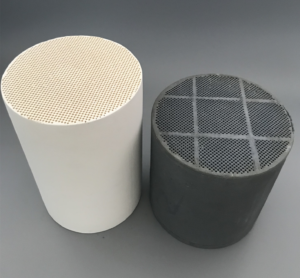
We position Cordierite DPF options for light-duty and stop-and-go urban use, citing low weight, resistance to thermal shock, and lower cost. Our SiC options provide higher thermal conductivity and mechanical strength for heavy-duty or harsh conditions.
Both are wall-flow filters that support passive or active regeneration. The difference is how those material properties align with the anticipated loading, thermal events, and mechanical stress of the application.
For a diesel particulate filter project, the useful inputs include exhaust-flow range, soot production pattern, available space, regeneration strategy, and temperature history. They make it possible to compare material and geometry on the same basis.
A strong SiC core may be warranted by demanding thermal or mechanical exposure; a Cordierite unit can be appropriate when its stated properties fit a lighter duty. No material label substitutes for confirming the required capacity and pressure behavior at the chosen size.
The more complete specification connects capture, loading, and regeneration. Cordierite and SiC options and the stated soot-capture level define what our filter information covers.
Soot capacity for a proposed size still comes from the loading and regeneration behavior measured over its intended duty cycle. That boundary keeps material choice linked to measurable operation rather than a generic promise about how long a filter will run between regeneration events.
Filter material matters because a DPF repeatedly moves between collecting soot and removing it. Cordierite and SiC offer different ways to handle that thermal and mechanical cycle, but their value appears only in a defined application. A capture figure describes the beginning of the cycle. Temperature, pressure, and regeneration history determine how the filter performs over time.