An empty diameter box on a DPF inquiry form hides a larger problem. You cannot size the filter usefully until you know the engine’s exhaust flow, soot production, and available installation space. Material, cell density, and shape belong on the specification, but they are responses to an application rather than a substitute for describing it.
A custom dpf request becomes workable when you state what the filter must capture, how it will regenerate, and which dimensions are constrained. These inputs give each number in the drawing a practical reason to be there. Those inputs give each number in the drawing a practical reason to be there.
Describe the Duty Before Filling the Specification Table
The first specification entries should describe the engine and its operating pattern. Flow and temperature ranges, expected loading, available packaging space, and intended emissions duty set the boundaries for a DPF. These parameters define what the filter must handle.
An engine that spends long periods at a steady hot load presents different regeneration opportunities from one that runs short urban trips. The filter also needs a defined position in the exhaust line, with inlet and outlet connections that fit the vehicle or machine. Without these details, a nominal diameter is only a packaging guess.
Soot capacity requires separate consideration from capture efficiency. Capture describes how much particulate matter the wall-flow core retains under stated conditions. Capacity concerns how much material can accumulate before pressure loss or the regeneration strategy reaches a limit.
A high capture claim does not define a universal storage mass for every size. The inquiry should therefore identify the allowable pressure loss and how loading will be monitored or managed, not merely request the greatest possible capture figure.
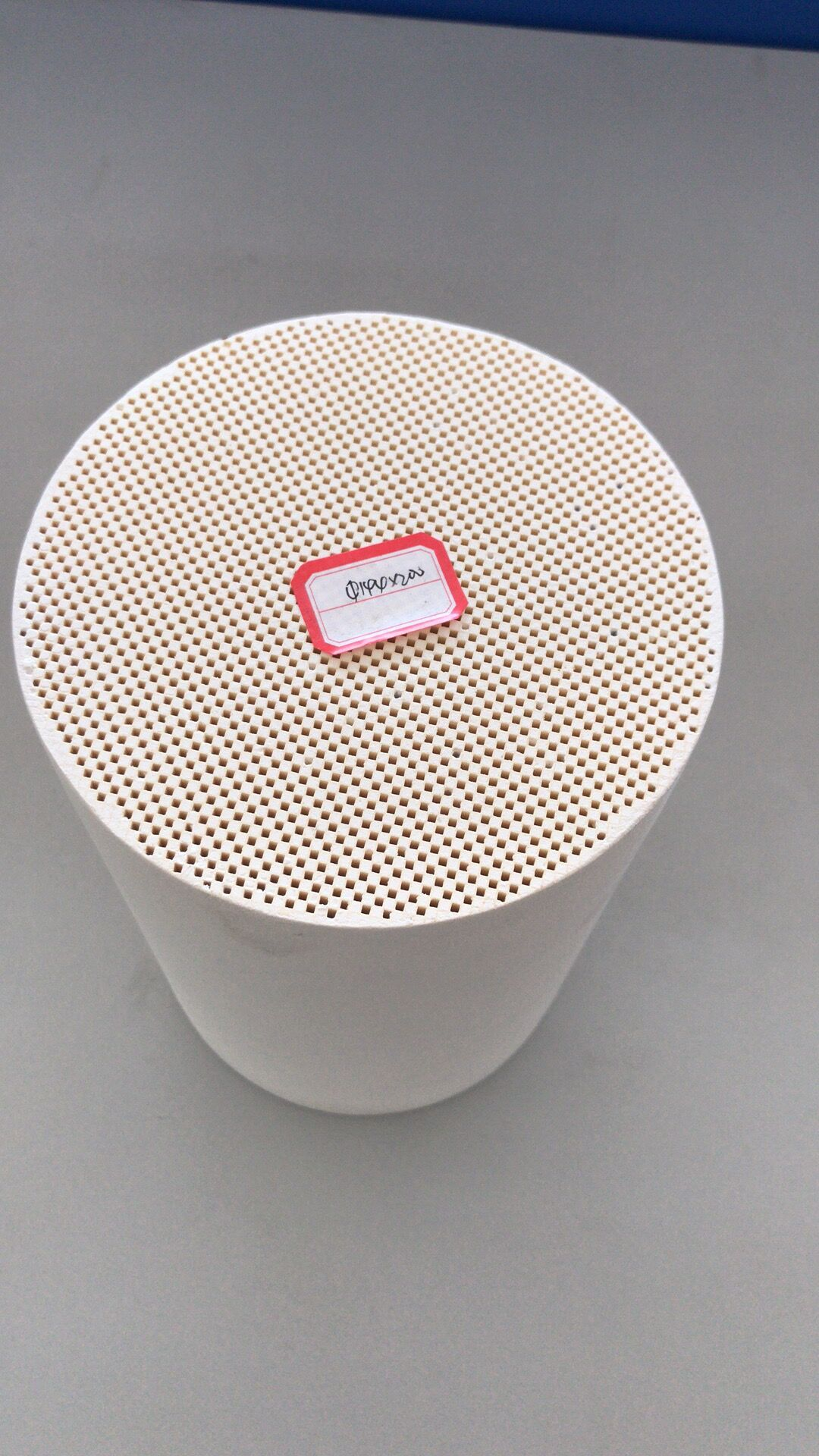
The wall-flow mechanism explains the need for those conditions. Alternate channel ends direct exhaust through porous walls, where soot remains while gas continues onward. As retained material builds up, the filter’s operating state changes. A custom dpf design must be evaluated at more than the clean-filter point if the application is expected to run between regeneration events.
The diesel particulate filter specification should also state which operating point defines its pressure-loss allowance. A clean core and a loaded core answer different questions. Naming the expected interval between regeneration events keeps the soot-capacity discussion connected to the way the engine will actually be run.
Turn Material and Geometry Into Specific Options
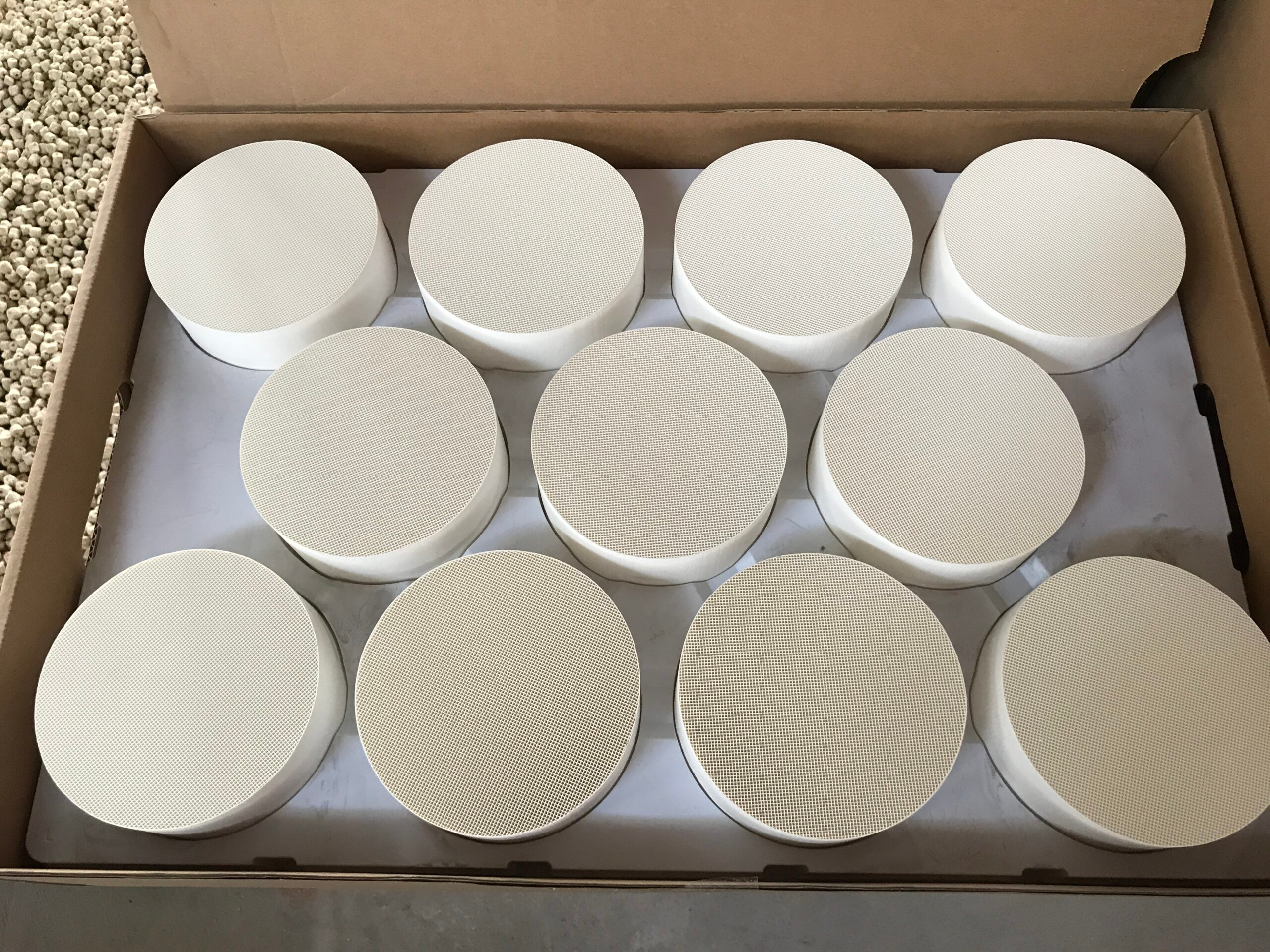
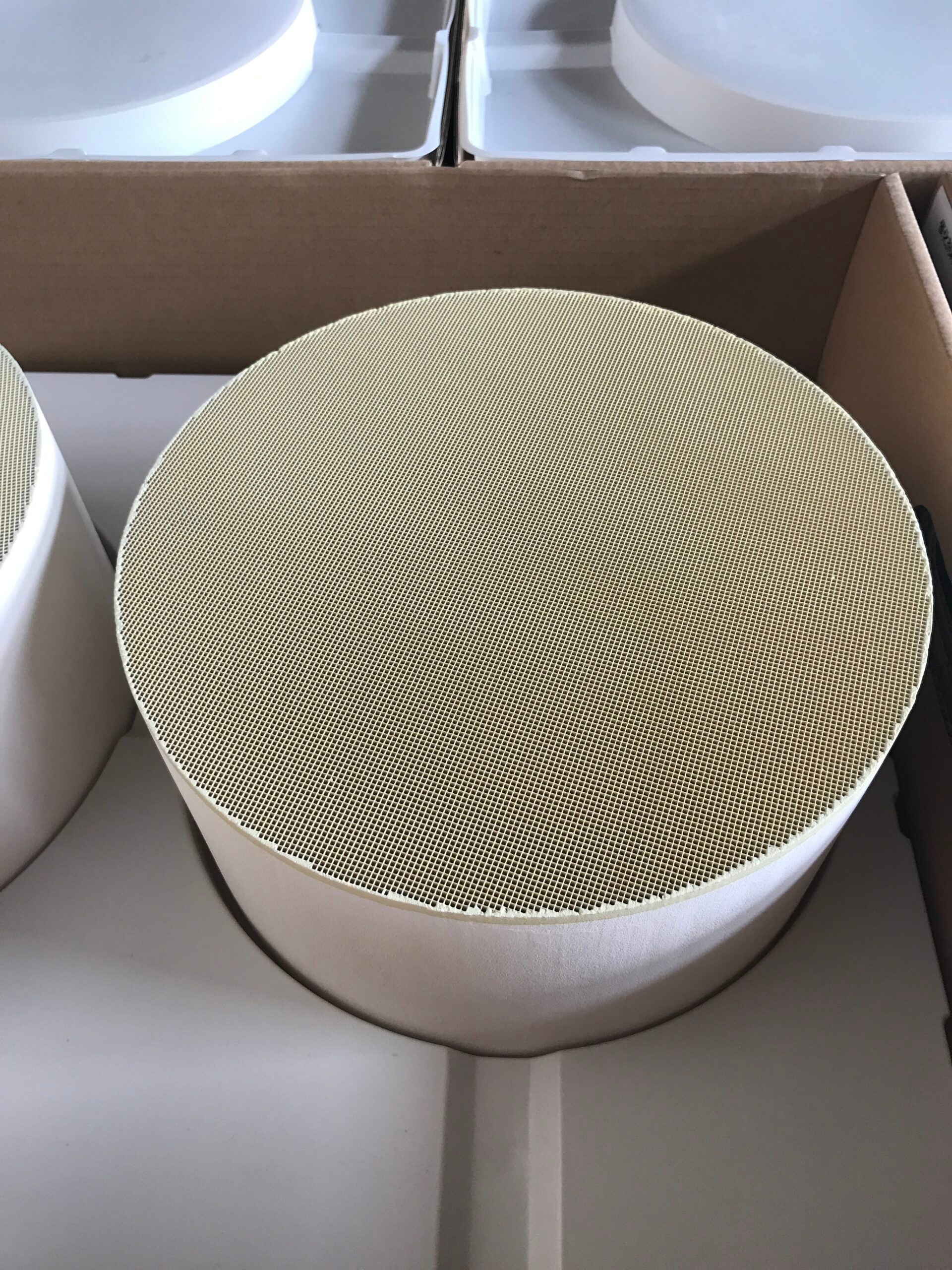
Cordierite and SiC are the two material options we offer. The material decision affects how the filter handles thermal and mechanical demands, while the dimensions and channel structure affect flow and capture.
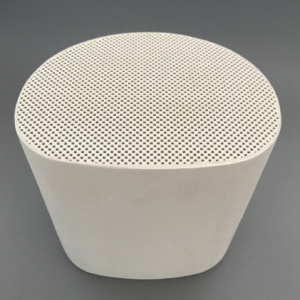
We offer round or square shapes, along with customizable diameter and length. The chosen outer form has to fit the envelope and its connection points; internal channel area still needs to serve the exhaust flow.
For a diesel particulate filter, CPSI names the number of cells in one square inch of cross-section. The cell count describes a pattern of passages, whereas the amount of soot stored and the resulting pressure rise are properties of the complete, loaded filter.
A 100 CPSI part and a 350 CPSI part may differ in passage dimensions, yet their installed behavior also depends on core size, wall properties, and loading state. A useful specification treats CPSI alongside material, dimensions, and intended operating conditions, rather than as a quality ranking.
Once those inputs are defined, we can configure a Hualian Catalyst DPF using Cordierite or SiC, round or square geometry, customizable diameter and length, and 100, 200, 300, or 350 CPSI.
Our listed applications include Euro 4, Euro 5, and Euro 6 exhaust treatment. These are configurable ranges and application references, not a promise that one listed combination automatically meets a particular engine’s requirements. The customer’s drawing and duty data determine which options deserve evaluation.
Tie Soot Loading to a Regeneration Plan
Regeneration removes accumulated soot so the DPF can continue to operate within its pressure allowance. Passive regeneration relies on sufficiently hot exhaust during normal use. Active regeneration adds heat when the duty cycle does not supply enough.
The system design needs to identify which route is expected, when it is triggered, and what temperature exposure the filter will see. That strategy affects the material and size choice because the core experiences both soot loading and thermal events.
An exhaust particulate filter with a suitable clean pressure reading may still prove undersized. This happens when the filter loads too quickly for the intended regeneration schedule. Conversely, a larger filter that is difficult to package may introduce other installation problems.
The specification needs a target for acceptable pressure over the relevant loading range and a clear basis for judging soot capacity. Until pressure and soot-capacity targets are measured, the proposed size and CPSI remain provisional.
Our wall-flow options include passive and active regeneration. The proposed custom dpf needs capacity data for its geometry and duty cycle, alongside the pressure allowance.
A buyer can make the next technical exchange productive by supplying the flow and temperature profile, available envelope, soot-loading estimate, pressure limit, and regeneration method. Those inputs turn a menu of material and cell-density options into an evaluable design.
A complete request connects the service cycle to the physical part. Material, shape, CPSI, and dimensions describe what may be built; soot loading and regeneration describe how it will be used. The custom specification is ready for evaluation when those two descriptions refer to the same engine and operating pattern.