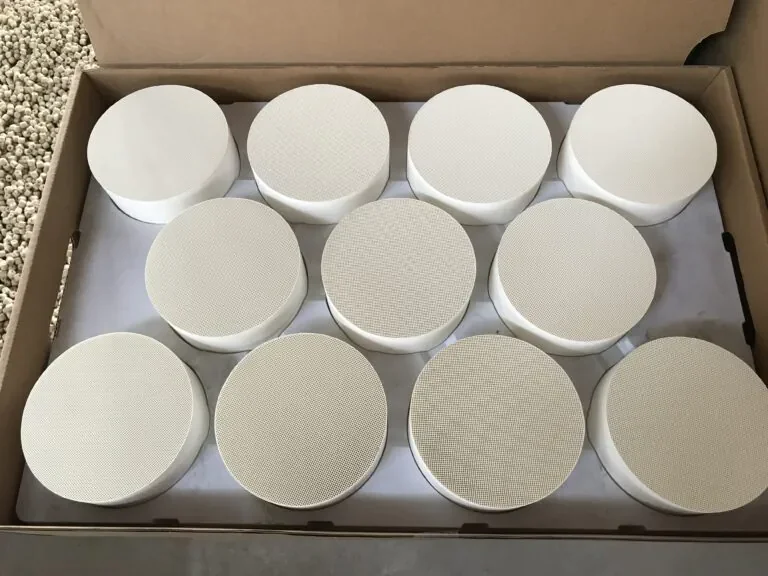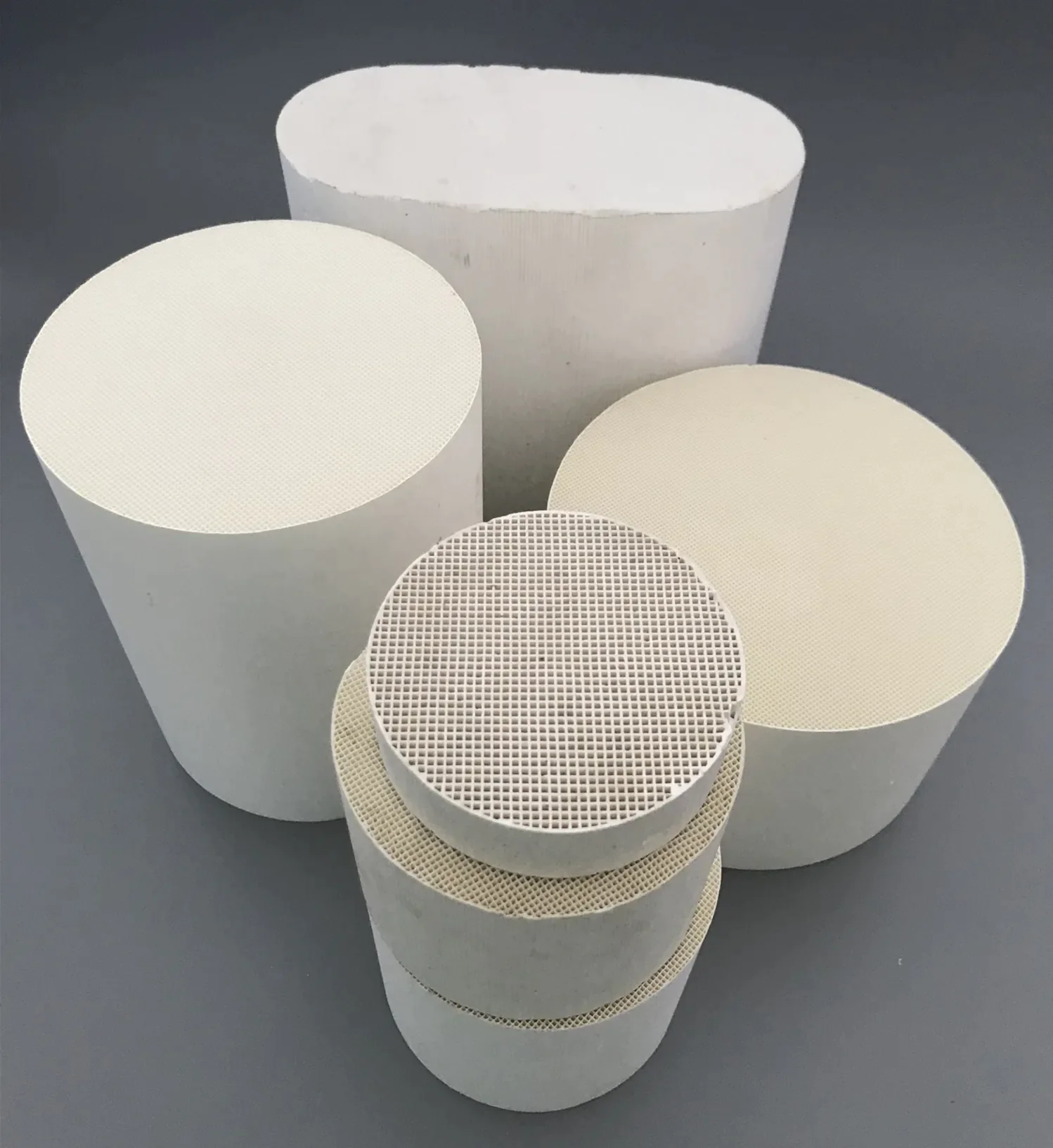
Diesel engines are valued for their torque, durability, and fuel efficiency. However, combustion under oxygen-rich conditions also produces nitrogen oxides (NOx), including nitric oxide (NO) and nitrogen dioxide (NO₂). Controlling these emissions requires an exhaust aftertreatment system that can operate under changing engine loads. Selective catalytic reduction (SCR) is widely used in heavy-duty vehicles, off-road machinery, marine engines, and stationary power units. At Hualian Catalyst, we develop honeycomb SCR catalyst solutions for diesel applications. Our selective catalytic reduction catalyst range supports urea-SCR systems that convert NOx into nitrogen and water.

The Basic Principle Behind a Selective Catalytic Reduction Catalyst
SCR is a chemical reduction process. It uses ammonia (NH₃) as the reducing agent and a catalyst to promote reactions between ammonia and NOx in the exhaust. Since storing and handling ammonia directly can be impractical in mobile equipment, most diesel systems use an aqueous urea solution, commonly known as diesel exhaust fluid (DEF) or AdBlue.
The control unit calculates the required reductant dose using engine operating data and NOx sensor signals. An injector sprays the urea solution into the hot exhaust upstream of the SCR catalyst. Heat evaporates the water and decomposes the urea. The resulting intermediates then react with water to produce ammonia, the active reducing agent at the catalyst surface.
For the predominant nitric oxide component in diesel exhaust, the standard SCR reaction is:
4NH₃ + 4NO + O₂ → 4N₂ + 6H₂O
When NO and NO₂ are present in suitable proportions, a faster pathway can occur:
2NH₃ + NO + NO₂ → 2N₂ + 3H₂O
These reactions explain the term “selective.” Under suitable conditions, ammonia reacts with nitrogen oxides to form nitrogen and water. The catalyst accelerates the reaction but is not consumed as a reactant.
How the SCR System Works from Injection to Exhaust Outlet
The SCR catalyst is one component in a coordinated aftertreatment system. A typical diesel layout may include a diesel oxidation catalyst (DOC), a diesel particulate filter (DPF), a urea dosing and mixing section, and an SCR catalyst. The exact arrangement depends on the engine platform and emissions-control design.
The DOC can oxidize carbon monoxide and hydrocarbons, and it may also adjust the NO-to-NO₂ balance. The DPF captures particulate matter; it performs a different function from the SCR catalyst and should not be treated as a NOx-reduction device.
Next, the dosing system injects DEF into the exhaust stream. Effective atomization, evaporation, decomposition, and mixing are essential. Poor mixing can create uneven ammonia distribution across the catalyst face, while insufficient temperature can limit ammonia generation or contribute to deposits. The prepared exhaust then enters the SCR honeycomb, where NOx and ammonia contact the active coating.
As the gas travels through the catalyst channels, surface reactions convert NOx into nitrogen and water vapor. Downstream sensors monitor NOx levels and help the control system adjust dosing. Some systems also use an ammonia slip catalyst after the SCR stage to manage excess ammonia that has not reacted.
Why Catalyst Chemistry and Operating Temperature Matter
SCR performance is not determined by the honeycomb substrate alone. The active catalyst formulation must match the exhaust temperature profile, gas composition, available space, and required conversion performance.
Our diesel SCR product information identifies several catalyst options, including Fe/zeolite, Cu/zeolite, vanadium-based metal oxides, and manganese-containing oxides. Their listed operating windows differ: 450–620°C for Fe/zeolite, 190–550°C for Cu/zeolite, 230–470°C for vanadium-based metal oxides, and 130–250°C for manganese-containing oxides. These are the ranges published for the respective catalyst options, not a guarantee that every formulation will perform identically throughout each interval. Final selection requires application-specific evaluation.
Temperature affects both reaction rate and reductant preparation. At low exhaust temperatures, urea decomposition and SCR reaction rates may be inadequate. At excessively high temperatures, catalyst aging or unwanted side reactions can become concerns, depending on the formulation. The NO/NO₂ ratio also matters: a suitable balance can promote the fast SCR reaction, while an unsuitable ratio may reduce conversion efficiency.
For system integrators comparing SCR catalyst manufacturers, evaluation should cover more than a headline conversion figure. Relevant factors include catalyst chemistry, temperature window, cell density, dimensions, pressure drop, thermal durability, vibration resistance, and compatibility with the dosing and control strategy.
Honeycomb Design, Specifications, and Application Matching
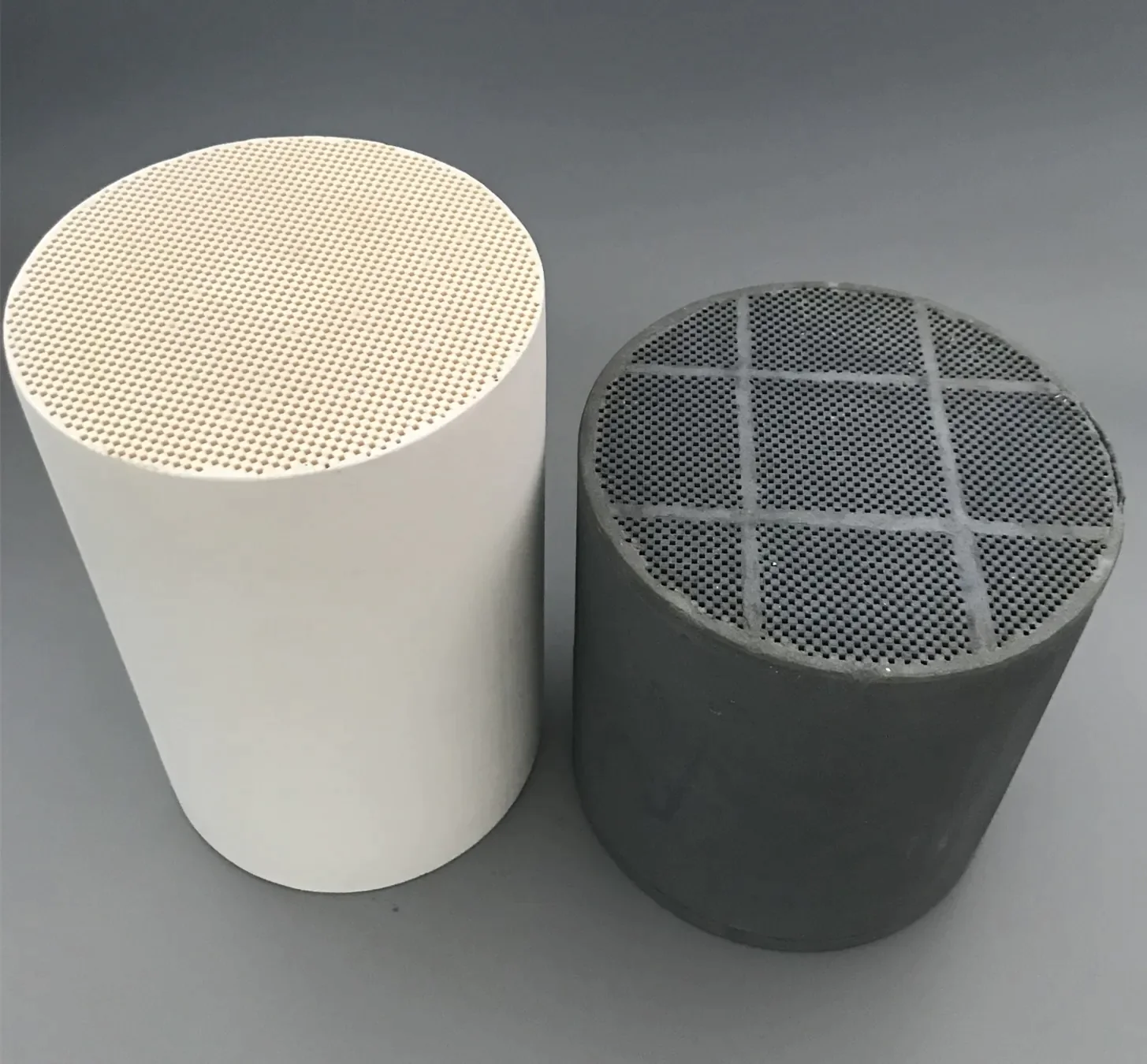
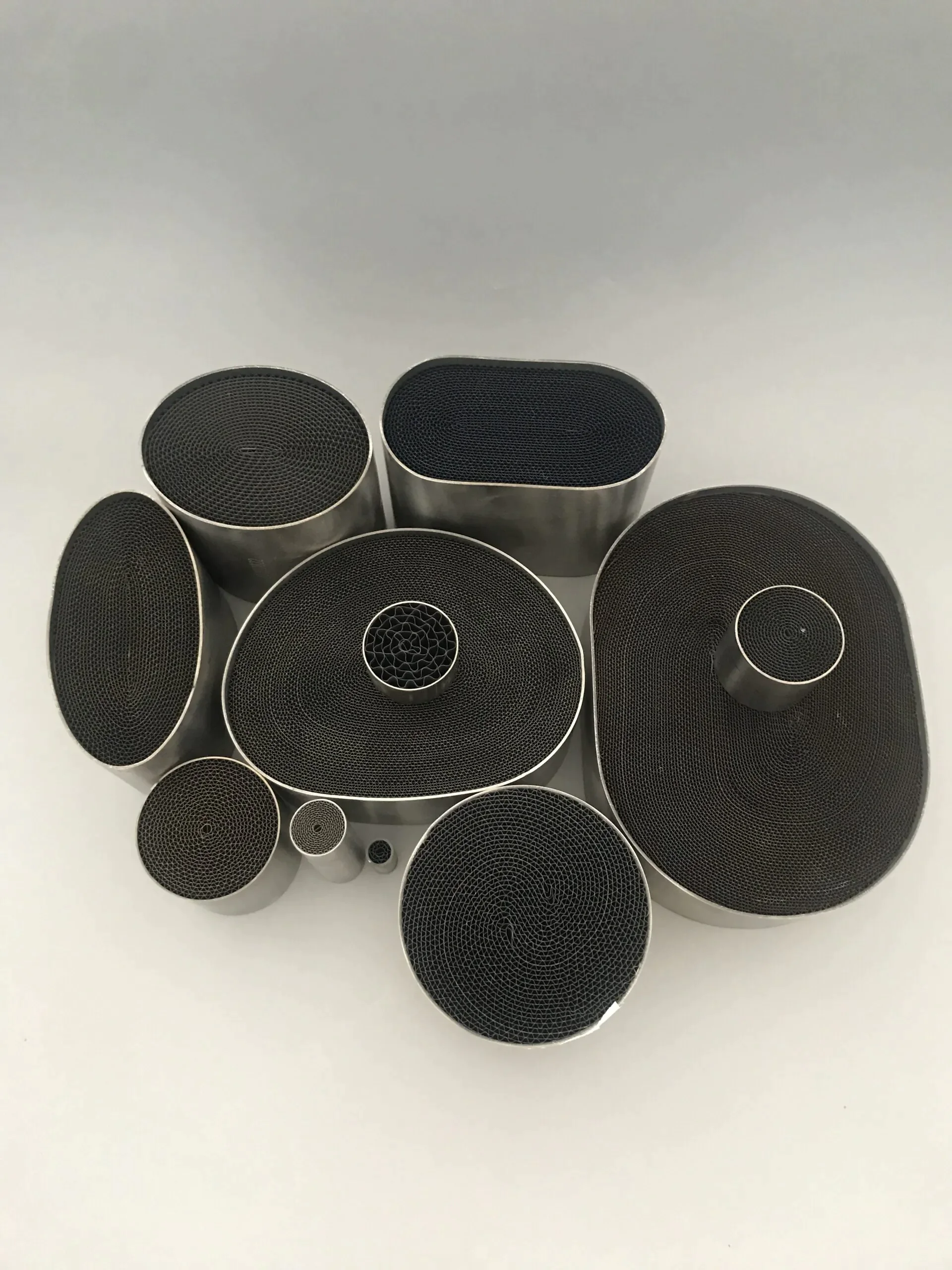
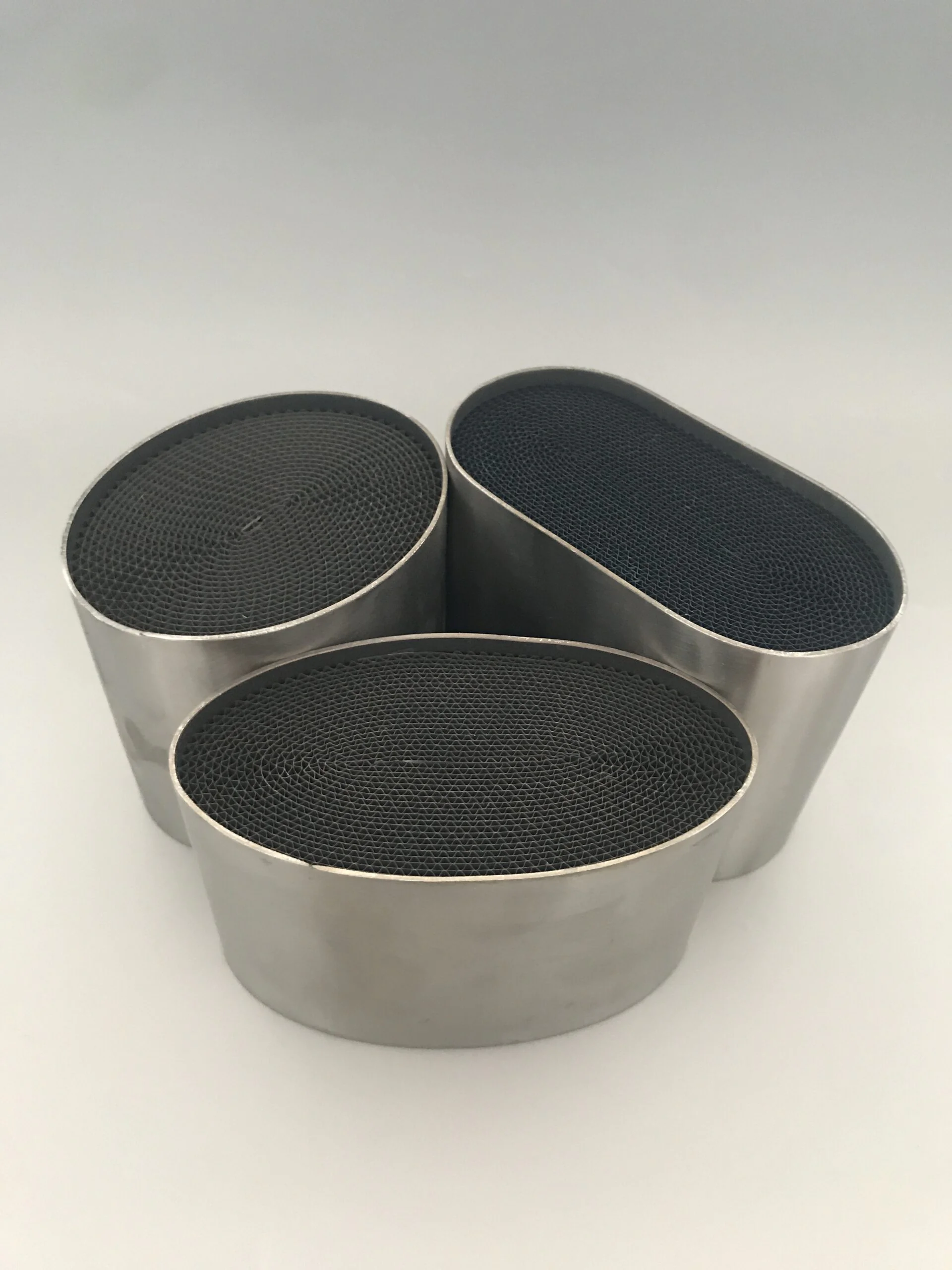
The honeycomb substrate provides channels for exhaust flow and supports the active catalyst coating. Channel density and geometry influence surface area, gas contact, and flow resistance. A higher cell density may provide more geometric surface area, but it can also affect pressure drop. The appropriate design depends on exhaust flow, packaging limits, and the engine’s backpressure allowance.
Hualian supplies square and cylindrical honeycomb SCR configurations, with or without an ammonia-slip catalyst. Published square options include cell densities of 40, 75, 100, 200, and 300 CPSI, with a 150 × 150 mm cross-section and lengths from 100 to 400 mm. Cylindrical options include 300, 400, and 600 CPSI, with diameters from 143.8 to 330.2 mm and lengths from 101.6 to 177.8 mm. Other sizes can be customized according to customer requirements. These figures describe available configurations; they are not one universal specification for every engine.
Our diesel SCR catalysts are intended for applications including heavy-duty trucks, buses, construction machinery, marine diesel engines, stationary generators, and industrial equipment used in mining and agriculture. Selection should start with measured exhaust flow and temperature data, engine-out NOx levels, target emissions standard, installation envelope, and allowable backpressure. Buyers should also confirm coating formulation, substrate dimensions, quality documentation, durability requirements, and whether an ammonia-slip function is needed.
Selecting an SCR Catalyst for Reliable NOx Control
A well-matched SCR catalyst depends on the complete system, not just the catalyst element. Correct DEF dosing, uniform mixing, suitable operating temperature, sensor feedback, and regular maintenance all contribute to stable NOx conversion. Deposits, contamination, thermal cycling, and mechanical vibration should also be considered during design and service planning.
At Hualian Catalyst, we provide customizable diesel SCR honeycomb solutions for mobile and stationary applications. Our engineering discussions begin with engine and exhaust-system requirements, then consider catalyst chemistry, geometry, cell density, and integration constraints. This helps buyers specify a catalyst that fits the actual duty cycle rather than selecting by a single specification. For product configuration or application matching, contact Hualian Catalyst to review the requirements of your diesel emission-control system.