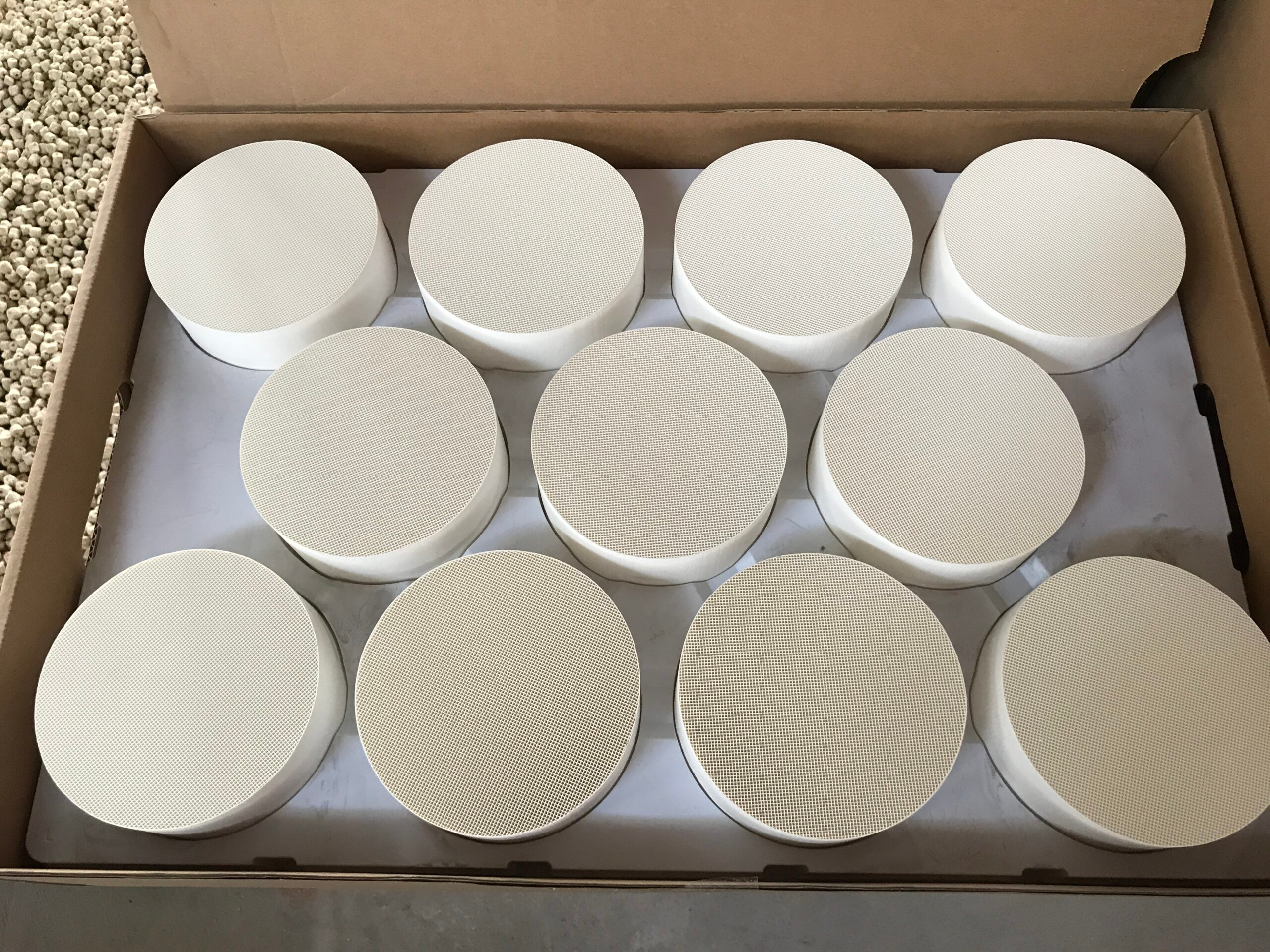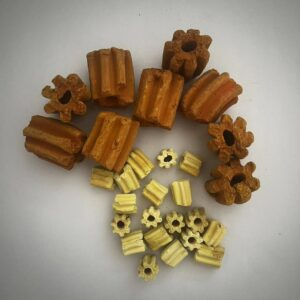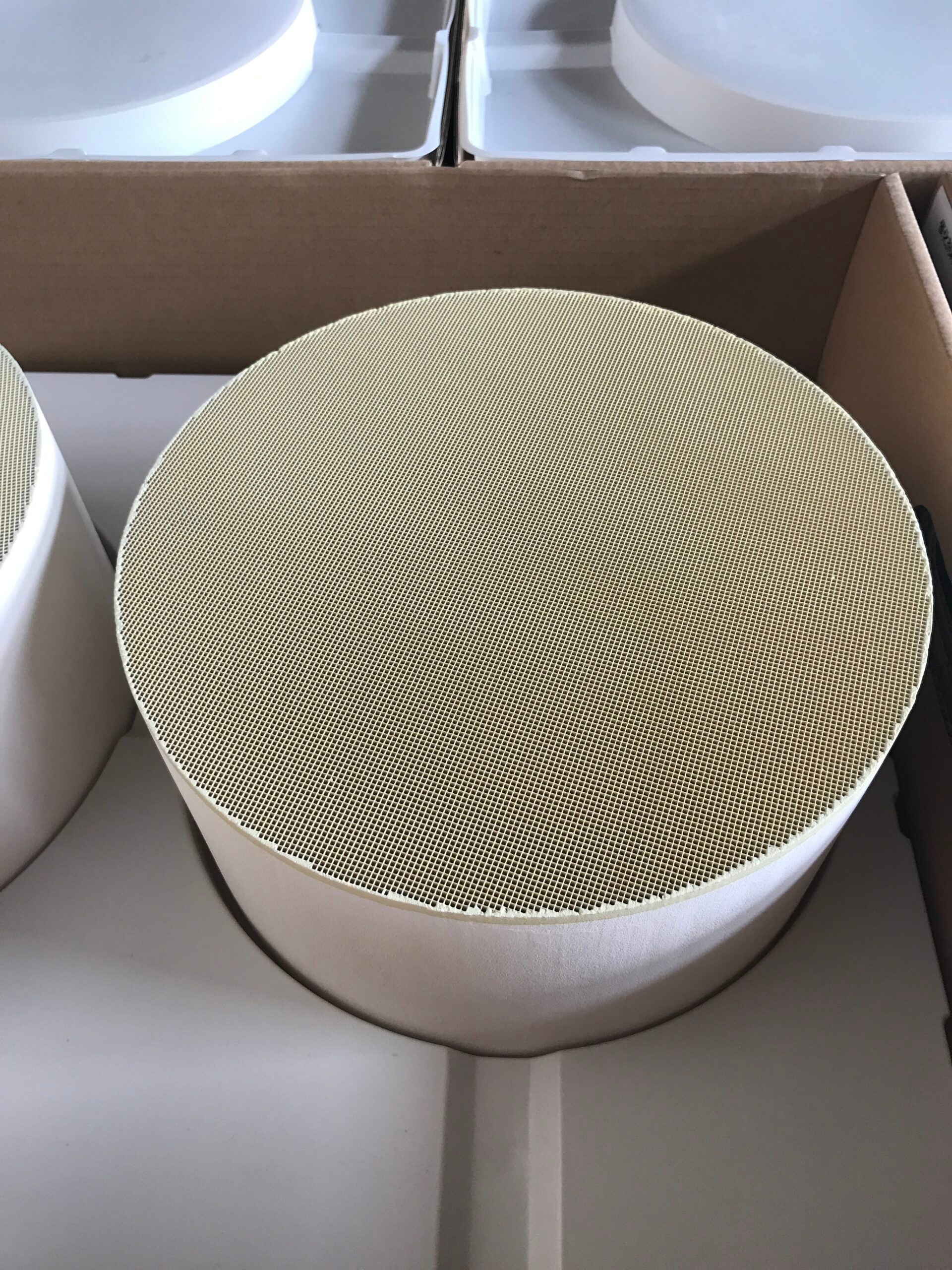
Vanadium pentoxide belongs to a particular NOx-control chemistry: selective catalytic reduction, or SCR, uses ammonia to reduce nitrogen oxides toward nitrogen and water. A catalytic surface can promote that reaction within a suitable exhaust-temperature range.
The active material and test conditions matter. An unrelated converter may also report a NOx result without using vanadium at all. The active SCR chemistry is traced through ammonia, NOx, and temperature, while conversion figures from a different catalyst family stay with the product that generated them.
Follow Ammonia and NOx to the Active Surface
In an SCR system, ammonia supplied by the reductant has to reach active sites along with NOx in the exhaust. Supported vanadia formulations provide surface sites where ammonia can adsorb and react with NO under oxygen-containing conditions.
The catalyst promotes a pathway to nitrogen and water rather than relying on an uncatalyzed gas-phase reaction at the same operating temperature. Conversion still depends on gas composition, temperature, contact, and reductant delivery to the surface
V₂O₅ is therefore not a stand-alone performance guarantee. Its activity is shaped by how vanadia is distributed on a support and by the conditions in which the SCR catalyst operates. Too little available ammonia limits the intended reaction; excess dosing can leave residual ammonia downstream.
Flow through the catalyst must also be sufficient for the engine without depriving the gas of useful contact. The practical question is whether the selected formulation and system controls place the active surface within the operating window the application will actually encounter.
A metallic catalytic converter may belong to the same aftertreatment discussion, but its substrate material does not identify its active chemistry. Likewise, the phrase high-flow catalytic converter describes a flow objective, not evidence that the coating contains V₂O₅. Distinguishing the physical carrier from the active formulation is essential before comparing NOx-conversion claims across products.
Separate SCR Chemistry From Other Converter Results
The effect of vanadia in SCR is assessed through the ammonia–NOx reaction under defined temperature, flow, and inlet composition. A useful test reports the catalyst formulation, reductant condition, and NOx result.
A light-off figure for a different coating cannot answer the same question. Even when both reports use the word conversion, they may refer to different feed gases, reaction mechanisms, and acceptance criteria.
For the metal converter we offer at Hualian Catalyst, the listed active components are rare-earth materials with Pt, Pd, and Rh. Our supplied product information describes CO oxidation to CO₂, hydrocarbon conversion to H₂O and CO₂, and NOx reduction to nitrogen.
It also lists T50(CO) ≤230°C, T50(HC) ≤260°C, and T50(NOx) ≤250°C. Those T50 values belong to the Pt/Pd/Rh-containing metallic product, not a V₂O₅ SCR formulation with an ammonia feed. A vanadium SCR claim consequently needs its own catalyst identity and NOx test results.
The distinction matters especially when a high-flow catalytic converter is being considered for an engine with both pressure and NOx targets. A metal honeycomb may be relevant to packaging or flow, while the chosen active material determines which reaction is being promoted.
If the system requires V₂O₅-based SCR, the technical file must describe that SCR formulation and its ammonia-fed test results. Flow capability and NOx chemistry need separate evidence before they can be combined in one design claim.
The T50 notation deserves particular care. It identifies a temperature at a defined conversion point for the named pollutant under the stated test conditions. A metallic catalytic converter with a reported T50(NOx) can therefore be evaluated for that formulation, but the number does not identify the reductant, active vanadium content, or SCR reaction pathway.
The presence of NOx in two datasets is not enough to make their temperature figures interchangeable. A meaningful comparison first confirms that both tests used the same reaction chemistry and a comparable gas mixture; only then can temperature or conversion differences be interpreted.
Ask for the Evidence That Matches the SCR Duty
An SCR evaluation begins with the expected temperature distribution, NOx level, reductant strategy, and permissible pressure loss. These inputs determine whether a proposed catalyst is being assessed under realistic conditions.
A vanadia-based formulation can only be compared fairly with another option if the gas mixture and conversion criterion are stated. A headline temperature or conversion percentage without those conditions can conceal a different test basis.
The metallic catalytic converter information we currently provide can support discussion of its stated Pt/Pd/Rh-related behavior and T50 indicators. It does not establish V₂O₅ loading, SCR temperature window, ammonia storage, or durability for a vanadium formulation.
Those properties require their own product specification and tests. Where both technologies appear in a diesel aftertreatment proposal, each should be described by its actual active chemistry rather than by a shared converter label.
NOx conversion in a V₂O₅-based SCR system comes from a matched interaction among catalyst surface, ammonia, exhaust composition, and temperature. The supplied metal-converter data answer a different product question. A sound SCR claim follows the vanadium formulation through its own test conditions and results. Flow and installation must be assessed alongside that formulation, not borrowed from another catalyst family.