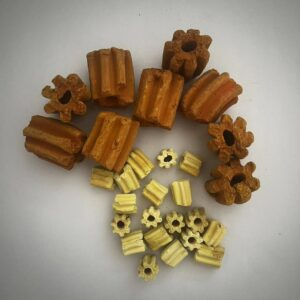
A catalyst may lose activity even while gas can still pass through its reactor. The cause can lie at the active surface, in the support, or in deposits formed during operation. That is a different diagnosis from a diesel particulate filter becoming loaded with soot: the filter is designed to retain particles and then regenerate under appropriate conditions.
SCR and hydrogenation catalysts serve chemical reactions, so their loss of performance needs reaction-specific evidence. Separating these problems prevents a pressure reading or a DPF cleaning event from being mistaken for proof about an SCR or hydrogenation catalyst’s active sites.
Distinguish Chemical Deactivation From Filter Loading
Catalytic activity depends on access to the active material. Strongly adsorbed impurities can block sites, deposits can cover a surface, and prolonged thermal exposure can change the dispersion or structure of an active phase. Those routes do not have identical remedies.
A surface blocked by deposits may respond differently from a material whose active structure has changed. A proper investigation starts by identifying the catalyst, its feed contaminants, and its temperature history. It also requires measuring the change in conversion under comparable test conditions.
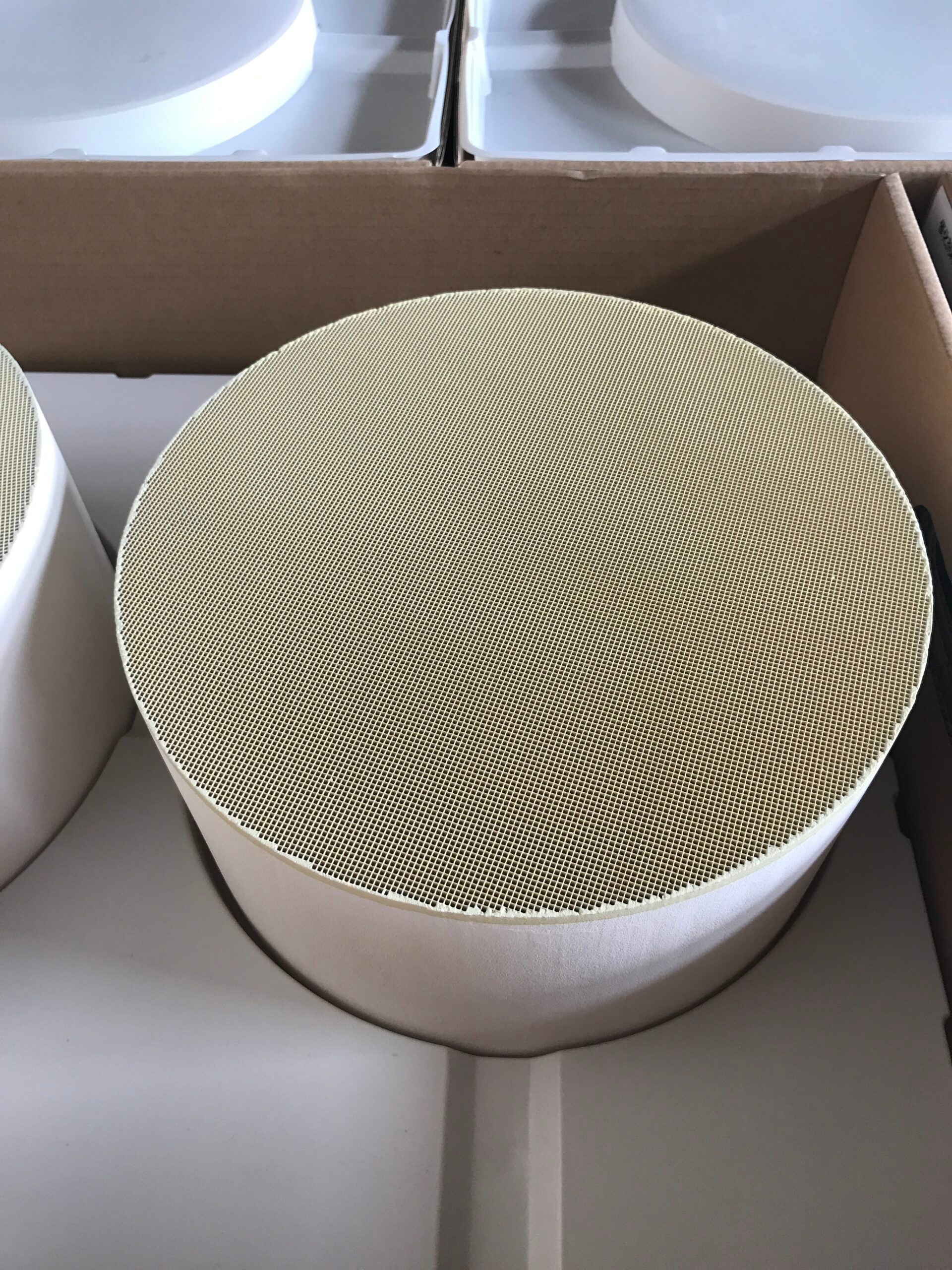
For diesel particulate filters, soot capture is the intended function. In a wall-flow filter, exhaust crosses porous channel walls while particles remain behind. Accumulation can increase pressure loss, and regeneration removes soot when the required conditions are met.
A rise in filter backpressure may therefore indicate a loading or regeneration issue without showing that the SCR catalyst downstream has lost NOx-reduction activity. The two components need separate measurements.
The distinction also applies to hydrogenation. A catalyst can lose reaction rate because its active surface is poisoned or altered, even when the reactor flow path has not plugged.
A pressure-drop check alone would miss that chemical change. Conversely, a physical obstruction can affect throughput without identifying the active-site mechanism. The symptom tells the investigator where to look, but it does not by itself identify the cause.
Match the Failure Mechanism to the Reaction
Diesel SCR relies on the reduction of NOx with ammonia over an active catalyst. A decline in NOx conversion can be related to contamination, thermal history, reductant delivery, or changing inlet conditions. These possibilities require different checks.
A test that compares fresh and used catalyst activity at matched temperature and feed composition is more informative than a before-and-after vehicle number. The vehicle number alone lacks its operating context. It separates a possible catalyst change from a change in what the catalyst was asked to process.
Hydrogenation uses a different feed and active chemistry. Sulfur-containing compounds can poison nickel-based hydrogenation catalysts in studied systems by reducing access to active metal sites; heat and deposits can also alter activity, depending on the process.
That mechanism cannot be assigned automatically to every hydrogenation product. The feed composition, catalyst formulation, and operating conditions determine which explanation deserves testing. A diesel SCR result would be no substitute for those hydrogenation measurements.
Neither case can be diagnosed from a diesel particulate filter specification. Filter material, soot-capture rate, and regeneration behavior answer questions about particulate control. They do not report SCR catalyst poisoning, sintering, or hydrogenation catalyst activity. Keeping the source of each fact attached to the correct component prevents a maintenance recommendation from outrunning its evidence.
The comparison becomes sharper when the measured symptom is named. Lower NOx conversion at matched SCR conditions points toward a reaction or dosing problem. Lower hydrogenation conversion at matched feed conditions raises a different set of catalyst and contaminant questions.
Increasing filter pressure loss points toward retained material or flow restriction. One site may experience all three, but a single operating number cannot identify all three causes.
Build Separate Activity and Filter Records
A diesel particulate filter can be inspected alongside a deactivation case without being treated as the failed catalyst. First compare fresh and used SCR or hydrogenation activity under matched feed and temperature; then examine likely contaminants and thermal exposure.
Pressure history identifies a parallel flow restriction, while conversion measurements show whether the chemical task has changed. The diagnostic record thus starts from the reaction that has lost performance.
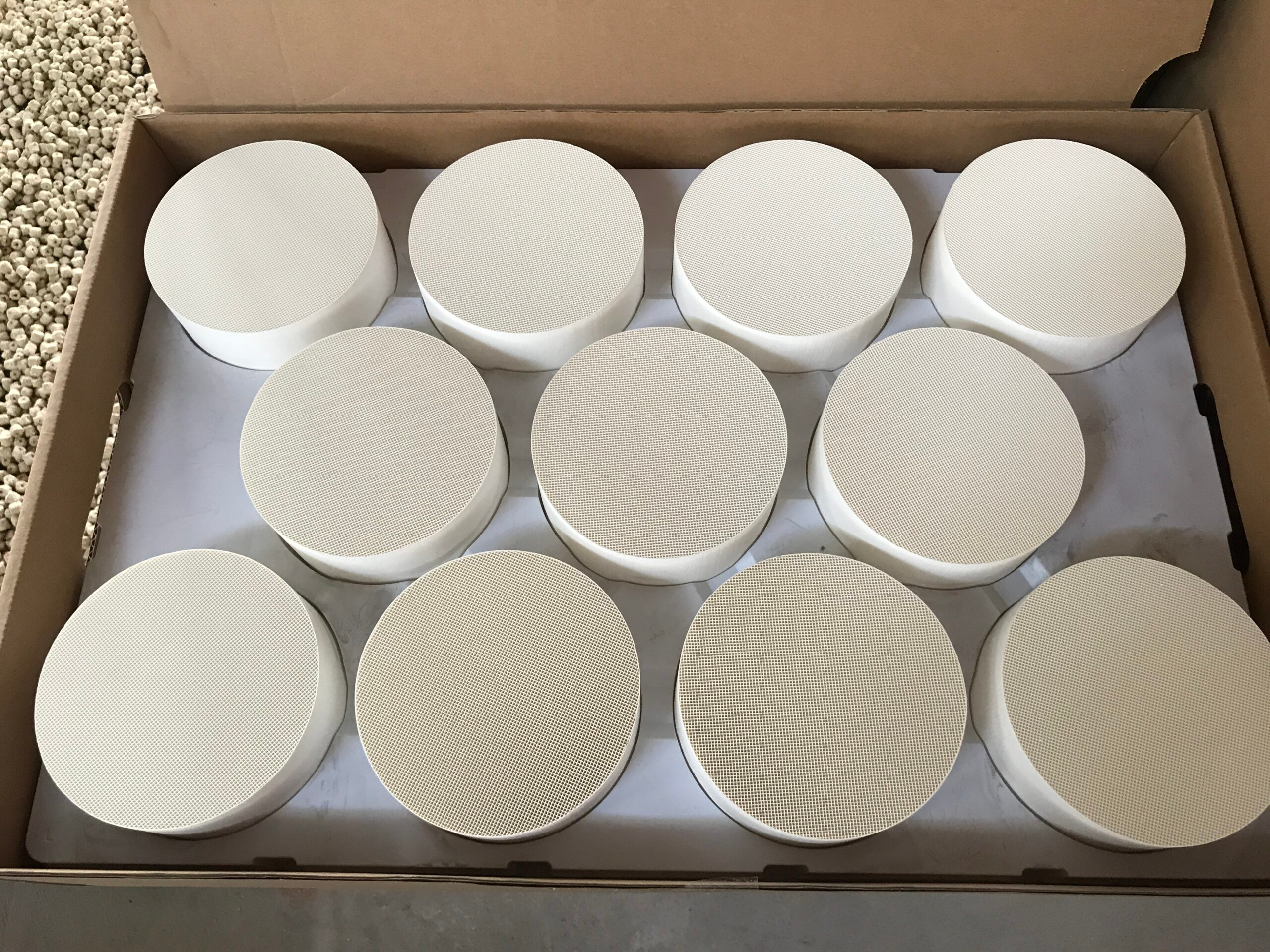
Soot capture above 95%, low backpressure, high-temperature operation, and passive or active regeneration are the DPF properties we describe at Hualian Catalyst for SiC or Cordierite wall-flow honeycombs. These figures describe the filter’s capture and thermal duty, not the chemistry of neighboring catalyst beds. Separate activity data are still needed for the SCR and hydrogenation reactions.
For diesel particulate filters, the service sequence follows soot loading, pressure loss, and recovery after regeneration; Cordierite or SiC must tolerate the associated heat cycle. An SCR catalyst instead needs NOx conversion and ammonia data, while hydrogenation needs conversion and feed-contaminant evidence.
Keeping these records side by side reveals whether the change came from particle loading, reaction chemistry, or both. A wall-flow record may share an installation with SCR, but it remains separate from catalyst-activity results.
Loss of catalytic activity and accumulation in a filter can occur in the same installation without being the same event. The first requires evidence about reaction sites and operating chemistry; the second requires evidence about retained particles, pressure, and regeneration. Diagnosis improves when each component is tested for the function it actually performs.