Ammonia slip begins with a mismatch. More ammonia reaches the end of the SCR unit than the current operating conditions can consume. The extra reductant may exit the exhaust line rather than react with NOx.
A reading at the outlet therefore has to be interpreted alongside dosing, temperature, and the gas composition entering the selective catalytic reduction catalyst. Treating the outlet number alone as a conclusion about the catalyst overlooks the conditions that produced it.
Trace the Reductant From Dosing to the Outlet
In a diesel system, a urea solution is commonly dosed upstream and supplies ammonia for the SCR reaction. The intended amount changes with engine-out NOx and exhaust flow. If dosing exceeds what the passing gas and active surface can use, residual ammonia can appear downstream.
A control error is one possible cause. Transient events can also cause slip when the exhaust changes faster than the dosing system can respond. Slip can thus rise without any change to the physical honeycomb.
The opposite mismatch is also informative. Insufficient ammonia leaves NOx unconverted, whereas excess ammonia increases the possibility of slip. Both measurements matter when a system is tuned.
Raising dose to chase a lower NOx reading can simply move the problem to the ammonia outlet if the available reaction opportunity has already been used. A useful diagnosis compares inlet and outlet conditions over the same operating event rather than pairing measurements from different loads.
The term SCR catalyst describes the reaction component, but the measured slip reflects the entire reductant and exhaust arrangement. Injection location, mixing, sensor interpretation, and catalyst temperature all affect what reaches the channels.
A downstream reading cannot identify one faulty part without that surrounding information. It signals where the investigation should begin: with the reductant delivered, the NOx present, and the conditions under which the two met.
A paired check can separate a steady surplus from a brief event. Compare the commanded dose and exhaust measurements before, during, and after the slip peak, then repeat at a similar load.
If the peak follows a rapid change in engine operation, the timing of delivery deserves attention. If the peak persists at steady conditions, the available reaction capacity and physical condition require closer inspection. The SCR catalyst is one part of that comparison.
Check Whether the Gas Can Use the Ammonia
Temperature changes the rate and availability of SCR reactions. During a cold start or a low-load interval, ammonia may be supplied before the selective catalytic reduction catalyst reaches a useful operating condition. A hot steady period can present a different balance even at the same nominal dose.
A trace of exhaust temperature throughout the slip event is therefore more revealing than a single average value. It shows whether a slip peak occurred while the system was warming, cooling, or working steadily.
The NO/NO₂ ratio also affects conversion efficiency in the supplied product information. If the proportion changes, the same ammonia feed does not necessarily produce the same NOx conversion.
This is one reason to inspect upstream exhaust treatment and engine operation before increasing a dose command. Neither temperature nor NO/NO₂ ratio provides a universal slip threshold by itself; together they describe how much reaction opportunity the gas may offer at that moment.
Physical condition can narrow that opportunity further. Fouling may restrict access to active surfaces or alter flow distribution through the channels. Proper engine maintenance and high-quality urea or DEF are identified in our product information as ways to help prevent fouling.
Poor reductant quality should be investigated as one system condition. It should not be assumed to be the sole cause every time ammonia appears at the outlet. Evidence from inspection and operating data is needed to distinguish deposits from a dosing or temperature issue.
Decide Whether an Ammonia-Slip Stage Is Needed
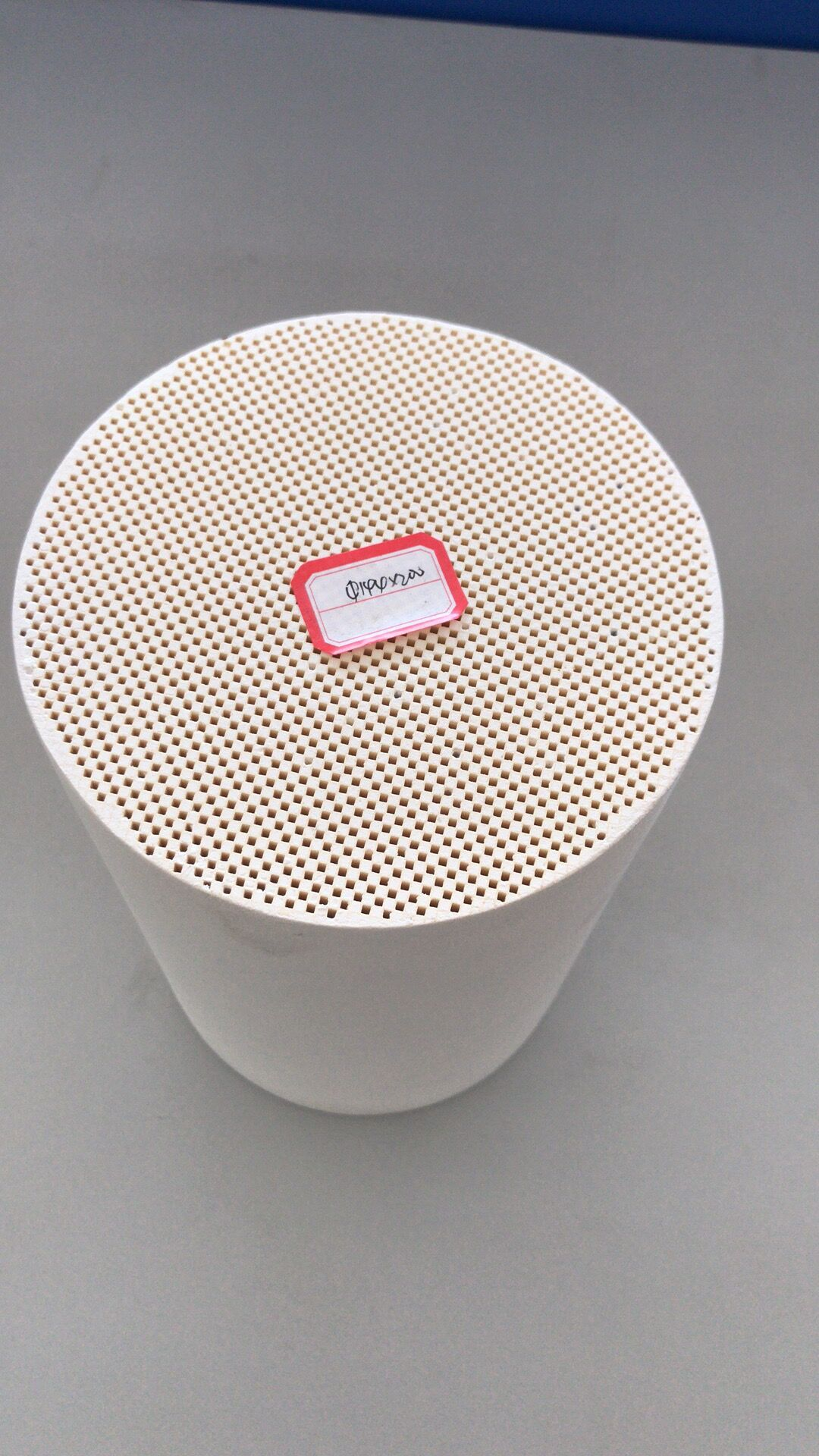
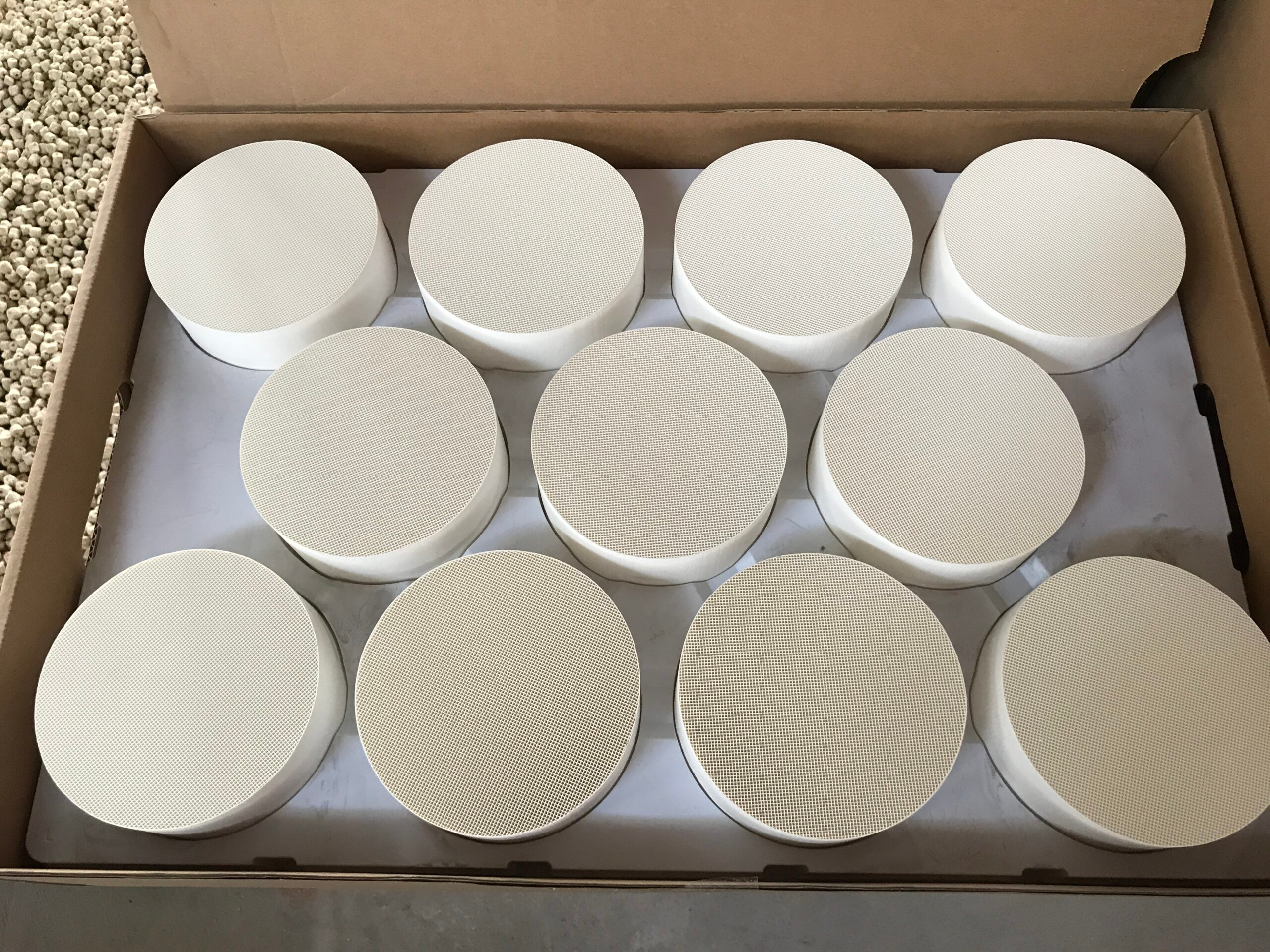
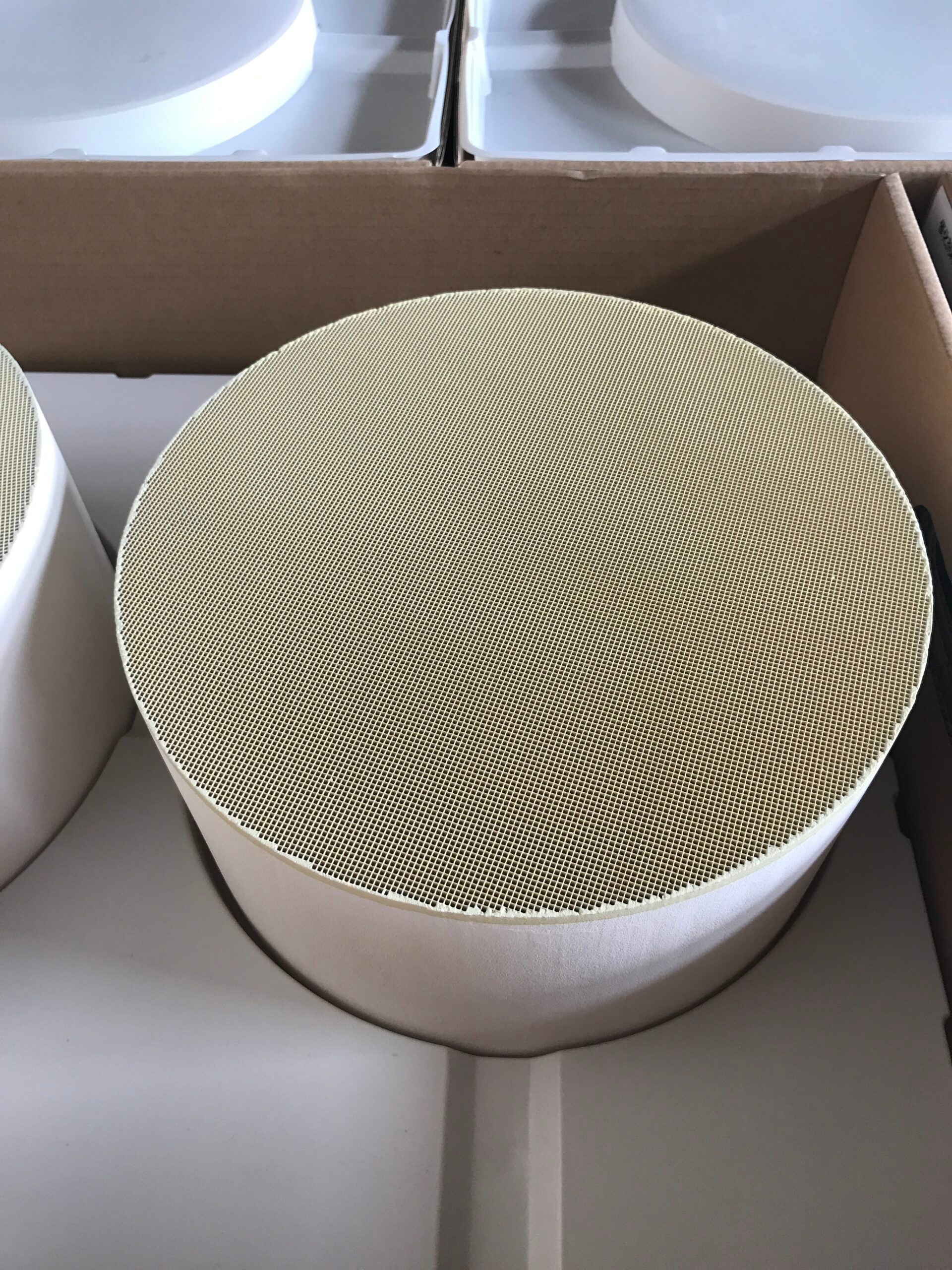
For different exhaust layouts, we offer square and cylindrical SCR honeycombs at Hualian Catalyst, with or without an NH₃-slip catalyst. That configuration choice belongs after the upstream cause of excess ammonia is understood.
An ammonia-slip stage can address residual reductant downstream. However, its presence does not excuse uncontrolled dosing or remove the need for suitable SCR temperature and gas composition Space, flow, and the position of each component also affect how the arrangement can be packaged.
In our discussions of a selective catalytic reduction catalyst, we ask for the operating temperature range, NOx and ammonia measurements, dosing behavior, and the chosen honeycomb form.
Those facts allow a square or cylindrical option, and the possible inclusion of an NH₃-slip catalyst, to be assessed against the actual exhaust line. Any ammonia-slip acceptance limit must come from the project’s stated requirement and test method; our listed SCR configuration carries no universal numerical slip threshold.
The final check is a repeated measurement under the duty points that first produced the slip. A change to dose, maintenance condition, or component arrangement should be judged by both NOx conversion and ammonia at the outlet.
The configuration we propose for that installation can then be assessed against outlet ammonia and NOx measurements under matching duty points. Ammonia slip is best understood as unused reductant in a changing system, not as a property that can be assigned to a honeycomb in isolation.