Vanadium pentoxide (V₂O₅) is an important active component in industrial oxidation catalysts. Its value comes from its ability to participate in reversible redox reactions, allowing selected oxidation processes to proceed at practical rates. One of its most established applications is the contact process for sulfuric acid production, where sulfur dioxide (SO₂) is converted into sulfur trioxide (SO₃).
Industrial users must assess more than a catalyst’s nominal V₂O₅ content. Promoter chemistry, support structure, particle geometry, operating temperature, gas composition, and converter-bed position all affect performance. Understanding these factors helps users match a vanadium pentoxide catalyst to the actual process rather than treating all formulations as interchangeable.
How V₂O₅ Catalyst Works in Industrial Oxidation
Vanadium-based catalysts promote oxidation through a redox cycle. In sulfuric acid production, sulfur dioxide reacts with oxygen to form sulfur trioxide:
2SO₂ + O₂ ⇌ 2SO₃
The vanadium species participate in electron transfer during the reaction, cycling between different oxidation states, commonly V⁵⁺ and V⁴⁺. Oxygen in the process gas reoxidizes the reduced vanadium species, allowing the catalytic cycle to continue. The catalyst reduces the reaction kinetic barrier, yet it cannot shift the equilibrium position of this reversible reaction.
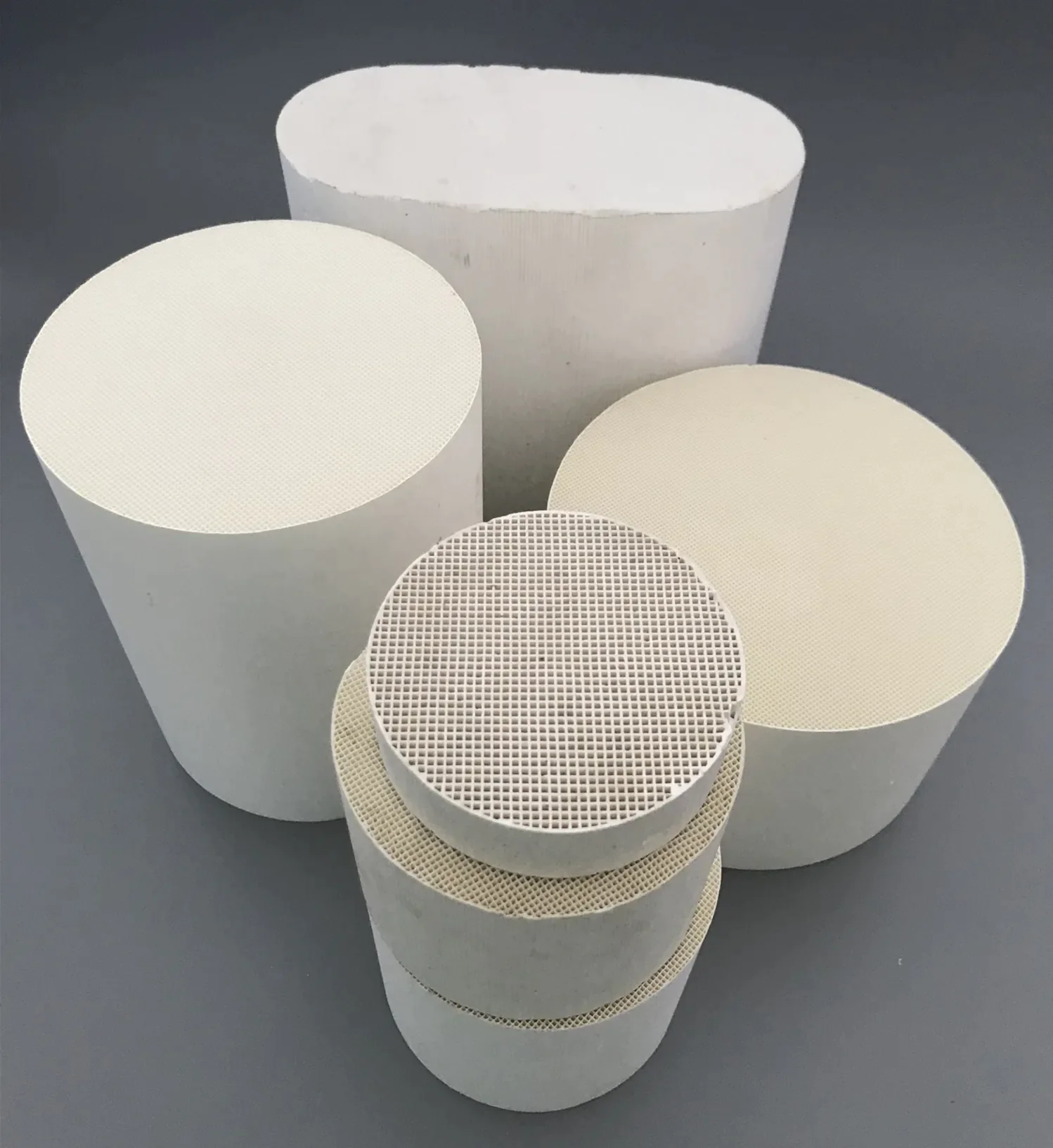
Commercial sulfuric acid catalysts are more complex than pure V₂O₅ powder. They generally contain vanadium compounds, alkali-metal promoters, and a porous support, commonly silica. Potassium is widely used, while cesium-containing formulations can support activity at lower operating temperatures. The support and pore structure provide contact area and influence gas diffusion, heat transfer, and pressure drop.
Sulfuric Acid Production: The Primary Industrial Application
The contact process is the principal application of vanadium pentoxide-based catalysts. Sulfur is burned or sulfur-containing feed gases are processed to generate SO₂. After gas conditioning, the SO₂-containing stream passes through a catalytic converter, where oxygen converts part of the SO₂ into SO₃. The SO₃ is then absorbed to produce sulfuric acid.
Converter systems employ multiple catalyst beds with inter-stage cooling. This arrangement manages the heat released by the exothermic oxidation reaction and helps maintain a suitable temperature profile. Catalyst activity must be considered alongside gas composition, inlet temperature, SO₂ concentration, and pressure drop. High conversion in one bed does not alone determine overall plant performance; the converter and absorption arrangement matter.
Formulations are designed for specific bed positions and operating conditions. A general-purpose potassium-promoted grade may be suitable across converter beds, while a cesium-promoted grade can be selected where lower-temperature activity is required. Catalyst geometry also matters because pellet shape and size influence gas distribution, mechanical strength, and pressure drop through the bed.
Choosing the Right V₂O₅ Catalyst Grade
The term v2o5 catalyst covers multiple formulations rather than one universal product. Selection should account for ignition temperature, continuous operating range, thermal stability, bulk density, shape, and the intended converter-bed location. Operators should also review feed-gas impurities and the plant’s operating history before deciding whether a catalyst change is appropriate.
Our sulfuric-acid catalyst range includes three series: V201-M, V208-M, and V212-M. V201-M is a potassium-promoted grade suitable for all beds, with a stated continuous operating range of 400–630°C. V208-M combines cesium and potassium promotion and is particularly intended for the third bed, where the process gas contains a significant amount of SO₃. For lower-temperature operation, V212-M uses cesium promotion and is designed for selected first-, fourth-, or fifth-bed applications.
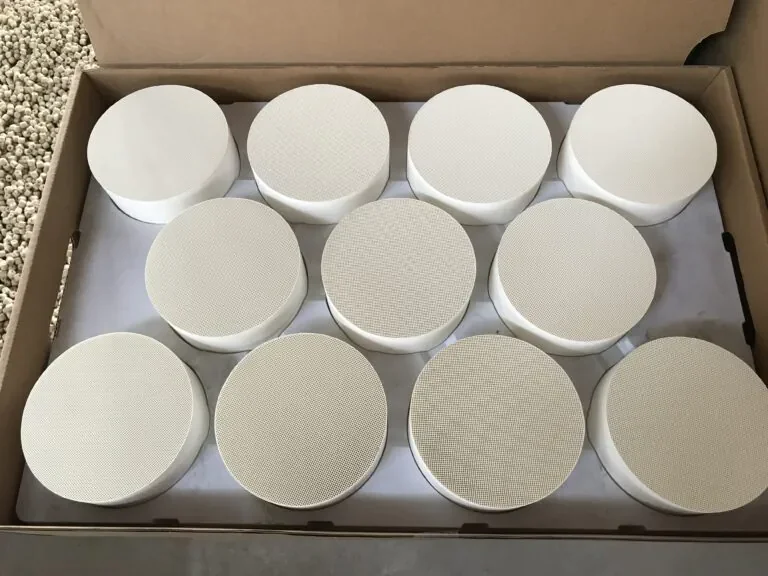
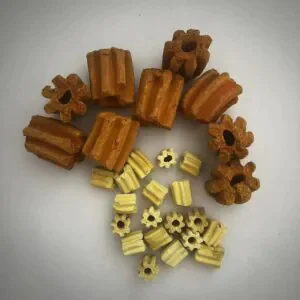
The published technical specifications list all three V-series products in an 11 mm special daisy shape. This geometry provides multiple gas-flow channels and a relatively large exposed surface area, helping balance gas-solid contact with flow resistance.
The listed bulk density is 0.38–0.43 kg/L, with thermal stability of 650°C. Their listed ignition temperatures are 360°C for V201-M, 340°C for V208-M, and 310°C for V212-M. The stated continuous operating ranges are 400–630°C for V201-M and V208-M, and 370–630°C for V212-M. These are published specifications from the product page and do not represent universal operating limits. Actual catalyst selection and loading shall comply with the plant’s process design together with supplier technical guidance.
Other Industrial Uses and Important Technical Distinctions
Vanadium-containing catalysts also appear in other oxidation and emissions-control technologies, but their formulations should not be confused with sulfuric-acid contact-process catalysts.
For example, vanadium-titanium-based formulations are used in some selective catalytic reduction (SCR) systems to support NOx removal from industrial or combustion exhaust. These catalysts are engineered for a different gas composition and reaction environment, often using titanium dioxide as a support and additional promoters. They are not simply interchangeable with the shaped V-series products used in sulfuric acid converters.
Another distinct family is vanadium-phosphorus oxide (VPO), used in selective oxidation processes such as converting n-butane to maleic anhydride. Although vanadium is central to the active chemistry, VPO catalysts have a different composition and phase structure from conventional V₂O₅-based sulfuric acid catalysts. Engineers should identify the specific catalytic system and target reaction before specifying a material.
At Hualian Catalyst, we help industrial buyers evaluate these options according to process temperature, gas composition, and specific application requirements.
Maintaining Performance in Continuous Operation
Catalyst performance can degrade for several key reasons: thermal aging, feed-gas contamination, mechanical attrition, or shifts in process-gas composition. Dust and deposits can obstruct pores or increase bed pressure drop, while certain impurities can reduce active-site availability. Regular monitoring of converter temperatures, SO₂ conversion, pressure drop, and emissions helps operators identify changes before they affect plant output.
A sound replacement or loading decision should be based on process data, not catalyst name alone. Bed location, gas analysis, operating history, and the required conversion target all help determine the suitable grade and quantity.
We supply V₂O₅ catalyst grades for sulfuric acid production, including V201-M, V208-M, and V212-M, with specifications for different converter-bed conditions. Plant operators and engineering teams can review our product information when assessing catalyst options for their process requirements.